

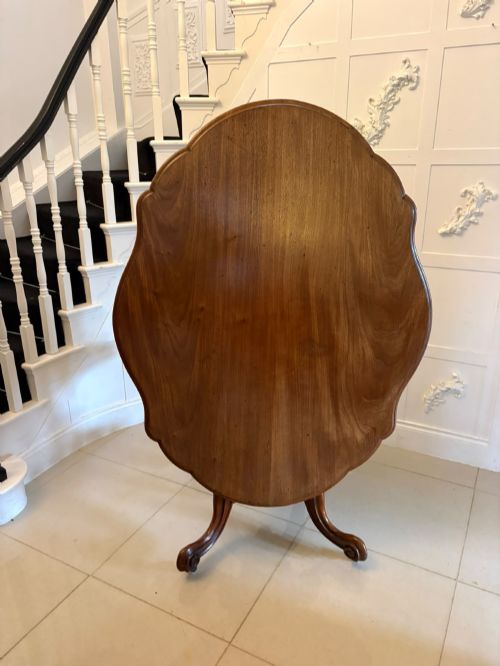
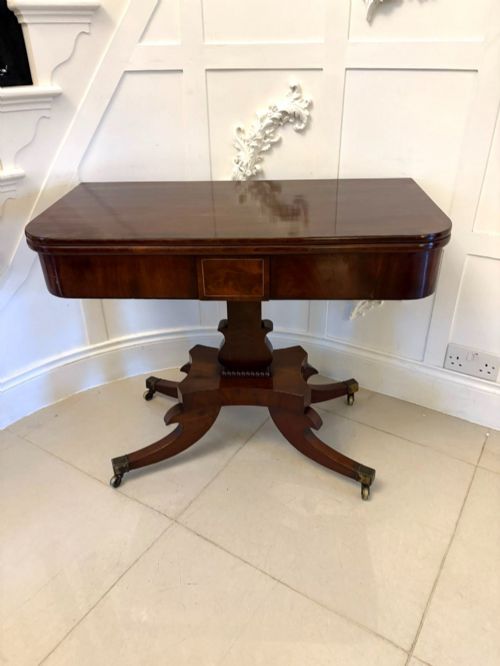
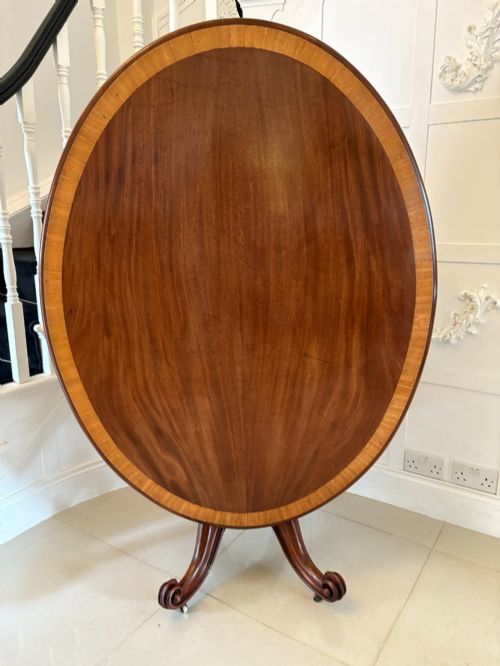
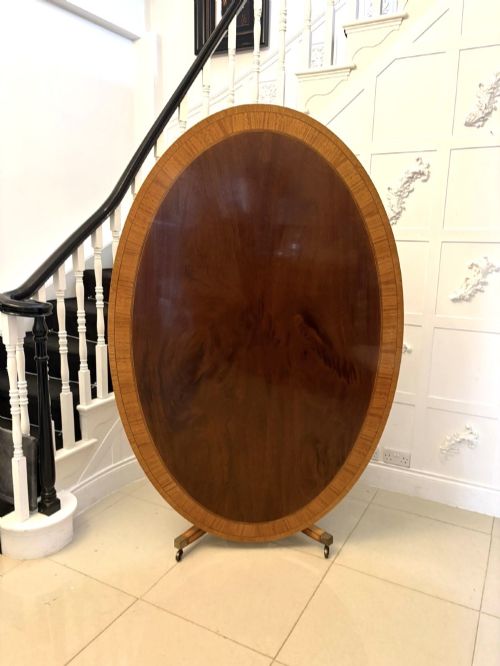
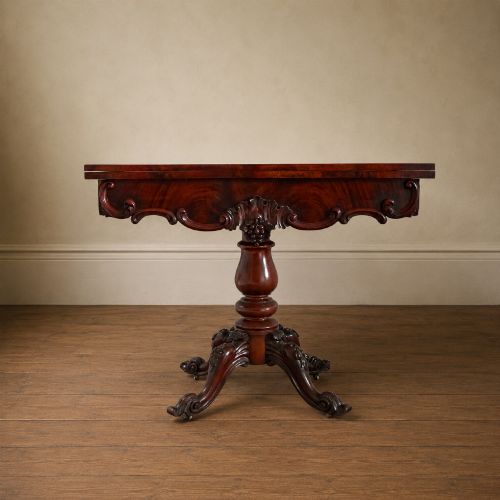
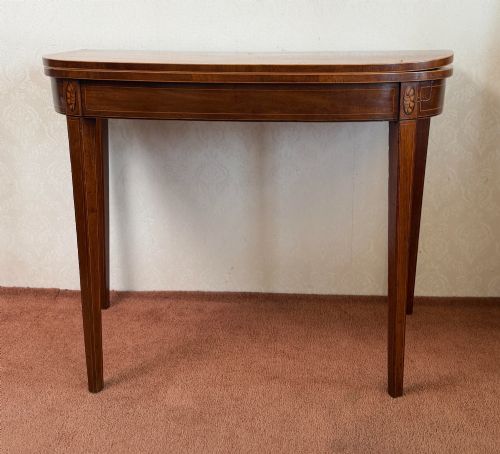


Figured Mahogany Top Table
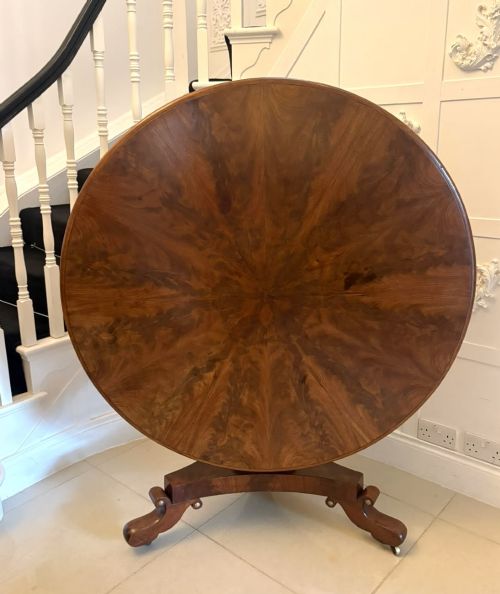
A figured mahogany top table brings rich, swirling wood grain and warm timber tones straight to the centre of a room.
Figured Mahogany Top Table
A figured mahogany top table focuses attention on the decorative grain of the timber, displaying rich flame, fiddleback, or swirl patterns across the surface. These pieces appear in forms ranging from compact tea, card, and occasional tables to large dining and breakfast tables spanning the Georgian, Regency, William IV, and Victorian periods.
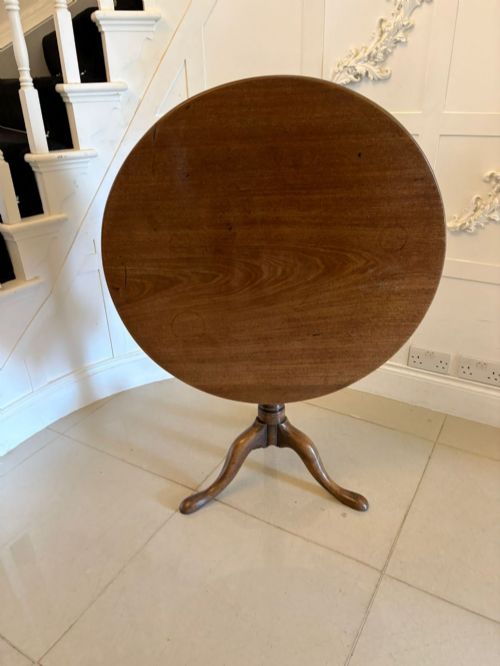
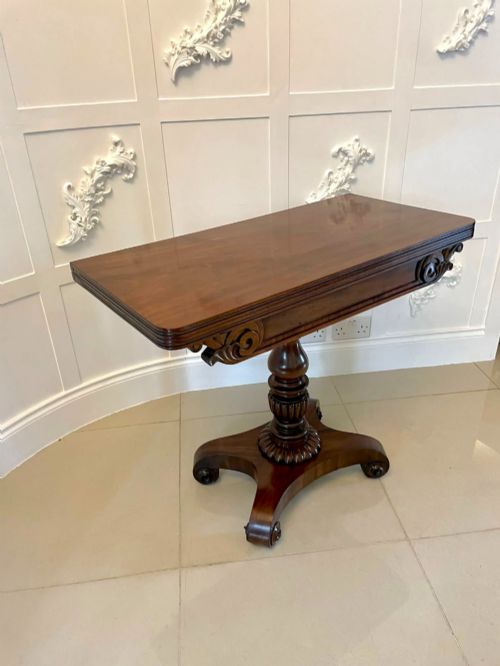
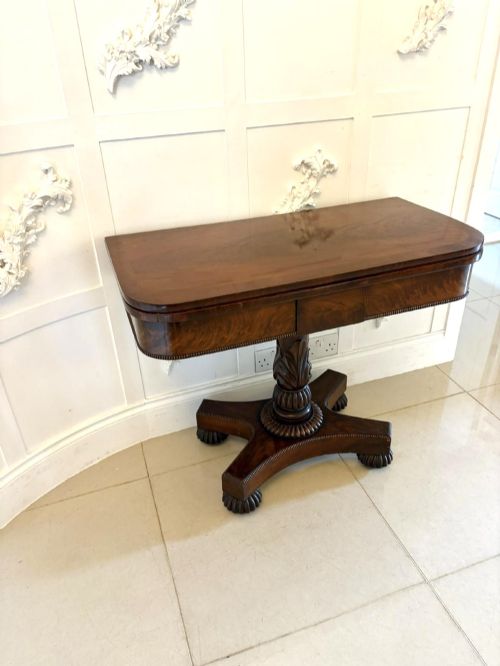
Buyers seeking a figured mahogany top table will encounter versatile fold-over card tables, tilt-top breakfast tables designed to save space, and substantial pedestal dining tables. The selection draws on styles such as Sheraton, Chippendale Revival, and French Empire, reflecting craftsmanship from the eighteenth century through to the early twentieth century.
The timber itself defines the aesthetic, often enhanced by contrasting veneers or specialist construction that allows the polished wood to dominate the room. Whether standing on an octagonal pillar, slender legs, or heavy console bases, each table showcases the natural figuring of the timber as its primary ornament.
What varies in quality
The degree of movement and natural visual impact in the timber grain dictates much of the visual appeal, with tightly swirled flame patterns commanding greater presence. Skill in matching and laying the veneers across the top surface separates standard construction from exceptional work.
The refinement of the supporting structure, whether an octagonal central pillar, carved pedestal, or detailed brass inlay, shapes the overall architectural balance. Joinery execution and the crispness of any applied carving or mounts further distinguish the standard of the piece.
Figured Mahogany Top Table Retail Price Guide 2026
Typical asking prices for figured mahogany top table among the pieces listed under this phrase on Sellingantiques today, from the lower quarter to the upper quarter. They describe what is for sale here now, not the wider market.
Listings feature mahogany, satinwood, brass, and marble across Georgian, Victorian, and Edwardian periods.
The Figured Mahogany Top Table Glossary
- Figured mahogany
- Timber selected from specific sections of the mahogany tree that display striking patterns such as flame, curl, or feathering. This wood was prized for high-status furniture surfaces.
- Tilt-top table
- A table designed with a hinged mechanism allowing the top to pivot vertically when not in use. This clever design saved floor space in smaller rooms.
- Crossbanding
- A decorative border of veneer laid around the perimeter of a table top so that the grain runs at right angles to the central panel. It creates a neat framing effect.
- Card table
- A folding table featuring a hinged top that opens to reveal a baize-lined surface for playing games. These pieces were commonplace in eighteenth and nineteenth-century drawing rooms.
Figured Mahogany Top Table: Frequently Asked Questions
How do I care for figured mahogany?
Keep the timber away from direct sunlight and excessive heat sources to prevent the wood from drying out or fading. Regular dusting with a soft, dry cloth preserves the polished surface without damaging the delicate grain beneath.
Apply a traditional wax polish occasionally to nourish the timber and maintain its characteristic depth of colour. Avoid using modern silicone sprays, which can build up and dull the finish over time.
Were tilt-top tables meant to be stored away?
Tilt-top breakfast and lamp tables were routinely pivoted upright and pushed against the wall when meals or gatherings concluded. This practical feature freed up floor space in principal rooms during the day.
The hinge mechanisms were built to handle regular movement, allowing households to adapt their living spaces easily. Today, this mechanism remains a reliable indicator of period construction.
What is the difference between a tea table and a card table?
Tea tables generally feature a single hinged leaf that folds out to provide a surface for serving tea. They often sat against a wall when closed, serving as a side or console table.
Card tables usually incorporate a double-folding top supported by a swinging leg or concertina frame to reveal a green baize playing surface. Both forms were essential items for entertaining guests in period interiors.
How can I tell a Regency table from a Victorian one?
Regency tables, dating from the early nineteenth century, frequently exhibit neoclassical restraint with clean lines, brass inlay, and rosewood or satinwood contrasts. Their proportions tend to feel lighter and more architectural.
Victorian tables, produced from the mid-nineteenth century onward, often feature heavier pedestals, bolder carvings, and darker finishes. Serpentine shapes and elaborate tilt-top mechanisms are more commonly found in this later era.