

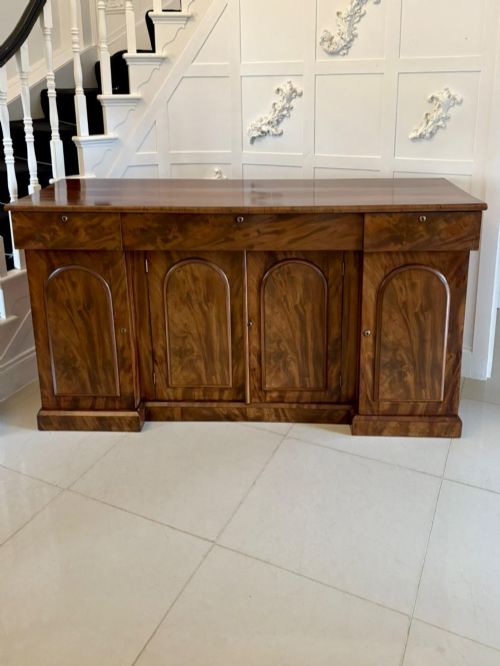
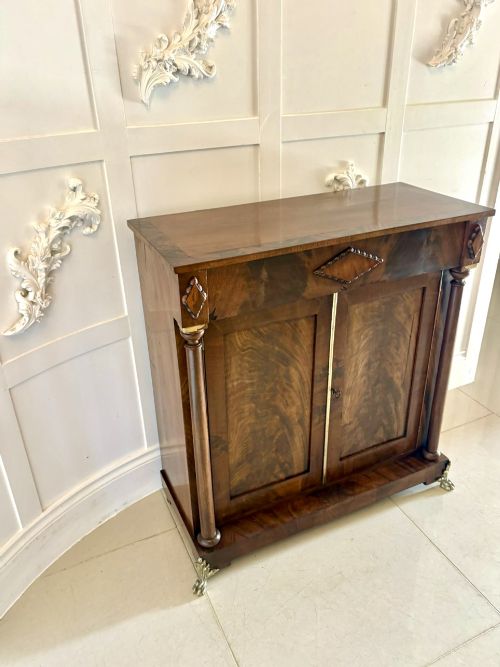
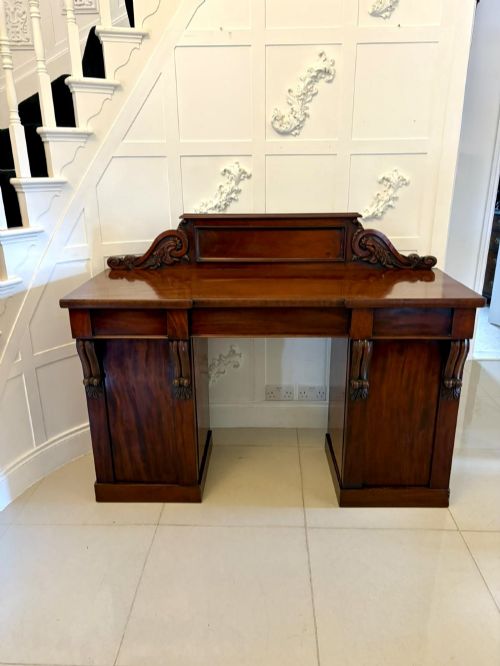
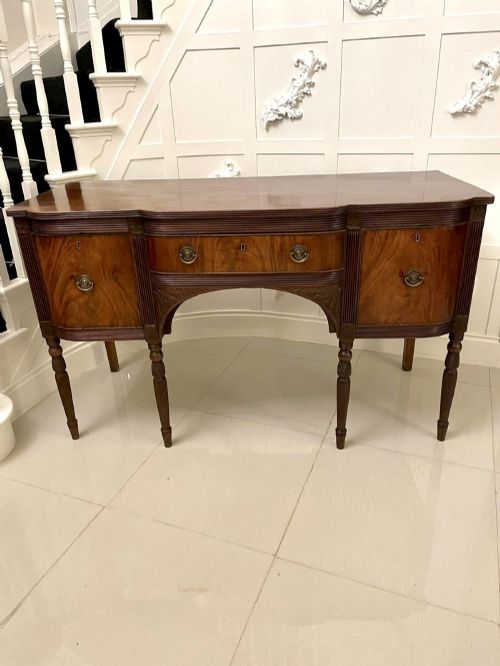
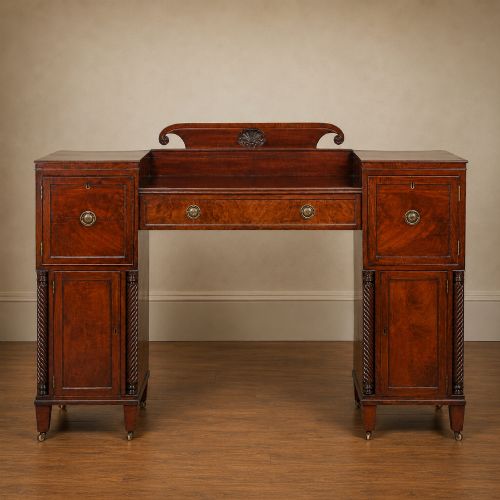


Figured Mahogany Credenza
A figured mahogany credenza brings warmth and exceptional timber grain to a room through centuries of cabinet-making skill.
Figured Mahogany Credenza
A figured mahogany credenza incorporates large storage furniture designed for dining rooms and principal reception spaces, typically encountered as sideboards, chiffoniers, and low cabinets. These forms span George III, Regency, William IV, and Victorian periods, showcasing significant functional evolution.
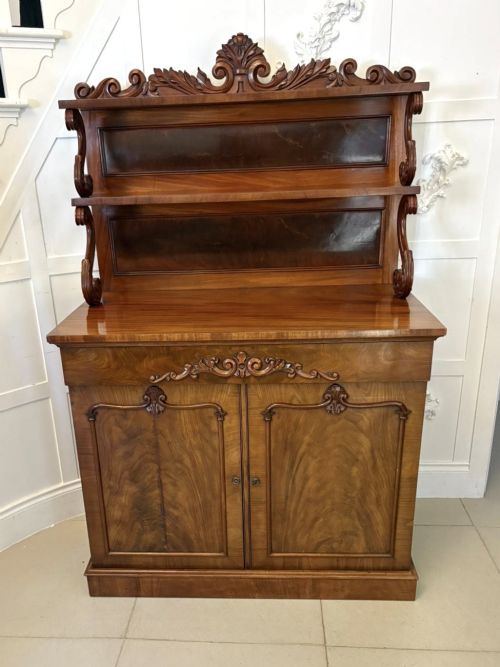
The primary forms on this page include breakfront sideboards, pedestal sideboards, and two-tier chiffoniers. Buyers frequently select these pieces for their expansive timber surfaces and practical interior compartments.
Origins stretch from the eighteenth century through the nineteenth century into early twentieth-century Art Deco interpretations. Each era brings distinct proportions, from grand breakfronts to unusually small-scale chiffoniers.
How they were made
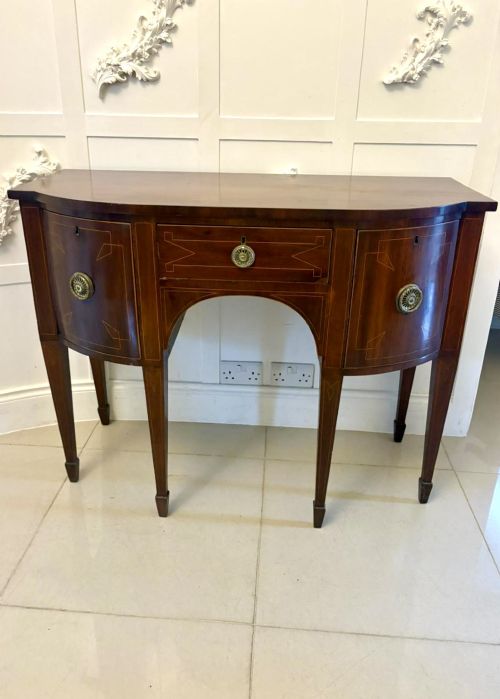
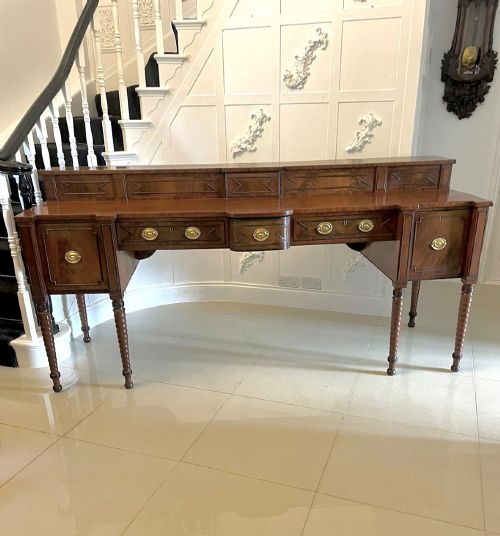
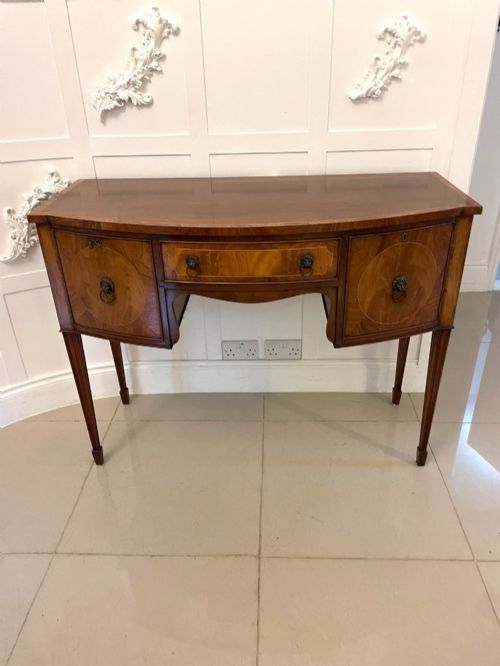
Craftsmen built these cabinets using solid timbers combined with flame mahogany veneer and wood veneer to highlight dramatic grain patterns. Workshops applied boxwood inlay for fine linear contrast against the deep reddish-brown mahogany ground.
Structural elements incorporated brass hardware, such as handles, hinges, and gallery rails, which complemented the polished timber surfaces. Joinery techniques relied on traditional framing to stabilise large sideboards and side cabinets across changing indoor climates.
Figured Mahogany Credenza Retail Price Guide 2026
Typical asking prices for figured mahogany credenza among the pieces listed under this phrase on Sellingantiques today, from the lower quarter to the upper quarter. They describe what is for sale here now, not the wider market.
Listings span the 18th century, Regency, Victorian, and Art Deco periods, utilising mahogany, brass, boxwood, and walnut.
What varies in quality
The visual impact of a figured mahogany credenza depends largely on the symmetry and liveliness of the veneer selection. Master cabinet-makers aligned flame patterns deliberately across drawer fronts and cabinet doors to create striking optical movement.
Proportion and scale distinguish finer examples, particularly where secondary woods, boxwood inlay, and brass details receive meticulous attention. Superior pieces maintain crisp carving and balanced architecture regardless of whether they date from the Georgian era or later Victorian workshops.
Bowman Brothers
The Figured Mahogany Credenza Glossary
- Figured mahogany
- Timber exhibiting highly decorative grain patterns, such as flame or plum pudding, caused by irregularities in tree growth.
- Credenza
- A sideboard or low cabinet used for serving food or storing dining room accessories.
- Chiffonier
- A compact sideboard or cabinet featuring shelves or a tiered superstructure above enclosed storage.
- Breakfront
- Furniture featuring a central section that projects forward from the flanking outer sections.
- Veneer
- A thin layer of superior wood applied over a stable secondary timber to display decorative grain.
Figured Mahogany Credenza: Frequently Asked Questions
What is a figured mahogany credenza used for?
These cabinets served primarily in dining rooms for storing silverware, linen, and serving dishes.
Today, they function well as credenzas or sideboards in modern living spaces, offering substantial storage surface and display capacity.
Are chiffoniers different from sideboards?
Chiffoniers are generally smaller and often include a two-tiered superstructure or raised shelf at the back.
Sideboards tend to be larger, lower structures designed specifically for dining room service.
How do I care for mahogany veneer?
Protect antique veneer by keeping furniture away from direct sunlight and sudden temperature fluctuations.
Apply traditional wax polish sparingly to maintain the natural sheen of the timber.