

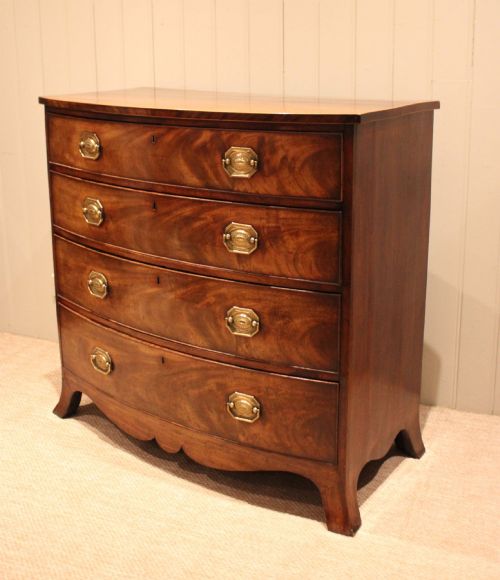
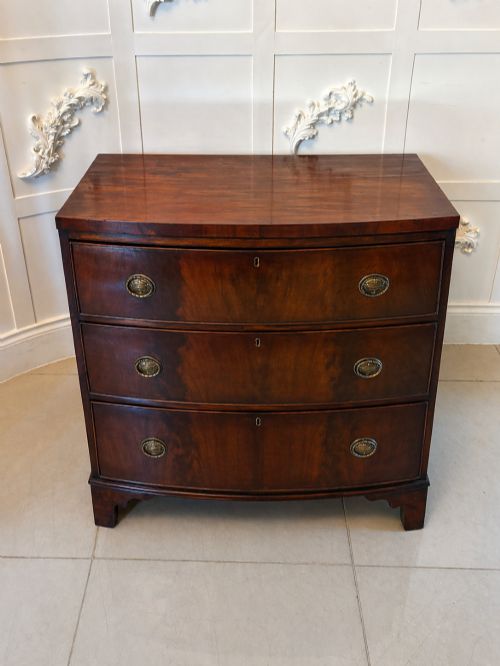
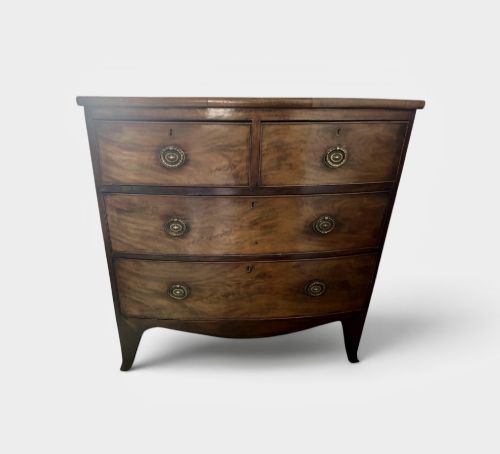
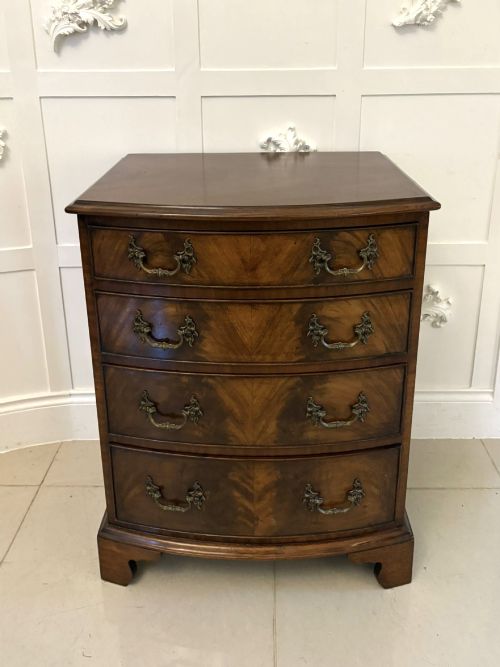
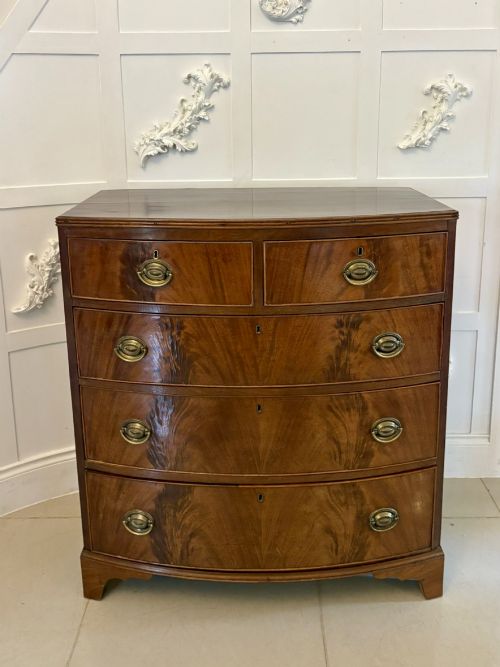
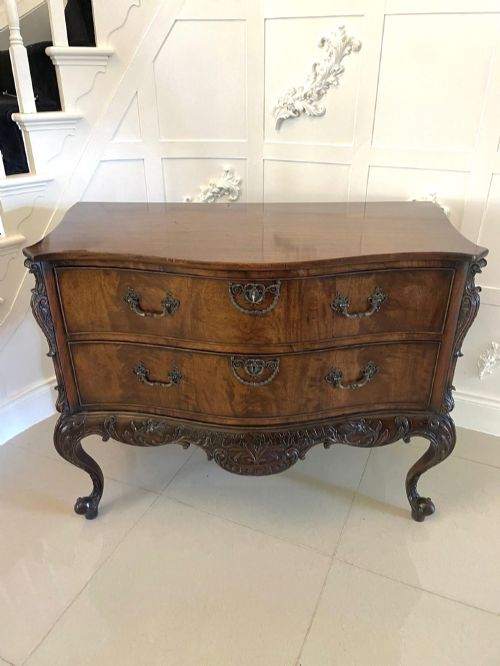


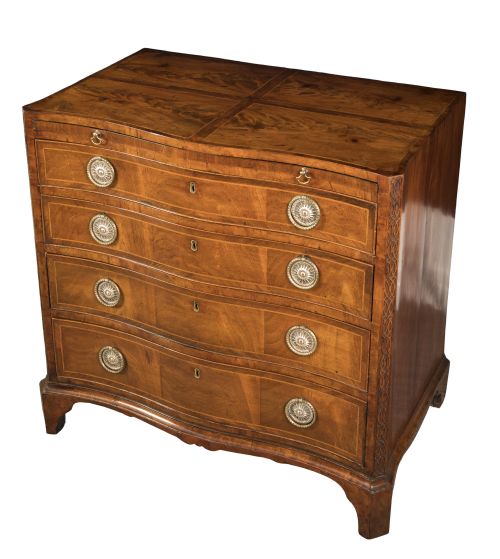


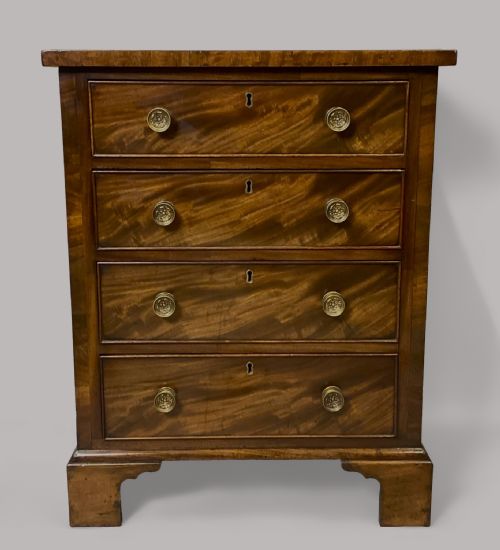
Figured Mahogany Commode
A figured mahogany commode brings extraordinary grain and cabinetwork into a room, offering both generous storage and rich visual depth.
Figured Mahogany Commode
A figured mahogany commode is a substantial chest of drawers or commode displaying the rich, swirling grain patterns characteristic of high-grade timber. These pieces span periods from the eighteenth century through the Edwardian era, taking forms such as bow fronts, serpentine shapes, and breakfronts.
Buyers frequently encounter George III and Regency examples alongside Victorian and Edwardian variations. French pieces from the Louis XVI and Second Empire periods also appear, occasionally featuring marble tops and ebony mouldings.
How they were made
Cabinetmakers utilised solid wood and wood veneer to construct these chests, selecting timber specifically for its dramatic figure. Brass handles and mounts provide functional and decorative contrast against the dark timber.
Construction techniques include graduated drawers and curved fronts such as the serpentine or bow front, requiring precise joinery to shape the timber without compromising structural integrity.
Figured Mahogany Commode Retail Price Guide 2026
Typical asking prices for figured mahogany commode among the pieces listed under this phrase on Sellingantiques today, from the lower quarter to the upper quarter. They describe what is for sale here now, not the wider market.
Listings feature mahogany, figured mahogany, wood veneer, brass, and marble across multiple centuries.
What varies in quality
Quality rests in the intensity and placement of the wood figure across the drawers, alongside the crispness of the serpentine or bow front shaping. Superior examples display thoughtful grain matching and well-proportioned dimensions.
Hardware and secondary details like brass handles, ebony mouldings, and original marble tops elevate certain pieces. The overall execution of the cabinetwork dictates whether a commode sits at the top of the range.
The Figured Mahogany Commode Glossary
- Bow front
- A convex curving front typical of many chests of drawers. This shape softens the profile of the furniture while increasing central depth.
- Serpentine
- A front shaped with a central convex curve flanked by concave sweeps. This complex contour requires skilled woodworking.
- Graduated drawers
- Drawers that decrease in depth from bottom to top. This arrangement creates a balanced visual perspective on the facade.
- Veneer
- A thin layer of figured timber applied over a secondary wood base. This technique allows cabinetmakers to display striking grain patterns.
- Commode
- A low chest of drawers or cabinet. The term frequently applies to continental European designs and sophisticated eighteenth-century British pieces.
Figured Mahogany Commode: Frequently Asked Questions
Where should I place a commode?
These chests suit bedrooms, hallways, or living spaces where surface area and drawer storage are both useful. Their decorative grain allows them to function as focal points in a room.
Ensure the dimensions, particularly bow or serpentine projections, match the available floor space without obstructing walkways.
How do I care for mahogany?
Keep the wood away from direct sunlight and steady heat sources to prevent the veneer from drying out. Dust regularly with a soft, dry cloth.
Occasional polishing with appropriate wax maintains the lustre of the timber without building up heavy residues.
Are marble tops original?
Marble tops appear frequently on continental European commodes from periods such as the Louis XVI and Second Empire styles. They provide a durable, cool surface contrasting with the warm timber.
Examining the fit and edge finish helps confirm whether the stone top belongs to the original construction of the commode.