


Figurative Desk Lamp
These figurative desk lamp examples bring sculptural presence to a desk or table, combining human, animal or mythical forms with functional lighting.
Figurative Desk Lamp
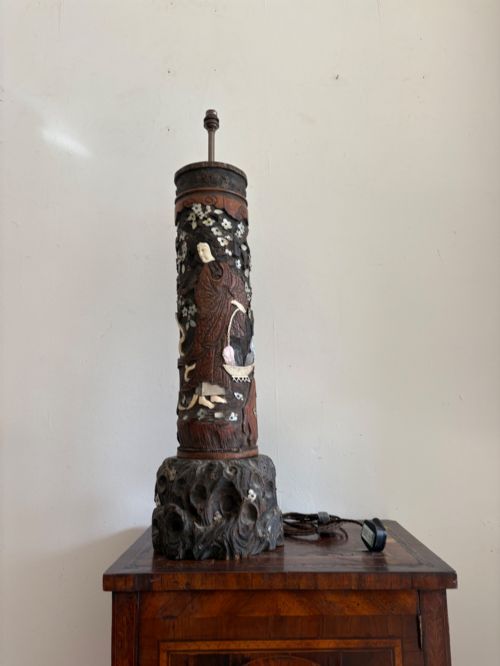
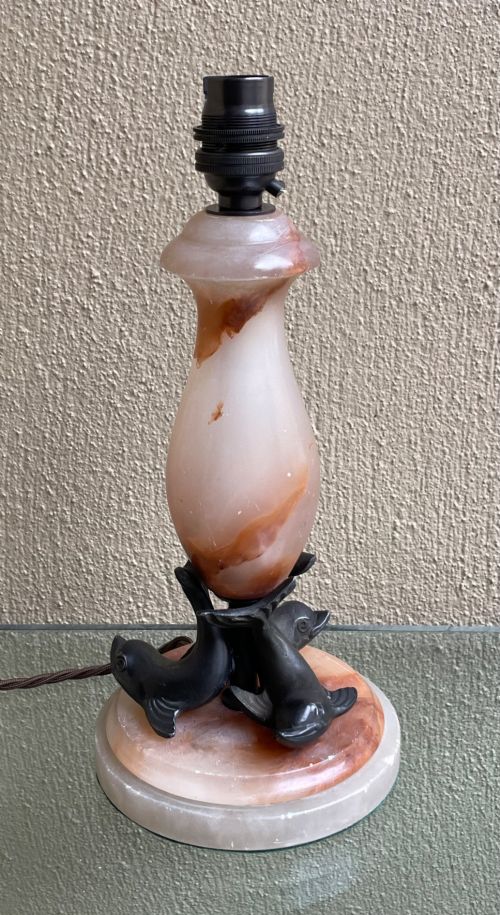
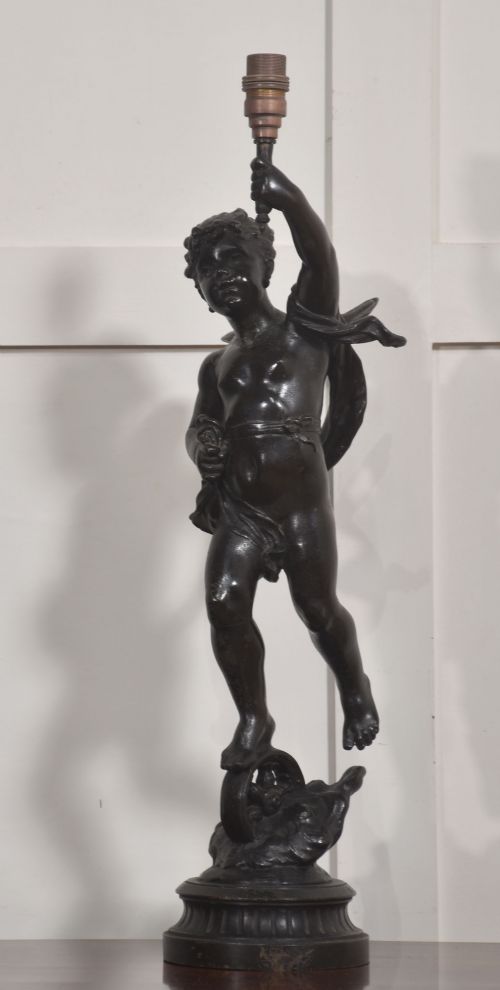
A figurative desk lamp integrates sculpted subjects into a functional lighting piece, drawing on Victorian novelty, Japanese Meiji, Art Nouveau and Art Deco aesthetics. These pieces depict animals, birds, cherubs, athletes, musicians and historical figures cast in metal or carved from wood and stone.
The most common interpretations span late nineteenth-century bronze cherubs and Japanese carvings alongside twentieth-century spelter dancers, athletes and animals mounted on marble bases. Each piece turns a utilitarian table lamp into a narrative sculpture.
Origins stretch from European foundries in France and Germany to Asian workshops, encompassing diverse cultural styles from Chinese Qing Dynasty motifs to French Chateau and Japanese Meiji period craftsmanship.
Materials and construction methods
Foundries cast figures in bronze, spelter and brass, often applying patination to accentuate the sculpted musculature, drapery or feathers. Spelter serves as a lighter alternative to bronze, frequently paired with marble bases to provide stability.
Carvers shaped natural media including wood, root wood, mother of pearl and alabaster, preserving organic grain and texture in brush pots and animal forms. Porcelains were fired and glazed by factories like Ernst Bohne & Sohn to create detailed animal lamps.
Lighting components integrated with glass elements, such as opaline or frosted shades, alongside fabric elements to diffuse the illumination cast by the sculptural figures.
A porcelain owl lamp by Ernst Bohne and Sohn keeps watch alongside a seagull caught mid-wave on an Art Deco base.
Distinguishing quality across periods
Materials contribute significantly to a piece's standing, with heavy patinated bronze, solid marble bases and carved alabaster representing a higher grade of manufacture than lighter, unweighted metal alloys.
Artistic expression varies from generic decorative items to highly evocative narrative compositions, such as athletes in motion, animals in natural poses, or distinct cultural figures.
Ivan Zaiec·Ernst Bohne Sohn
The Figurative Desk Lamp Glossary
- Spelter
- A zinc alloy commonly used as a cost-effective substitute for bronze in nineteenth and twentieth-century figurine production. It takes patination well to simulate heavier metals.
- Patina
- The surface sheen or colour acquired by metal through age or chemical treatment. A well-preserved patina highlights the relief work on bronze and brass lamps.
- Opaline glass
- A type of semi-translucent milky glass often used for lamp shades in the nineteenth century. It diffuses light softly around the sculptural base.
- Alabaster
- A fine-grained, translucent stone used for carving decorative objects and lamp bases. Its natural veining catches the glow of the bulb.
- Meiji Period
- The era in Japanese history spanning from eighteen sixty-eight to nineteen twelve, known for intricate carved works and decorative arts exported to the West.
Figurative Desk Lamp: Frequently Asked Questions
How do I date a figurative lamp?
Dating relies on stylistic markers such as Victorian novelty details, Art Nouveau whiplash curves or geometric Art Deco lines. Material choices and mounting styles also help place a piece within its proper decade.
Examining the base construction and wiring channels provides further clues to the manufacturing period.
What is spelter?
Spelter is a zinc-based alloy frequently employed for European decorative figures during the late nineteenth and early twentieth centuries. It allowed makers to produce intricate castings at a lower cost than bronze.
These figures are typically heavier than hollow tin and are often mounted on marble or slate bases for stability.
Are these lamps signed?
Some pieces bear artist signatures, foundry marks or manufacturer stamps on the base or lower edge of the casting. Signed works by makers like Ivan Zaiec or factories such as Ernst Bohne and Sohn appear occasionally.
Many decorative pieces remain unsigned, identified instead by their regional style and period casting techniques.
Where should I place these lamps?
These lamps function well on desks, side tables or mantelpieces where their sculptural qualities can be appreciated from multiple angles. They provide ambient or task lighting while serving as decorative focal points.
Pairing them with neutral backgrounds allows the detailed metalwork or carved wood to stand out in a room.