

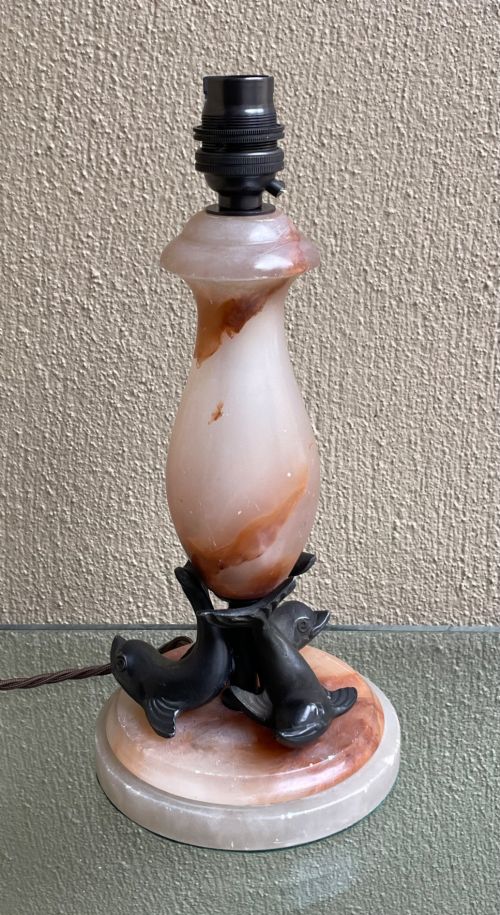


Figurative Art Lamp
A figurative art lamp brings character and illumination together, blending sculptural human or animal forms with functional lighting from the early twentieth century.
Figurative Art Lamp
When someone searches for a figurative art lamp, they encounter sculptural lighting pieces that blend practical illumination with distinct human, animal, or narrative subjects. The selection on this page centres heavily on the Art Deco and Art Nouveau periods, spanning table lamps and floor lamps created across the early decades of the twentieth century.
Buyers are most likely to meet depictions of animals and human figures, ranging from athletic studies and dancers to playful dogs, dolphins, and historical scenes. These pieces originate largely from French workshops and European traditions, capturing the artistic tastes of the nineteen-hundreds to the nineteen-forties.
How They Were Made
These pieces rely on a combination of cast metals, carved stone, and glass, utilising materials such as spelter, brass, bronze, marble, alabaster, and onyx for the structural bases and sculptural bodies. Makers cast metal figures using traditional methods and mounted them securely onto heavy mineral plinths to support the overall weight.
Surfaces received patination or applied finishes to highlight the sculptural details of the subjects, while glass components provided the luminous elements for the lamps and night lights.
Figurative Art Lamp Retail Price Guide 2026
Typical asking prices for figurative art lamp among the pieces listed under this phrase on Sellingantiques today, from the lower quarter to the upper quarter. They describe what is for sale here now, not the wider market.
Current listings span the decades from nineteen hundred to nineteen forty, featuring materials such as glass, marble, and patinated metal.
What Varies in Quality
The choice of base materials also distinguishes the range, with solid carved alabaster or substantial marble plinths indicating a higher tier of production compared to simpler metal mountings.
Argilor Paris·Ivan Zaiec
The Figurative Art Lamp Glossary
- Spelter
- A zinc alloy commonly used as an economical alternative to bronze for casting decorative sculptures and lamp bases during the early twentieth century. It accepts patination well to resemble more costly metals.
- Patinated Metal
- Metal surfaces treated with chemical solutions to produce a specific colour, tone, or aged appearance. This technique enhances the depth and visual contrast of figurative casts.
- Alabaster
- A fine-grained, translucent stone utilised for carved lamp bodies and bases that allow soft light to diffuse through the material. It was favoured during the Art Deco period for its smooth texture.
- Art Deco
- A design style spanning the nineteen-twenties and nineteen-thirties characterised by stylised geometric forms, streamlined silhouettes, and modern materials. It heavily influences the majority of the lamps listed here.
Figurative Art Lamp: Frequently Asked Questions
What is a figurative art lamp?
A figurative art lamp is a functional lighting piece that incorporates a sculpted human, animal, or narrative subject into its design.
These objects serve simultaneously as interior sculptures and sources of illumination.
How do I date these lamps?
Dating relies on identifying the stylistic markers of periods such as Art Nouveau or Art Deco, alongside the materials employed.
Consulting the manufacturing techniques and recorded dates associated with specific subjects provides further chronological context.
Where were these lamps made?
The pieces originate predominantly from European workshops, with a strong representation of French design houses and regional makers.
Craftsmen across the continent produced these works using local stones and metal foundries.
How do I care for marble bases?
Marble and stone bases require gentle cleaning with a dry or slightly damp cloth to preserve the surface finish.
Harsh chemical cleaners should be avoided to prevent damage to the natural grain and patination.