

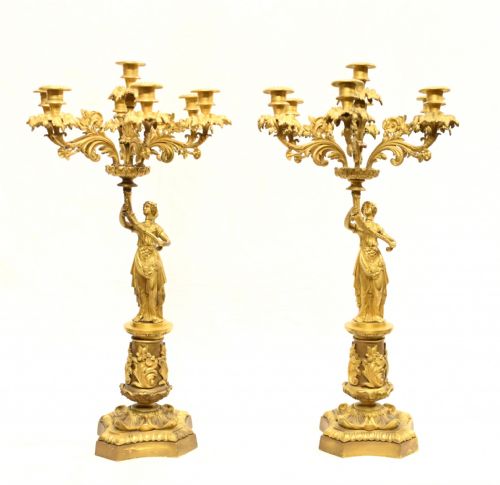


Figural Brass Candle Holders
Figural brass candle holders combine sculpture and utility, bringing historic character and expressive metalwork to any mantel or table.
Figural Brass Candle Holders
Figural brass candle holders present human, animal or mythical subjects cast in metal to support one or more candles. When searching for figural brass candle holders, collectors encounter sculptural forms ranging from single candlesticks to multi-branch candelabra.
The pieces on this page span the nineteenth century into the early twentieth century, taking shape through distinct historical revivals. Buyers frequently find Victorian Renaissance Revival, French Rococo, Empire, Gothic, and Black Forest interpretations.
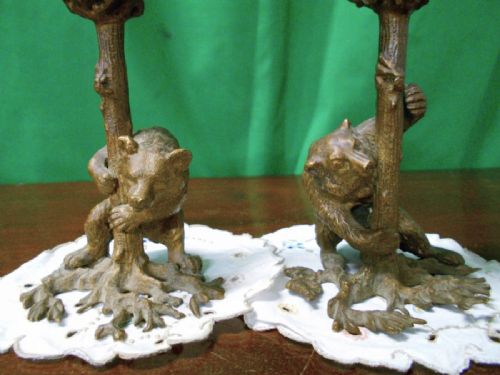
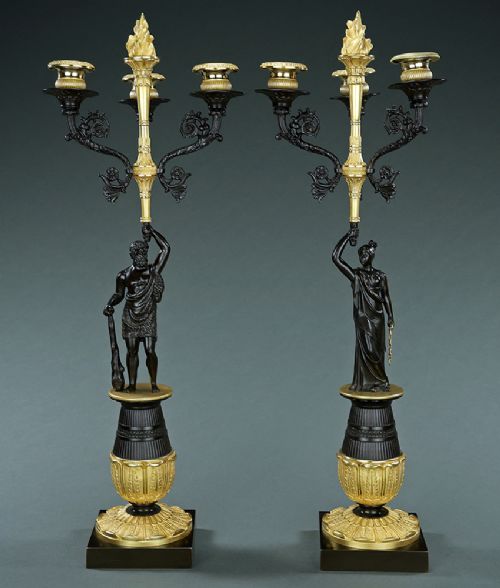
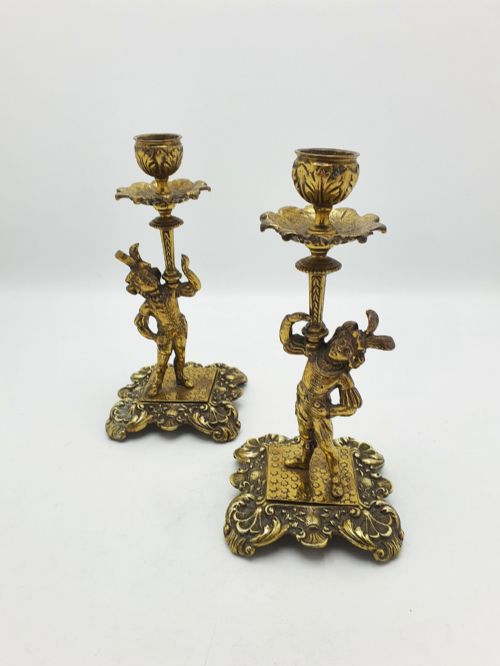
Forms include single candlesticks with dancing cherubs or bears alongside paired candelabra featuring maidens, Hercules, and heraldic figures. These objects bridge decorative bronze sculpture and functional domestic lighting from earlier eras.
How they were made
Surface finishing involved manual chasing, parcel gilding, and applying patination to heighten contrast across the figures and bases. Elements such as marble sometimes provided stable plinths for heavier bronze and brass compositions.
Figural Brass Candle Holders Retail Price Guide 2026
Typical asking prices for figural brass candle holders among the pieces listed under this phrase on Sellingantiques today, from the lower quarter to the upper quarter. They describe what is for sale here now, not the wider market.
Listings feature items spanning the 19th Century, 1880, 1900, and 1920, incorporating materials such as marble, ormolu, and patinated bronze.
What varies in quality
The sophistication of the surface treatment distinguishes better pieces, whether through the rich warmth of ormolu, carefully managed patination, or precise parcel gilding. Heavier, more substantial metalwork and integrated marble bases also signal higher production standards.
The Figural Brass Candle Holders Glossary
- Ormolu
- Gilded bronze produced by applying a mercury and gold amalgam to base metal and firing it. This finish yields a warm, enduring golden lustre characteristic of fine decorative pieces.
- Candelabra
- A branched candlestick holding multiple lights on a single base. These fixtures often incorporate elaborate figural shafts and arms.
- Patinated bronze
- Bronze treated with chemicals, heat, or acids to produce a specific surface colour or dark tone. This process highlights sculptural details and contrasts with gilt highlights.
- Parcel gilt
- An object partially covered in thin gold leaf or gilt, leaving parts of the underlying bronze or brass exposed. The technique accentuates specific decorative motifs.
- Rococo Revival
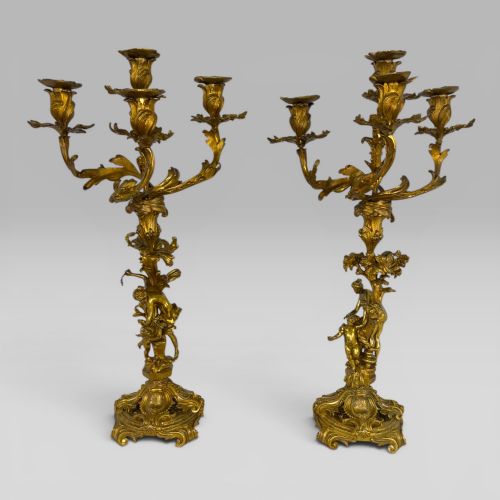
- A nineteenth-century design style reviving the asymmetrical scrolls, naturalistic forms, and shell motifs of the eighteenth century. Figures within this style often include cherubs and floral elements.
Figural Brass Candle Holders: Frequently Asked Questions
What periods do these pieces date from?
The pieces available here primarily date from the nineteenth century, including specific years like 1880, up to the early twentieth century around 1920. They reflect nineteenth-century revivals of earlier historical styles.
Craftsmen drew upon Renaissance, Baroque, Rococo, Empire, and Gothic vocabularies to shape these sculptural metal objects.
How were figural candle holders used historically?
Historically, these holders provided functional illumination in domestic interiors before electric lighting became common. Wealthy households placed them on dining tables, sideboards, and mantelpieces.
Beyond practical lighting, they served as sculptural decorative art displaying the owner's taste and the maker's technical skill.
What metals are used in these items?
Makers utilised brass, cast brass, bronze, gilt bronze, patinated bronze, and ormolu for these objects. Some pieces also incorporate marble elements for weight and contrast.
Surface finishes vary from polished brass to dark patination combined with partial gilding.
How do I distinguish between different revival styles?
Revival styles are identified through their distinct decorative motifs and sculptural themes. Rococo pieces feature cherubs, scrolls, and naturalistic asymmetry, while Empire designs draw upon classical antiquity and figures like Hercules.
Gothic and Renaissance revivals utilise architectural elements, heraldry, and formal symmetry.