




February Birthstone Jewellery Gold
February birthstone jewellery gold brings together rich purple amethyst and warm precious metal across rings, earrings, and necklaces.
February Birthstone Jewellery Gold
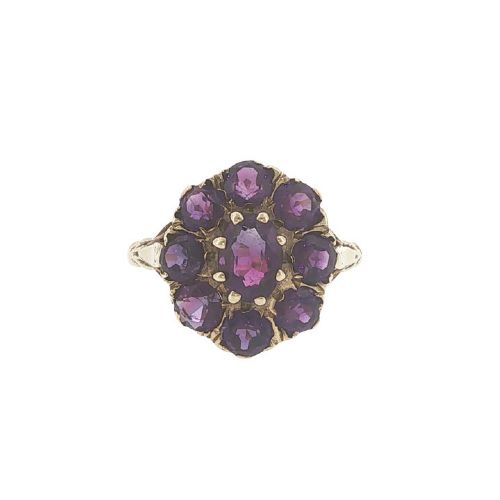
February birthstone jewellery gold centres on the deep purple gemstone amethyst set within gold mountings. Pieces appearing on this page span several decades from the Edwardian era through the nineteen fifties, nineteen sixties, and later periods.
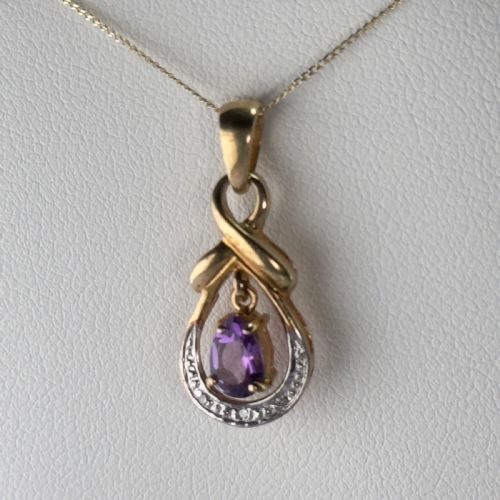
Rings form a substantial portion of the selection, including classic solitaire settings, multi-stone bands, cluster designs, and halo arrangements. Necklaces, pendant necklaces, and various styles of earrings complete the offering.
Yellow gold provides the traditional warm setting for these stones, while white gold and nine carat variations also appear. Gemstone cuts include emerald, pear, and oval alongside standard faceting.
Materials and Construction
The metalwork relies predominantly on nine carat gold, utilised in both yellow and white varieties to support the stones securely. Amethyst serves as the primary gemstone across the selection.
Diamonds and seed pearls frequently accompany the central amethyst in cluster, halo, and dress configurations. Stones are shaped into emerald, oval, and pear cuts to catch the light within traditional and vintage mountings.
Amethyst was once valued as highly as ruby and emerald before large deposits were discovered in Brazil.
Quality and Craftsmanship
The standard of February birthstone jewellery gold depends heavily on the depth of colour within the amethyst and the precision of its cutting. Emerald and oval cuts with strong saturation stand apart from paler stones.
Mounting construction and the integration of supporting diamonds or seed pearls influence the overall finish of rings, earrings, and pendants. Hallmark clarity and metal weight also mark the distinction between standard and finer examples.
The February Birthstone Jewellery Gold Glossary
- Amethyst
- A purple variety of quartz that serves as the traditional birthstone for February. Its hue ranges from pale lilac to deep violet.
- Halo ring
- A central gemstone encircled by a ring of smaller accent stones, such as diamonds or seed pearls. This setting enhances the visual presence of the primary gem.
- Cluster ring
- A jewellery design featuring a group of gemstones clustered closely together. Amethyst often forms the centrepiece surrounded by diamonds.
- Solitaire
- A single gemstone set on its own in a ring or pendant. Emerald cut amethysts frequently appear in this simple mounting style.
- Seed pearl
- A very small natural pearl, often round or slightly irregular, used historically in Edwardian halo and cluster settings.
February Birthstone Jewellery Gold: Frequently Asked Questions
What periods do these pieces date from?
The selection includes pieces from the Edwardian era, nineteen forties, nineteen fifties, and nineteen sixties. Later vintage examples also feature among the listings.
Each period brings distinct mounting styles and setting techniques to the gold and amethyst combinations.
What metals are used in this jewellery?
Gold forms the primary metal framework for these items, predominantly in nine carat yellow gold and white gold. These metals provide durable mountings for everyday wear.
Coloured gold contrasts or harmonises with the purple tones of the set amethysts.
How do I care for my amethyst jewellery?
Amethyst is a durable quartz, but it benefits from gentle cleaning with warm soapy water and a soft brush. Avoid harsh chemical cleaners and ultrasonic devices.
Store gold rings and necklaces separately to prevent scratching against other pieces in your collection.
Are diamonds combined with the amethyst?
Diamonds frequently appear as accent stones alongside amethysts in cluster rings, drop earrings, and pendant necklaces. They add sparkle that contrasts with the purple quartz.
Seed pearls also serve as traditional accent stones in Edwardian halo designs.