





Featherbanded Walnut Tallboy
A featherbanded walnut tallboy stands as a masterwork of early eighteenth-century cabinetry, offering layered storage and rich figuring.
Featherbanded Walnut Tallboy
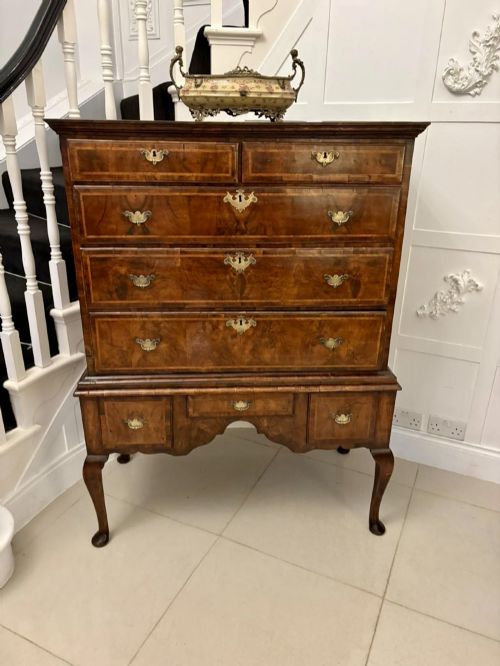
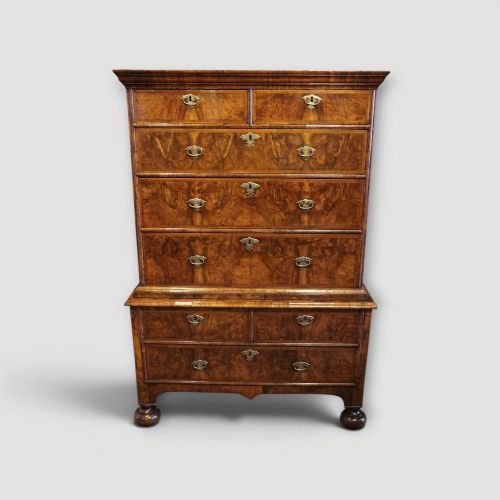
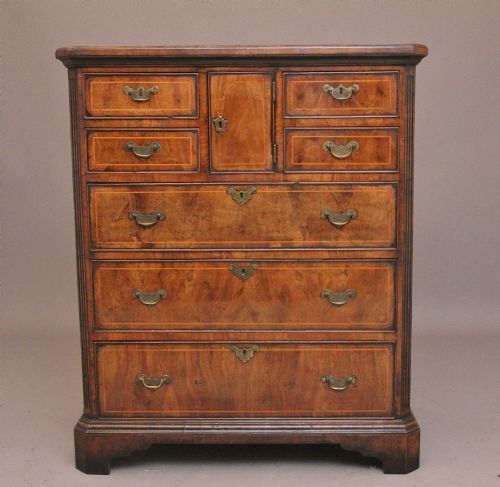
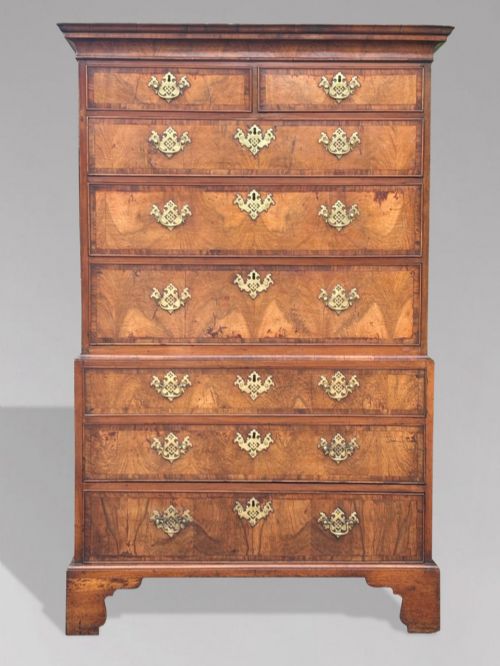
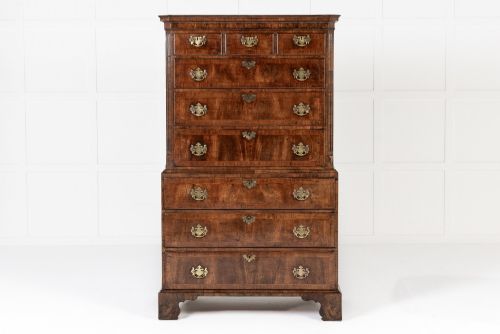
A featherbanded walnut tallboy brings together tall chests of drawers, cabinets on chests, and chests on stands from the late seventeenth century through the Georgian era. These pieces provide substantial tiered storage while displaying the warm grain of walnut.
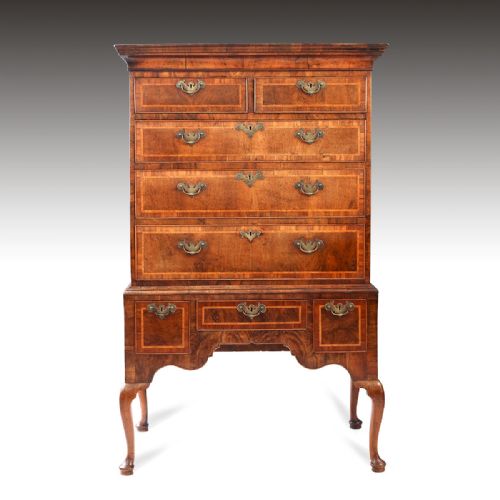
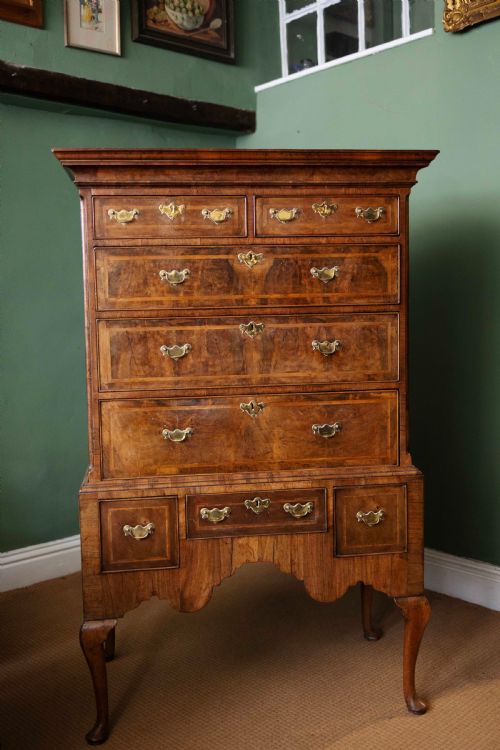
The versions most often met on this page date from the Queen Anne, George I, and George II periods, constructed in two distinct sections or raised upon cabriole legs. Their scale ranges from small proportions to imposing double-part chests.
Makers utilised oak and pine as secondary timbers beneath the decorative exterior, combining utility with formal elegance.
How they were made
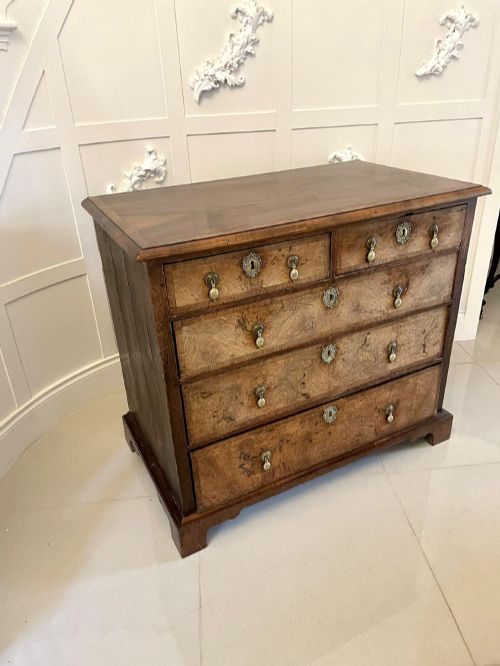
Craftsmen applied walnut veneer and burr walnut veneer over solid carcases of oak, pine, and walnut, cutting the timber to create symmetrical grain patterns across the drawer fronts.
Delicate featherbanding borders the drawer edges, enclosing the main panels within contrasting banded lines that demand precise woodworking skill.
Original mounts incorporate brass handles and escutcheons, secured to the timber to operate the drawers within the stacked or standing framework.
Featherbanded Walnut Tallboy Retail Price Guide 2026
Typical asking prices for featherbanded walnut tallboy among the pieces listed under this phrase on Sellingantiques today, from the lower quarter to the upper quarter. They describe what is for sale here now, not the wider market.
Materials recorded across the inventory include solid walnut, burr walnut veneer, oak, pine, and brass.
What varies in quality
Quality rests upon the choice of burr or figured walnut veneer and the exactness of the featherbanding, where sharper contrast and continuous grain alignment elevate the piece.
The integrity of the two-part construction, the proportion of the stand or lower chest, and the retention of original brass hardware distinguish finer examples from altered pieces.
The Featherbanded Walnut Tallboy Glossary
- Featherbanding
- A decorative inlay technique using two strips of veneer cut diagonally to meet along a central line, creating a herringbone or feather-like pattern around drawer perimeters.
- Tallboy
- A tall chest of drawers, often formed as a chest on chest or a chest on stand, providing multi-level storage.
- Burr walnut
- Timber taken from a tree growth or burl, yielding swirling, highly figured grain patterns prized for principal surfaces.
- Cabriole leg
- A furniture leg that curves outward and then tapers inward, typical of Queen Anne and early Georgian stands.
- Chest on chest
- A two-part storage unit comprising an upper chest placed directly on a slightly wider lower chest of drawers.
Featherbanded Walnut Tallboy: Frequently Asked Questions
What is a featherbanded walnut tallboy?
A featherbanded walnut tallboy is a tall chest of drawers or cabinet piece decorated with precise banded veneers around the drawer borders.
These pieces originate mainly from the late seventeenth and eighteenth centuries, taking forms such as chests on chests or chests on stands.
How do I date a walnut tallboy?
Dating relies on stylistic markers such as cabriole legs, bracket feet, and the configuration of the drawer sections.
Early pieces align with the William and Mary, Queen Anne, and George periods, showing specific construction methods in the secondary timbers.
What timber is beneath the walnut veneer?
Cabinetmakers used secondary woods like oak and pine for the internal carcases and drawer linings of these tallboys.
Walnut and burr walnut veneers were applied to the visible exterior surfaces to create rich decorative patterns.
Are these tallboys made in two parts?
Many examples are constructed in two distinct sections to allow for easier transport and placement within a room.
This includes chests on chests and cabinets on chests that stack securely together.