





Featherbanded Tallboy
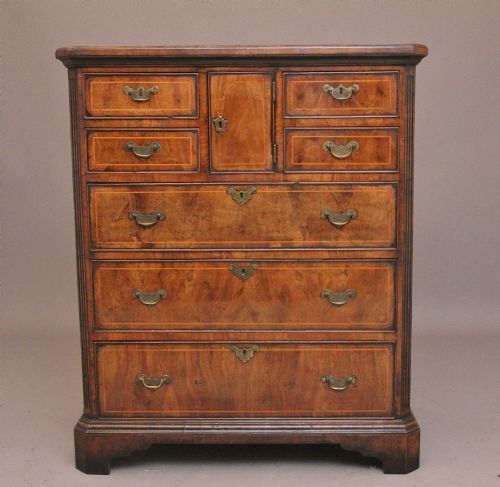
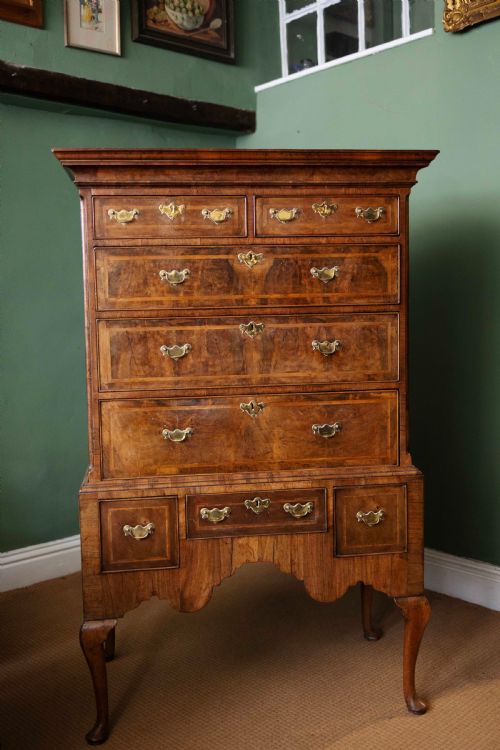
These walnut featherbanded tallboy pieces combine serious storage capacity with exquisite timber figuring, offering an imposing yet elegant presence for traditional interiors.
Featherbanded Tallboy
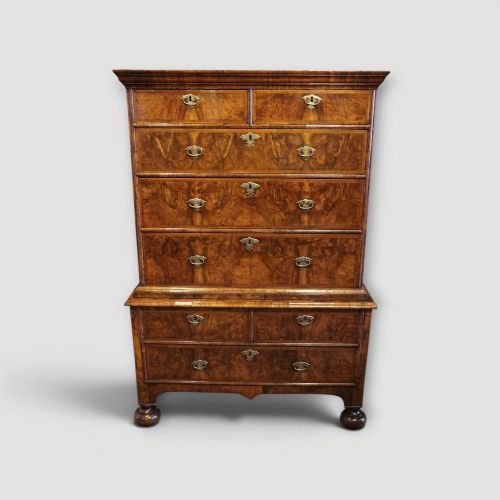
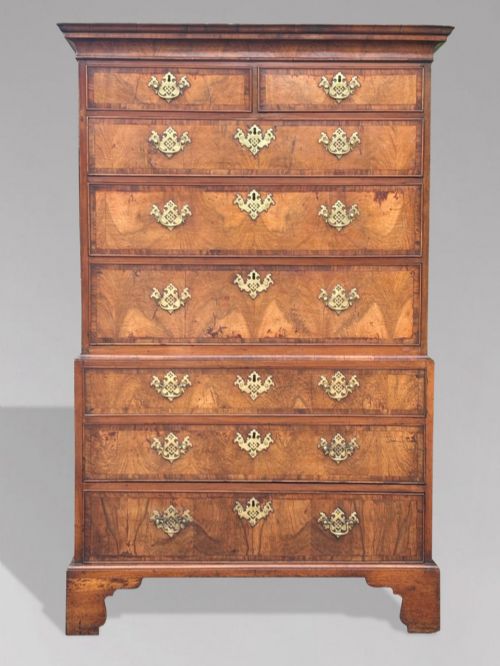
A featherbanded tallboy provides significant vertical storage by stacking drawers in two sections or mounting a chest on a stand or lower cabinet base. These striking storage items emerge primarily from the early eighteenth century, spanning the Queen Anne, George I, and George II periods.
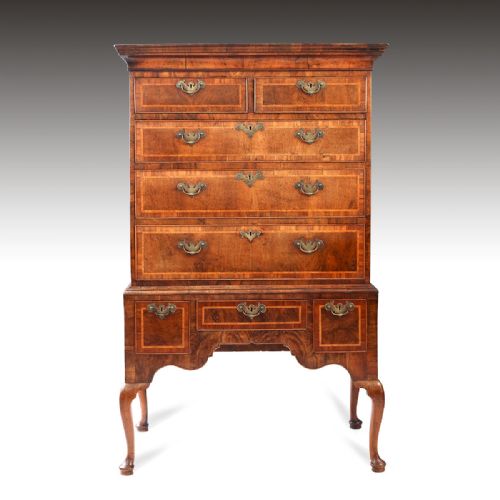
The versions most commonly met on this page are walnut chests on chests and chests on stands, often constructed in two separate parts for ease of movement. Makers frequently incorporated oak and pine as secondary timbers alongside the primary walnut veneers.
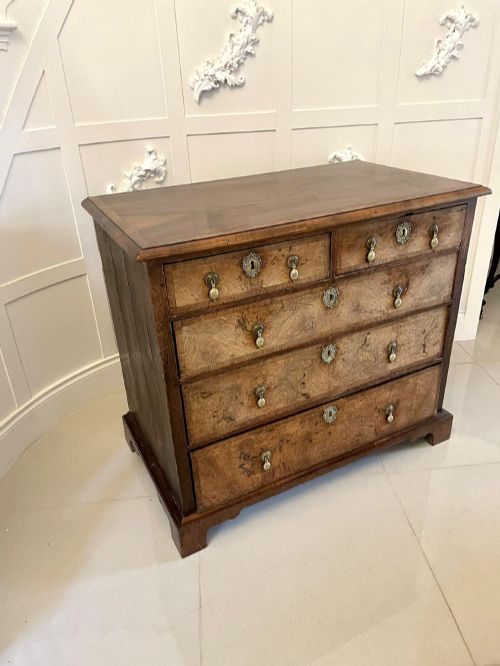
Tall chests of drawers also appear from later revival eras, notably around nineteen twenty, alongside pieces dated to seventeen fifty and seventeen hundred. The typical configuration uses multiple graduated drawers to deliver substantial interior volume while maintaining a slender footprint.
Materials and construction methods
Cabinet makers utilised choice burr walnut and walnut veneer laid over solid oak and pine carcases, creating intricate grain patterns across the drawer fronts. This technique required expert timber selection to ensure the decorative veneers remained stable over centuries of use.
Brass handles and escutcheons were fitted to the drawer faces, complementing the warm tones of the timber and providing functional hardware. Joinery details include construction in two distinct sections and the integration of cabriole legs on specific stand variations.
Featherbanded Tallboy Retail Price Guide 2026
Typical asking prices for featherbanded tallboy among the pieces listed under this phrase on Sellingantiques today, from the lower quarter to the upper quarter. They describe what is for sale here now, not the wider market.
Listings feature walnut, burr walnut veneer, oak, brass, and pine across eighteenth-century periods including George I and George II.
Distinctions in quality
Superior examples display exceptional figuration in the burr walnut veneer, where the grain matches symmetrically across the drawer fronts and borders. Lesser pieces may show uneven timber selection or heavier modern restoration to the surface polishes.
Proportion and scale dictate the desirability of a piece, with smaller proportions and refined cornice mouldings commanding greater attention. The integrity of the original brass handles and the crispness of the featherbanding further separate standard items from the finest survivals.
The Featherbanded Tallboy Glossary
- Featherbanding
- A decorative inlay technique using small strips of veneer arranged in a V-shape pattern to frame drawer fronts and tabletops. This precise banding creates a distinctive herringbone effect that highlights the craftsmanship of the period.
- Chest on Chest
- A tall storage unit formed by stacking one set of drawers directly on top of another, often called a tallboy. The upper section is typically narrower than the lower base.
- Chest on Stand
- A drawer carcase raised off the floor on a separate open frame or stand, frequently featuring cabriole legs. This form lightens the visual weight of the storage furniture.
- Cabinet on Chest
- A multi-tiered storage form combining an enclosed upper cabinet with a lower chest of drawers base. These pieces offer varied internal compartments behind the primary doors.
- Cabriole Leg
- A furniture leg that curves outward at the knee and tapers inward toward the ankle, ending in a foot. This stylistic element appears frequently on early eighteenth-century stands.
Featherbanded Tallboy: Frequently Asked Questions
What is a featherbanded tallboy?
A featherbanded tallboy is a tall storage chest featuring decorative banding around the drawer edges, typically constructed in two stacked sections during the eighteenth century.
These pieces combine walnut veneers with oak or pine carcases to deliver substantial vertical drawer space while serving as decorative focal points.
How were these tallboys used?
These tall chests served primarily for storing garments, linens, and personal valuables within domestic bedchambers and dressing rooms.
The stacked drawer configuration allowed households to organise belongings efficiently within a relatively compact floor area.
How do I date a walnut tallboy?
Dating relies on examining the construction methods, timber choices, and hardware styles, comparing them against known periods like Queen Anne and George II.
Early eighteenth-century pieces often feature two-part carcases, walnut veneers, and specific handle designs that evolved across the seventeen hundreds.
How do I care for walnut veneer?
Protect antique walnut veneer by maintaining stable room temperatures and avoiding direct sunlight that can dry out the timber and finish.
Apply occasional appropriate wax polish to nourish the wood surface and preserve the depth of the grain without using harsh modern chemical cleaners.