



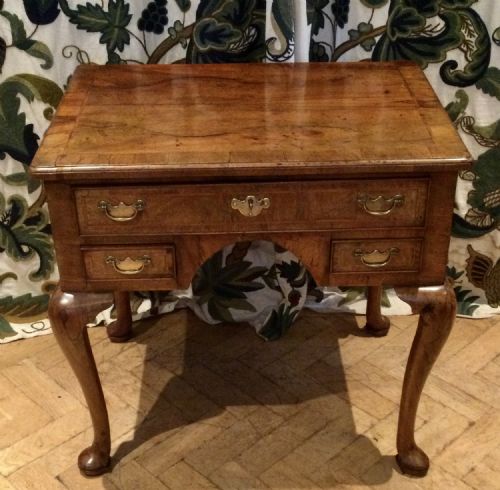
Feather Banded Dressing Table
A feather banded dressing table brings together crisp decorative stringing and rich timber, offering a practical surface with deep historical roots.
Feather Banded Dressing Table
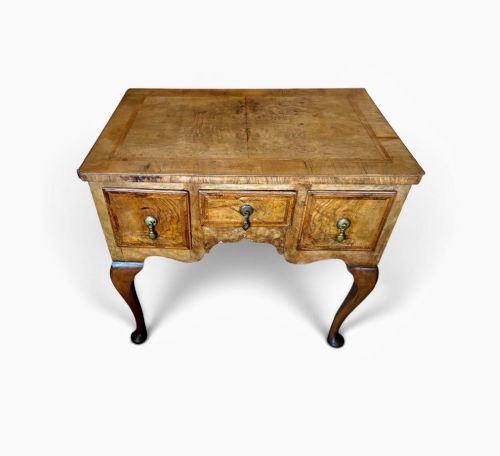
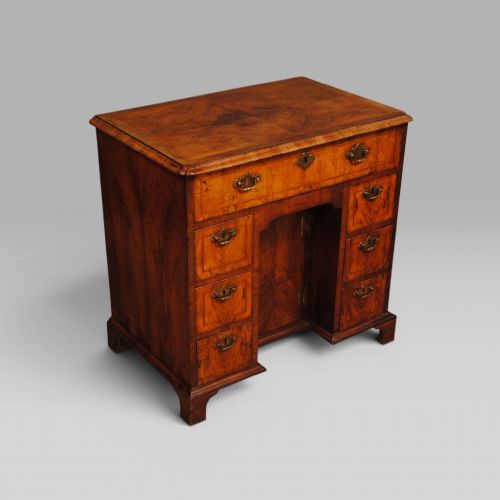
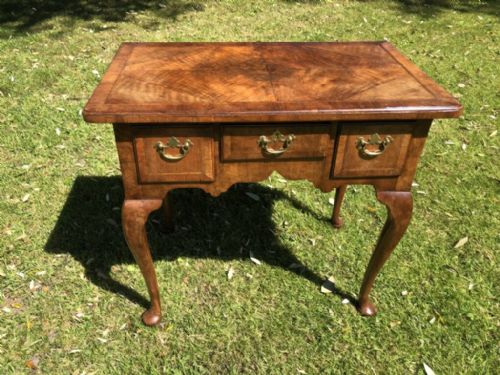
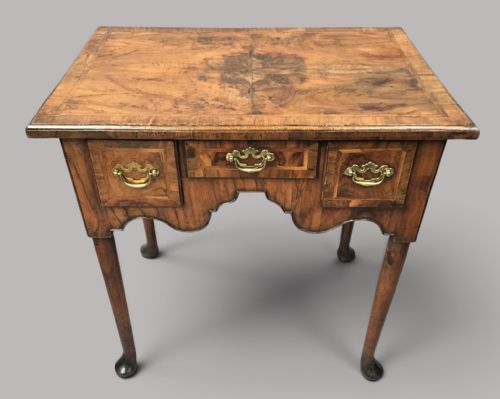
A feather banded dressing table connects directly to lowboys, side tables, and kneehole desks from the eighteenth century onwards. These forms serve as compact writing or dressing surfaces, often featuring multiple drawers arranged around a central kneehole or frieze.
The pieces on this page span several key eras, running from the early eighteenth century through the Georgian period into Edwardian revivals. Walnut and burr walnut dominate the examples, accompanied by occasional oak and brass hardware.
Makers and designers from the George I and George II periods established the classic proportions seen in these items. Later Edwardian pieces draw heavily on Queen Anne Revival aesthetics to recreate the same figured timber surfaces.
How they were made
Cabinetmakers constructed these tables using solid oak for internal framing and secondary timbers, applying figured walnut and burr walnut veneers to the primary display surfaces. The distinctive feather banding relies on precise diagonal cutting of veneer strips to create a herringbone pattern around the drawer edges.
Traditional brass handles and escutcheons secure the drawer fronts, fixed with pins or posts through the timber. Joinery methods involve hand-cut dovetails on the drawer boxes and pegged mortise and tenon frames.
Feather Banded Dressing Table Retail Price Guide 2026
Typical asking prices for feather banded dressing table among the pieces listed under this phrase on Sellingantiques today, from the lower quarter to the upper quarter. They describe what is for sale here now, not the wider market.
Secret drawers hidden behind faux fronts occasionally wait inside kneehole desks, giving quiet storage to people who love tiny hidden compartments.
What varies in quality
The refinement of the burr walnut figuring dictates the visual impact of the top surface, where tighter patterns demand superior timber selection. Early examples display more harmonious proportions in the overhang and leg placement.
Originality of surface finish and hardware elevates certain items, as untouched patination reveals the grain more honestly than later refurbishment. The crispness of the feather banding around small drawer perimeters also separates meticulous workshop production from simpler work.
The Feather Banded Dressing Table Glossary
- Feather banding
- A decorative inlay technique using two strips of veneer laid diagonally to meet at a central axis, creating a herringbone or feather-like border around drawer fronts and tabletops. This detail defines the classic aesthetic of the period.
- Lowboy
- A small table with one or more rows of drawers, commonly used as a dressing table or side table during the eighteenth century. It sits on four legs, often cabriole in shape.
- Burr walnut
- Timber sliced from the abnormal growth or burl of a walnut tree, prized for its swirling, highly figured grain patterns. Cabinetmakers used it primarily as veneer on prominent surfaces.
- Kneehole desk
- A compact desk featuring a recessed central space for the knees, flanked by pedestals of small drawers. These pieces often incorporate a concealed drawer or compartment beneath the top.
- Escutcheon
- A protective plate surrounding a keyhole, usually cast in brass and secured to the drawer front. It serves both a functional purpose and a decorative role.
Feather Banded Dressing Table: Frequently Asked Questions
What is a feather banded dressing table?
A feather banded dressing table is a compact surface featuring distinctive herringbone veneer inlay around the drawers. These pieces share forms with lowboys and side tables from the eighteenth century.
They provide a functional workspace or vanity surface while showcasing figured walnut timbers and traditional cabinetmaking techniques from the Georgian era.
How were lowboys used historically?
Lowboys functioned primarily as dressing tables where people sat to groom, write letters, or store small personal items. Their manageable size allowed them to fit easily into bedchambers and smaller parlours.
Over time, owners also repurposed them as side tables or serving surfaces in reception rooms, adapting their compact form to changing household needs.
How do I identify eighteenth century walnut furniture?
Eighteenth century walnut pieces typically display warm timber tones with natural figure variations and patination built up over generations. Construction details like hand-cut dovetails and solid oak linings point to early workshop methods.
Comparing the hardware fixings and secondary woods helps confirm the period against later Edwardian revivals that imitate the same styles.
How do I care for antique walnut surfaces?
Antique walnut requires stable indoor humidity away from direct sunlight and heat sources to prevent the timber from drying out or splitting. Gentle dusting with a soft, dry cloth preserves the finish without harming the historic surface.
Occasional application of appropriate wax feeds the wood and maintains the natural lustre of the burr veneers without creating heavy buildup.