



Faux Marble Top Table
A faux marble top table brings an enduring neoclassical surface to a room without the crushing weight of solid stone.
Faux Marble Top Table
A faux marble top table combines a sturdy wooden base with a simulated stone surface, offering both decorative utility and practical resilience. The pieces found on this page span several centuries, running from the eighteenth century through the Victorian era and into the twentieth.
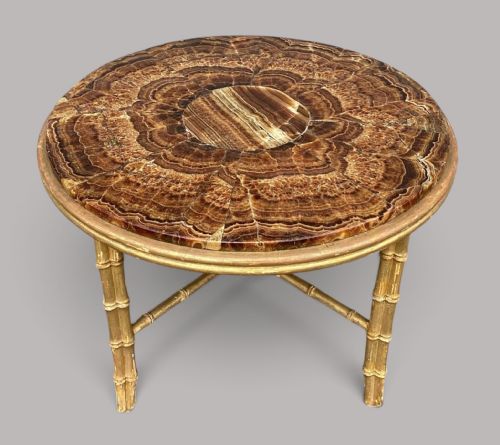
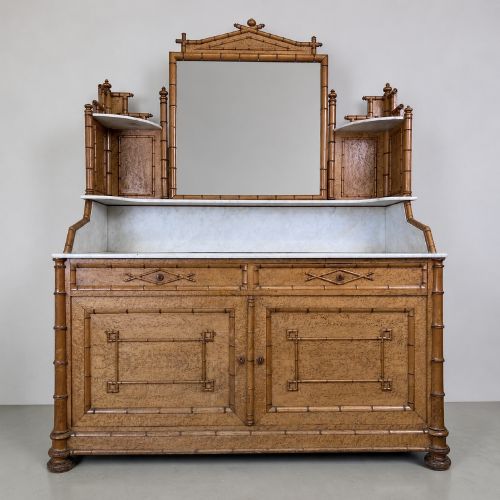
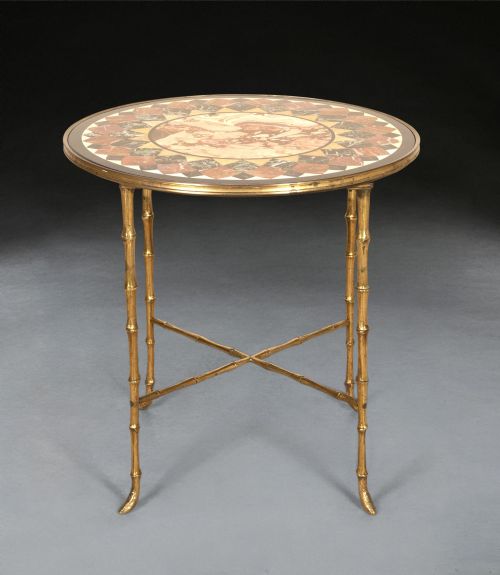
The forms vary widely across the inventory, ranging from washstands and dressing cabinets to console tables, coffee tables, and bedside cabinets. Buyers often encounter pieces dressed in painted pine, giltwood, or the distinctive Japanese-influenced aesthetic of faux bamboo.
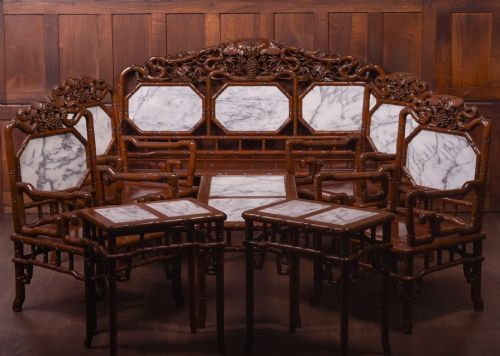
Origins stretch across Europe and beyond, taking in Italian neoclassical console tables, French chateau washstands, and Chinese export pieces. Each maker adapted the simulated stone top to suit the domestic needs of the parlour, bedroom, or hallway.
How they were made
Carpenters constructed the structural frames using native and exotic timbers, shaping pine, hardwood, and bird's-eye maple into slender legs or robust cabinets. Giltwood, brass, and glass frequently appeared on the most decorative nineteenth-century frames and occasional pieces.
The simulated stone finish relied on specialist paint techniques applied to wood or slate to mimic the veining of natural marble or porphyry. Artisans built up layers of pigment to deceive the eye, sealing the painted surface to withstand daily use.
Faux Marble Top Table Retail Price Guide 2026
Typical asking prices for faux marble top table among the pieces listed under this phrase on Sellingantiques today, from the lower quarter to the upper quarter. They describe what is for sale here now, not the wider market.
Listings demonstrate a strong representation of nineteenth-century faux bamboo furniture alongside eighteenth-century neoclassical console tables.
What varies in quality
The fidelity of the painted surface determines the visual success of the piece, distinguishing masterly graining from crude simulation. Skillful execution in the paintwork captures the subtle translucency and depth found in genuine mineral slabs.
Joinery and cabinetmaking standards separate standard utility pieces from high-status furniture. Carved details on giltwood or hardwood frames reflect the ambition of the original workshop.
The Faux Marble Top Table Glossary
- Faux bamboo
- A decorative turning technique where timber is carved to resemble natural bamboo stems, popular during the nineteenth century. This style frequently graced French washstands and dressing tables.
- Neoclassical
- An artistic movement drawing inspiration from the classical art and culture of ancient Greece and Rome. This aesthetic governed the restrained proportions of eighteenth-century console tables.
- Occasional table
- A small, movable table designed for a specific, intermittent domestic use rather than a permanent central position. These versatile items appear often as coffee tables or bedside stands.
- Washstand
- A piece of furniture built to hold a basin and jug for morning ablutions, typically fitted with a water-resistant top. Painted stone surfaces provided a practical defence against splashes.
Faux Marble Top Table: Frequently Asked Questions
Where should I put a faux marble top table?
These tables adapt well to numerous rooms, serving as bedside cabinets, hallway consoles, or low coffee tables in a living space.
Their varied footprints allow them to fit snugly into alcoves or act as focal points beneath mirrors and artwork.
How do I clean a painted faux marble top?
Dust the surface regularly with a soft, dry cloth to prevent the accumulation of grit that might scratch the paint layer.
Avoid harsh chemical solvents or abrasive scourers, using only a damp cloth for gentle cleaning when necessary.
Were these tables used in bedrooms?
Many examples on record functioned as washstands, dressing tables, or pot cupboards in nineteenth-century sleeping quarters.
The water-resistant nature of the painted or polished top made them ideal for daily grooming routines.
How do I distinguish an 18th-century table from a Victorian one?
Look to the overall architectural vocabulary and framing techniques, as eighteenth-century pieces often display neoclassical symmetry and carved pine.
Victorian items frequently embrace exotic finishes like faux bamboo and bird's-eye maple or heavy giltwood ornamentation.