



Faux Book Boxes
Faux book boxes are clever receptacles disguised as volumes that conceal treasures or practical items, combining library discretion with hidden utility.
Faux Book Boxes
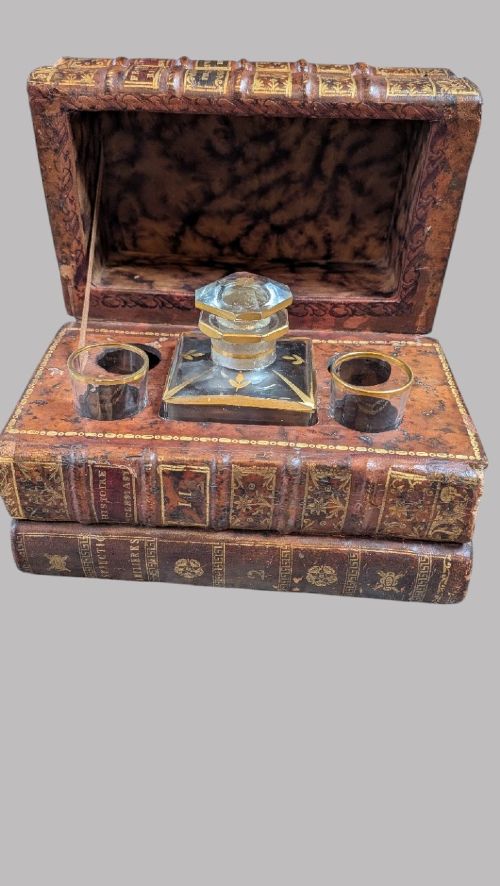
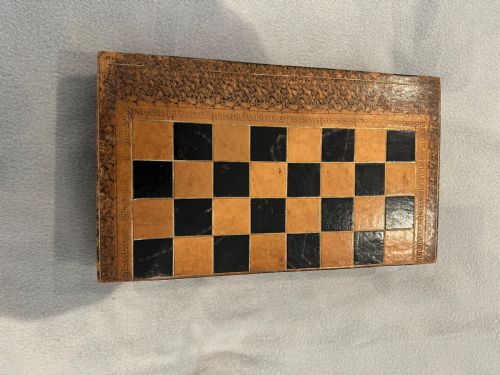
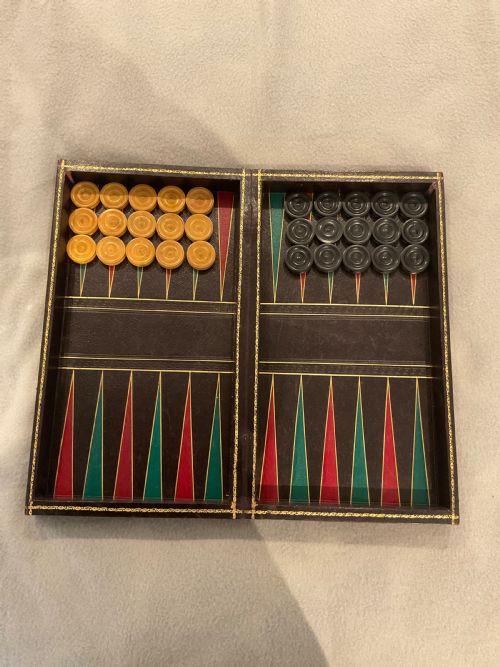
When searching for faux book boxes, collectors encounter cunningly disguised items that serve as games boards, caskets, and safes. These pieces mimic the appearance of genuine literature to keep contents private on a tabletop or desk.
The versions most frequently met on this page span several decades, ranging from Victorian leather-bound volumes to Edwardian and Art Nouveau creations. They take the form of decorative boxes, tabletop cabinets, and games boards.
Origins vary across English, French, and Italian workshops, showing how different cultures approached the disguise. An olive wood box from Sorrento sits alongside traditional English leather bindings and French safes.
Materials and Construction
Maker construction relies heavily on rich leather and solid wood foundations such as mahogany and olive wood. Artisans applied gold leaf tooling to leather spines and covers to simulate real book bindings.
Inlaid marquetry appears on Italian examples, creating intricate surface patterns using contrasting timbers. Brass hardware and locks secure the interior compartments of caskets and miniature cabinets.
Faux Book Boxes Retail Price Guide 2026
Typical asking prices for faux book boxes among the pieces listed under this phrase on Sellingantiques today, from the lower quarter to the upper quarter. They describe what is for sale here now, not the wider market.
Secret book safes prove that Victorians loved hiding their valuables inside fake literature.
Assessing Quality
Quality rests upon the convincing execution of the book disguise and the precision of the internal mechanism. Finer pieces display meticulous leather tooling and genuine gold leaf rather than simpler printed decoration.
The choice of materials dictates the overall calibre, with dense hardwoods and well-fitted compartments marking out superior examples. Marquetry inlay demands high skill, separating standard receptacles from finely detailed works of art.
The Faux Book Boxes Glossary
- Marquetry
- The art of applying small pieces of veneer to a structure to form decorative patterns. This technique appears on Italian olive wood boxes.
- Gold Leaf
- Gold beaten into extremely thin sheets used for gilding leather covers and titles. It provides an authentic sheen to simulated book spines.
- Sorrento
- A town in Italy renowned for distinctive woodwork and marquetry boxes. Pieces from this region often utilise olive wood.
- Casket
- A decorative box used for holding valuables or keepsakes. These often take the form of locked book containers.
- Tabletop Cabinet
- A small storage furniture piece designed to sit on desks or tables. Some examples are disguised as leather-bound volumes.
Faux Book Boxes: Frequently Asked Questions
What were faux book boxes used for?
These disguised receptacles served multiple hidden purposes in period homes. Owners used them to store playing pieces, correspondence, ink stands, or personal jewellery.
By blending into a library shelf or desk arrangement, the containers kept valuable or private items concealed from casual view.
How do I date a faux book box?
Dating relies on observing the materials, binding styles, and decorative motifs present on the piece. Victorian examples often feature heavy leather tooling, while Art Nouveau items display characteristic flowing carved lines.
Regional differences also provide clues, such as Sorrento marquetry work pointing towards early twentieth-century Italian production.
Where should I display a book box?
These items look most appropriate resting among actual volumes on a bookshelf or displayed on a library table. They also function well as decorative desk accessories.
Placing them flat or upright allows the simulated spine and cover details to be appreciated as sculptural objects.
Are all faux book boxes hollow?
Most containers feature an internal cavity accessed by lifting a hinged cover or sliding a panel. Some versions, however, are built to function as folding games boards.
Others house specific accessories like ink wells, transforming a decorative book spine into a functional desk stand.