

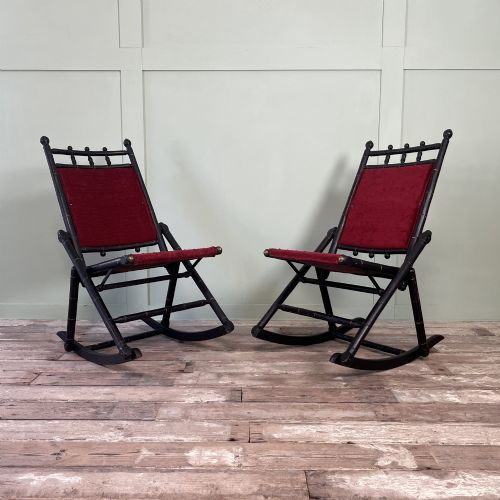


Faux Bamboo Bedroom Chairs
These faux bamboo bedroom chairs bring clever historic mimicry to your room, offering the charm of exotic cane without the structural weakness.
Faux Bamboo Bedroom Chairs
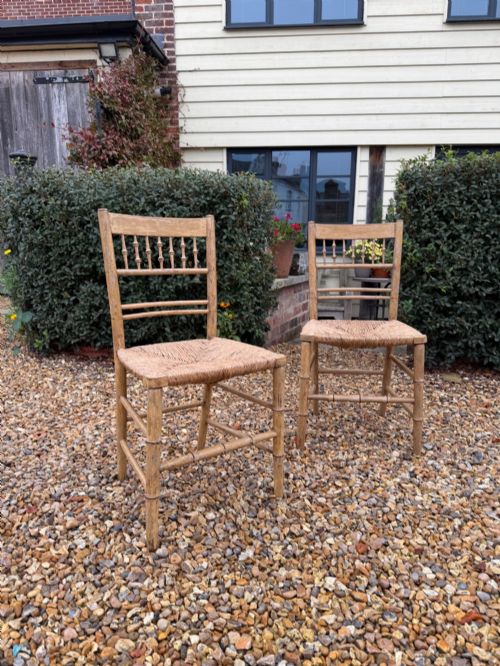
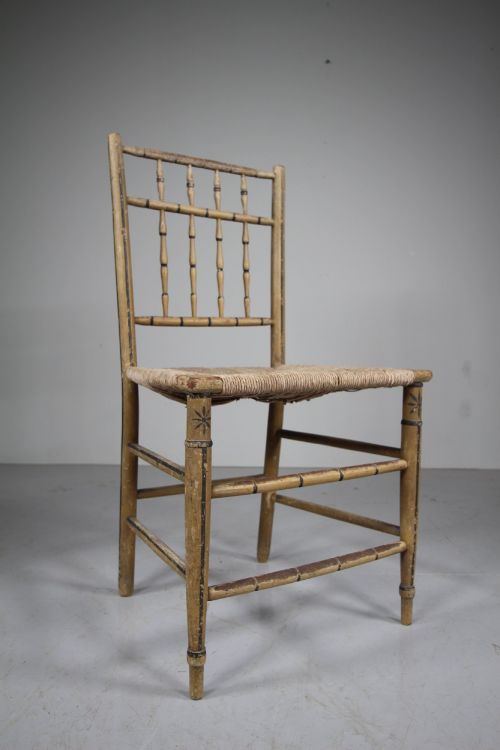
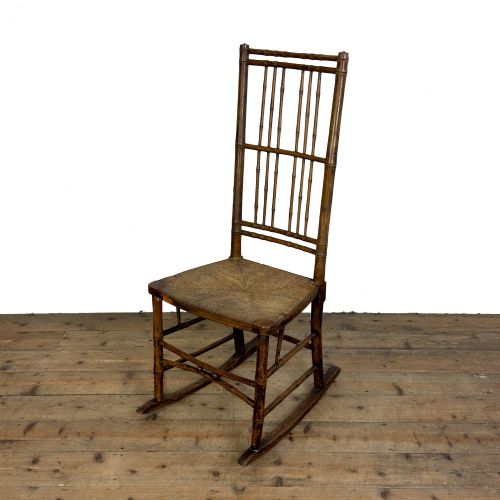
Faux bamboo bedroom chairs are seating forms carved or turned to imitate natural oriental cane, spanning the Regency, Victorian, and Aesthetic Movement periods. The examples on this page primarily take the form of side chairs, armchairs, and rocking chairs.
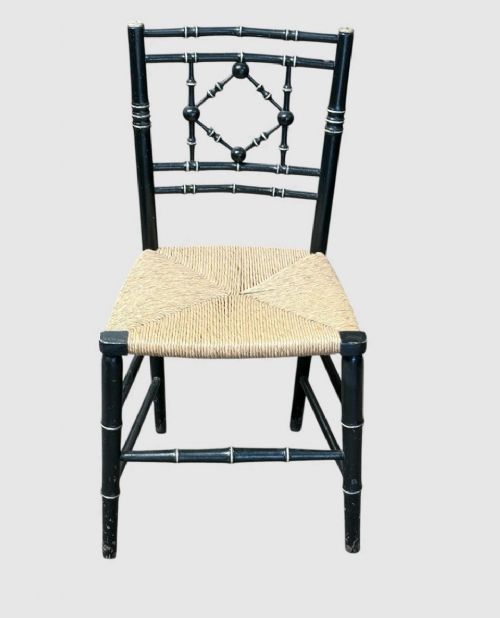
Most pieces you meet here date from the nineteenth century, including Regency originals and later 1880 or 1900 interpretations. Makers utilised wood, pine, and ebonised wood, shaping them into simulated bamboo stems complete with carved joints and rings.
You encounter variations in seating materials, with rush and cane frequently supplementing the wooden frames. French Napoleon III and Chinoiserie influences also appear among these bedroom and hall chairs, reflecting the broader popularity of simulated bamboo.
How they were made
Craftsmen shaped solid wood and pine on a lathe to create the characteristic nodes and segments of natural bamboo. Painters then applied surface finishes, sometimes using ebonised wood or decorative paint schemes to complete the illusion.
Seats were frequently laced with woven rush or cane to maintain the lightweight, organic aesthetic of the design. Brass details and fabric upholstery occasionally added comfort and contrast to the turned wooden frames.
Faux Bamboo Bedroom Chairs Retail Price Guide 2026
Typical asking prices for faux bamboo bedroom chairs among the pieces listed under this phrase on Sellingantiques today, from the lower quarter to the upper quarter. They describe what is for sale here now, not the wider market.
Victorian makers went to great lengths to fake bamboo, even carving knots into plain pine just to keep up with the botanical craze.
What varies in quality
The precision of the woodturning dictates much of the character, as finer pieces display sharply rendered bamboo nodes rather than soft, flat turnings. The subtlety of the original paintwork or ebonising also separates standard production from superior examples.
Structural integrity rests on the tightness of the joints and the preservation of woven rush or cane seats. Pieces retaining their original painted decoration command greater appreciation than those smothered in later layers of pigment.
The Faux Bamboo Bedroom Chairs Glossary
- Ebonised wood
- Timber stained or painted black to imitate expensive ebony. This dark finish was particularly popular during the Victorian and Aesthetic Movement periods.
- Rush
- Woven marsh grass used traditionally for seat pads. It provides a durable, textured surface that complements wooden and painted frames.
- Aesthetic Movement
- A late nineteenth-century design style emphasising visual beauty over narrative content. It often incorporated Japanese-inspired motifs like simulated bamboo.
- Napoleon III
- A French stylistic period spanning the mid to late nineteenth century. It frequently favored eclectic revivals, including whimsical bamboo and faux-bamboo furniture forms.
Faux Bamboo Bedroom Chairs: Frequently Asked Questions
Are these chairs comfortable for daily use?
Most of these pieces function well as occasional seating or bedroom accents rather than ergonomic lounge chairs. Their upright proportions suit dressing tables or bedroom corners.
Adding a small cushion can improve comfort if you plan to sit for longer periods. The sturdy wooden construction handles standard daily use quite capably.
How do I clean a painted bamboo finish?
Dust the turned wooden surfaces gently with a dry, soft cloth to prevent dirt accumulation. Avoid harsh chemical cleaners that might strip the historic paint.
If the piece has a rush or cane seat, use a soft brush attachment on a vacuum to clear debris from the weave. Moisture can damage old paint and natural fibres, so keep cleaning liquids to an absolute minimum.
How do I distinguish Regency from Victorian examples?
Regency pieces often display cleaner classical proportions alongside delicate painted or decorated surfaces. They tend to date from the early nineteenth century and frequently use pine.
Victorian and later Aesthetic Movement examples often embrace darker ebonised finishes or bolder decorative turning. Examining the underlying construction and paint layers helps clarify the era of manufacture.
Can I use these chairs in a modern room?
Their distinctive silhouettes and playful mimicry of natural cane allow them to mix easily into contemporary interiors. They provide an instant hit of texture and historical character.
Place an armchair in a quiet reading corner or use a side chair beside a modern desk. The neutral tones of painted wood and rush integrate smoothly with various colour schemes.