





Farmyard Scene Art
Farmyard scene art captures rural life through oil paintings, watercolours and framed prints depicting horses, cattle and poultry.
Farmyard Scene Art
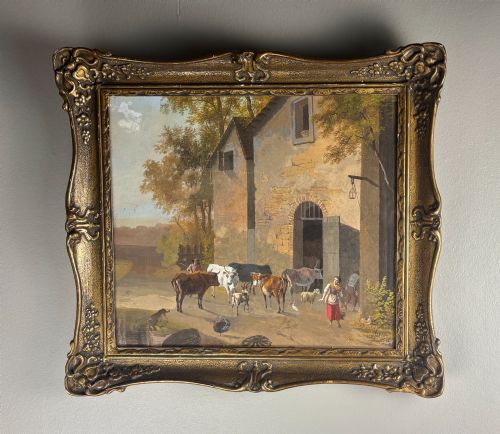
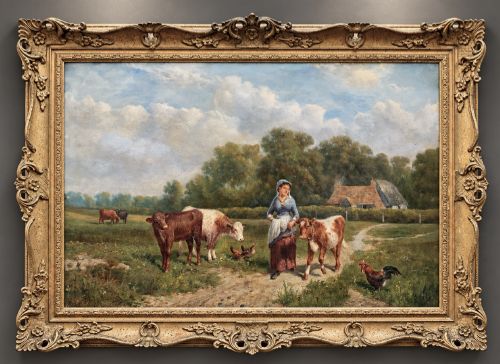
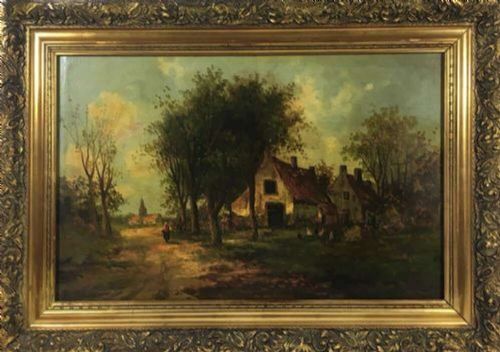
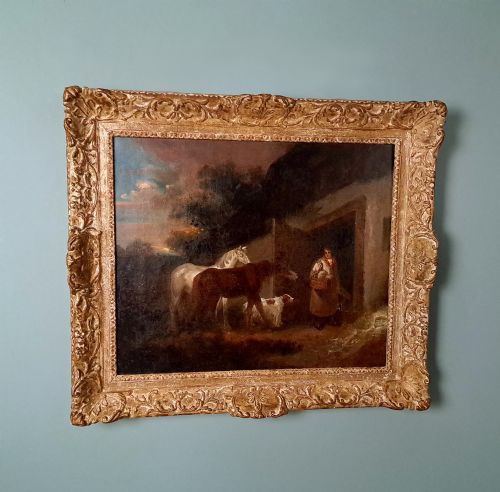
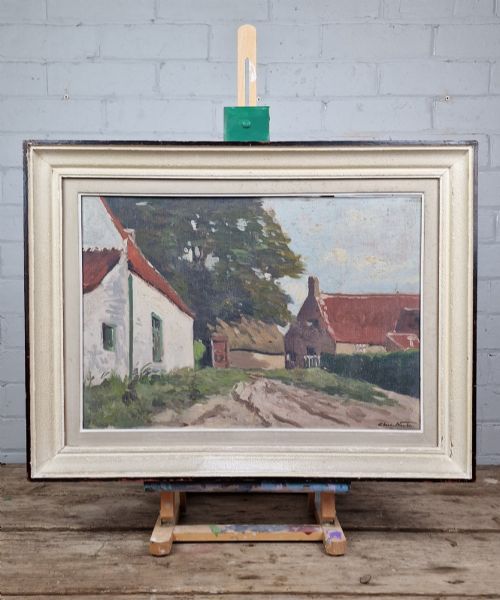
Buyers seeking farmyard scene art examine oil paintings and watercolours depicting rural subjects such as horses, cattle, pigs, and poultry alongside barns and cottages. These works capture 19th-century and early 20th-century agrarian life through various lenses, including British pastoral and post-impressionist styles.
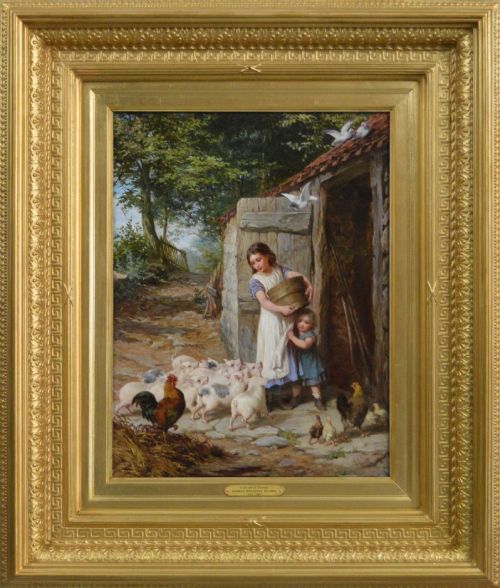
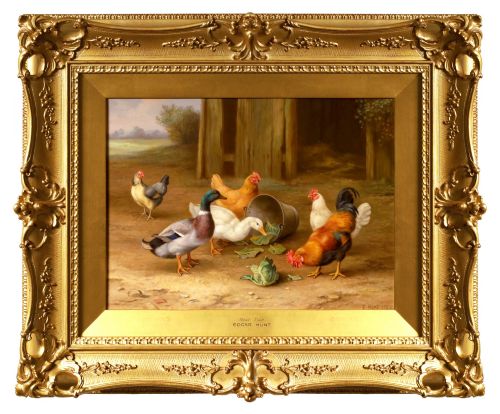
The pieces on this page are most commonly Victorian oil paintings on canvas or board, created by established artists who specialised in animal and landscape subjects. Common formats range from detailed depictions of feeding poultry to wider landscapes featuring working shires and carthorses.
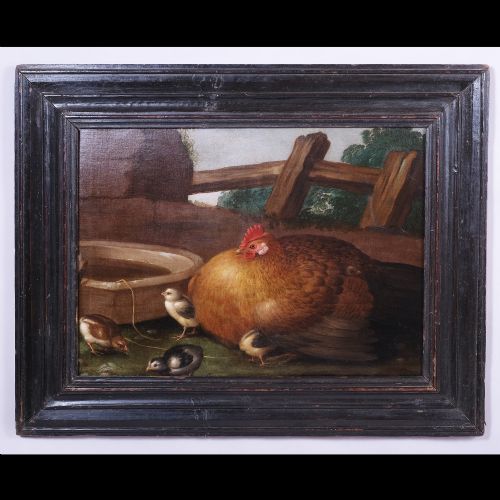
Subjects often focus on domestic animals and farmyard routines, rendered in oil paint or watercolour on paper and wood. Artists utilised these rural settings to explore light, texture, and the relationship between humans, animals, and the working landscape.
Materials and technique
Painters applied oil paint and gouache onto stretched canvas, prepared wooden boards, and paper supports, frequently finishing the works with giltwood frames. Canvas and wood provide the sturdy foundation necessary for building up textured layers of pigment, particularly when depicting animal coats and feather details.
Watercolour paintings on paper utilise washes and fine brushwork to achieve lighter, more translucent effects, often capturing pastoral scenes and portraits of animals with delicate precision. Framed prints and mezzotints replicate original compositions using engraved plates and coloured ink on paper.
Farmyard Scene Art Retail Price Guide 2026
Typical asking prices for farmyard scene art among the pieces listed under this phrase on Sellingantiques today, from the lower quarter to the upper quarter. They describe what is for sale here now, not the wider market.
Listings span the 17th century to the 1930s, featuring oil on canvas, watercolour, gouache, and giltwood frames.
Separating top examples from ordinary works
Quality in these rural works rests on the artist's ability to render animal anatomy, movement, and expression with convincing realism rather than rigid stiffness. The most successful pieces integrate livestock, human figures, and background architecture into a balanced composition with unified lighting.
The handling of the medium determines the visual depth, where skilled brushwork in oil paint creates tactile texture in animal fur, plumage, and weathered timber. Framing also contributes to the overall integrity, with period giltwood frames enhancing the visual weight of the canvas.
Samuel Joseph Clark·William Joseph Shayer Senior·Charles Houben·George Augustus Holmes·Edgar Hunt·Claude Cardon·Herbert Royle·John Frederick Herring Jnr·John Linnell·Helena Maguire·Pierre Emmanuel Dielmans·Julius Caesar Ibbetson·Arthur Charles Dodd·Robert Russell MacNee·Owen Bowen·B Kaufmann·Joseph Kirkpatrick·Edward Killingworth Johnson·John Percy Cooke·Arthur Walker Redgate·Ernest Higgins Rigg·Georgina Lara·George Morland
The Farmyard Scene Art Glossary
- Oil on Canvas
- A painting technique where pigmented oil is applied to a woven fabric support stretched over a wooden frame. This method allows for rich colour blending and textured brushwork.
- Giltwood
- Wood that has been coated with a thin layer of gold leaf or gilt powder. It is commonly found on the ornate frames enclosing 19th-century paintings.
- Gouache
- An opaque water-based paint consisting of pigment, water, and a binding agent such as gum arabic. It produces a dense, matte surface on paper.
- Mezzotint
- A printmaking process of the intaglio family where the plate is roughened to achieve tones and dark shades. It allows for subtle gradations in shadow and light.
- Barbizon School
- A French art movement of the mid-19th century associated with a shift towards realism in landscape painting. Artists painted directly from nature, focusing on rural and agricultural subjects.
Farmyard Scene Art: Frequently Asked Questions
What subjects appear in farmyard paintings?
These artworks depict horses, cattle, pigs, goats, and poultry within working farm settings, often accompanied by farmers or labourers.
Scenes frequently incorporate barns, stable interiors, cornfields, and cottages to establish an authentic rural atmosphere.
How do I identify a Victorian farm painting?
Victorian examples typically feature detailed realism in animal anatomy, deep earth tones, and traditional brushwork characteristic of 19th-century pastoral art.
Many retain their original giltwood frames and bear signatures or dates from the period between the start of Victoria's reign and the early 20th century.
Were these works painted outdoors?
While movements like the Barbizon School encouraged working directly from nature, many detailed farmyard compositions were developed in studios using preliminary sketches.
Artists observed animals and rural architecture on location before translating their studies onto canvas or paper in the workshop.
How should I care for antique oil paintings?
Oil paintings on canvas require stable indoor humidity and protection from direct sunlight to prevent the pigment from fading or cracking over time.
Dust surfaces gently with a soft, dry brush and avoid using liquid cleaners or touching the painted layer directly.