
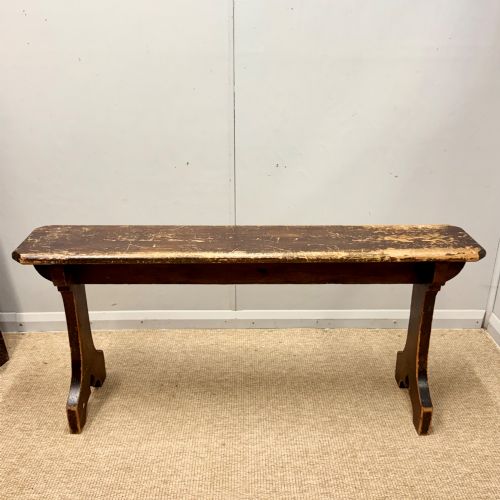
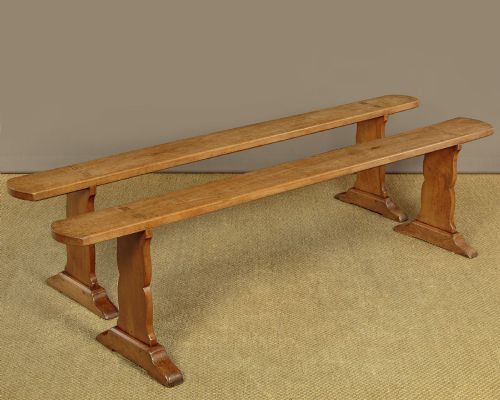


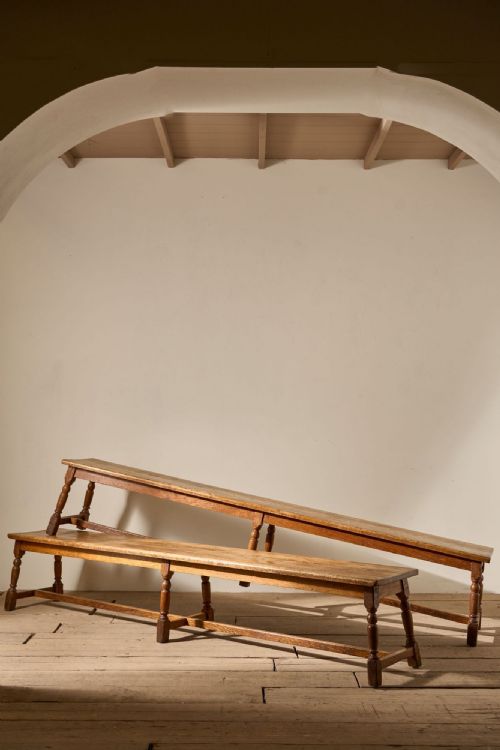


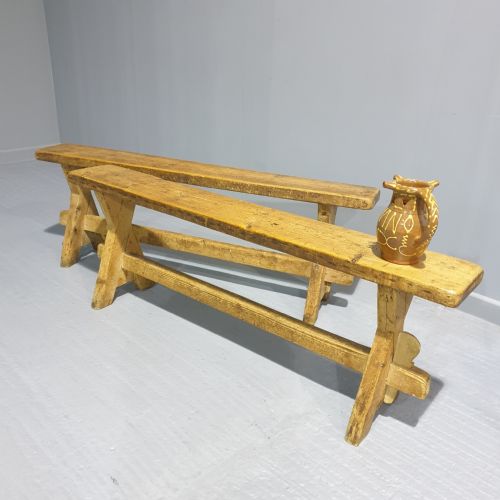
Farmhouse Wooden Form
A farmhouse wooden form brings honest vernacular character to a hallway or dining table, valued for its sturdy construction and honest timber.
Farmhouse Wooden Form
A farmhouse wooden form is a long bench designed for utilitarian seating in rustic settings, appearing primarily as single examples and matched pairs in the listings. These pieces serve dining rooms and hallways across various historical periods, offering practical seating solutions with straightforward designs.
The selection here encompasses forms from the Victorian era back to the eighteenth century, showing regional varieties from English country workshops to French provincial makers. Buyers encounter forms ranging from compact lengths to grand eight-foot examples suited for refectory settings.
Materials span native British and continental timbers, with pine and oak forming the backbone of the inventory alongside fruitwood, cherrywood, and elm. Each piece reflects the functional requirements of domestic and institutional spaces through unpretentious joinery and robust proportions.
How they were made
Makers constructed these forms using solid timbers selected for durability, joining planks and supports with traditional carpentry methods suited to heavy daily use. Pine and oak predominate, frequently showing the grain and natural marks of working life rather than refined cabinetmaking finishes.
Surface treatments vary from bare timber displaying natural patination to surviving historic paint finishes that record decades of domestic interior changes. Joinery relies on pegged joints, sturdy stretchers, and robust underframes designed to withstand the rigours of farmhouse dining and hall use.
Listings span pine, oak, cherrywood, fruitwood, and elm, documenting country seating forms from the eighteenth century through the Victorian period.
What varies in quality
Quality in a farmhouse wooden form rests on the integrity of the timber and the harmony of its proportions, distinguishing utilitarian workshop output from finer country joinery. Superior examples retain their original structural bracing and uncompromised timber thickness across long spans.
The presence of untouched surface patination separates well-preserved examples from those subjected to excessive restoration or modern sanding. Balance between the seat board and the supporting underframe dictates the visual weight and stability of the piece.
The Farmhouse Wooden Form Glossary
- Refectory bench
- A long seating form traditionally paired with a large dining table in communal halls or large kitchens. These pieces provide extended horizontal seating designed for communal dining.
- Scratch built
- A piece constructed by a local carpenter or amateur maker using available workshop timber rather than following standardised factory patterns. This method often results in charming irregularities and unique structural solutions.
- Patina
- The surface sheen and colour developed by wood over decades of handling, cleaning, and exposure to light. This quality indicates age and authenticity in vernacular furniture.
- Stretcher
- A horizontal wooden brace connecting the legs of a bench to provide lateral stability and prevent wobbling under heavy loads. These components are essential for the structural integrity of long seating forms.
Farmhouse Wooden Form: Frequently Asked Questions
How were farmhouse wooden forms used originally?
These long benches provided practical, space-efficient seating around large dining tables in farmhouses and institutional settings where multiple people needed to sit together. They were also placed along hallways for putting on boots or waiting.
Their narrow profile allowed them to be tucked completely under tables when not in use, maximising floor space in busy domestic environments.
How do I care for an antique wooden bench?
Keep the timber away from direct heat sources and sudden humidity changes to prevent the old wood from splitting or warping.
Apply a traditional beeswax polish occasionally to nourish the dry grain and maintain the protective surface sheen without building up synthetic residues.
How do I distinguish between Victorian and earlier country benches?
Earlier eighteenth-century pieces often display heavier oak construction with hand-split timber traits and pegged mortise and tenon joinery that differs from later nineteenth-century workshop methods.
Victorian and later nineteenth-century forms frequently utilise softer timbers like pine and employ more standardised mechanical sawing techniques while retaining rustic charm.
Are pairs of antique benches common?
Matching pairs appear regularly in vernacular furniture, having been made together to flank both sides of a long refectory dining table.
Finding surviving pairs from the nineteenth century offers a cohesive seating solution for larger dining spaces.