




Farmhouse Rush Chairs
Farmhouse rush chairs are sturdy vernacular seating bringing rustic character to dining rooms through woven seats and traditional timber frames.
Farmhouse Rush Chairs
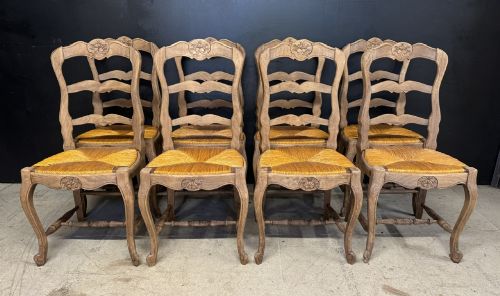
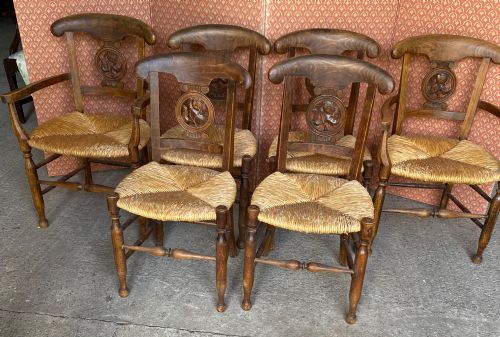
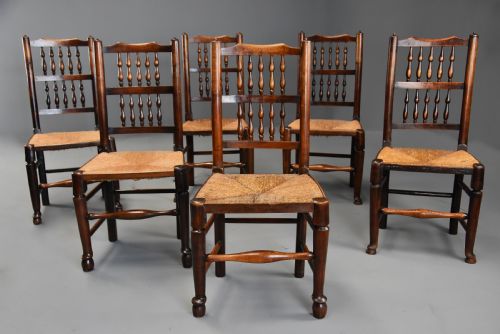
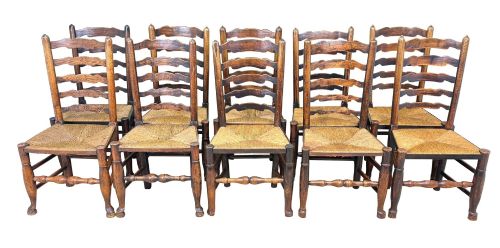
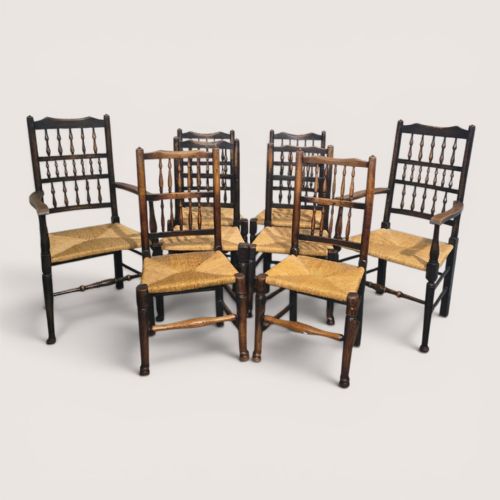
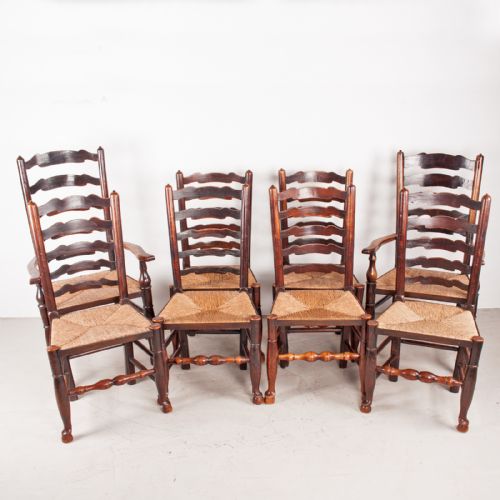
Farmhouse rush chairs are traditional country dining chairs and armchairs defined by woven seating materials and robust wooden frames. Buyers seeking these pieces encounter English country vernacular designs alongside French provincial styles spanning the Georgian, Victorian, and early twentieth-century periods.
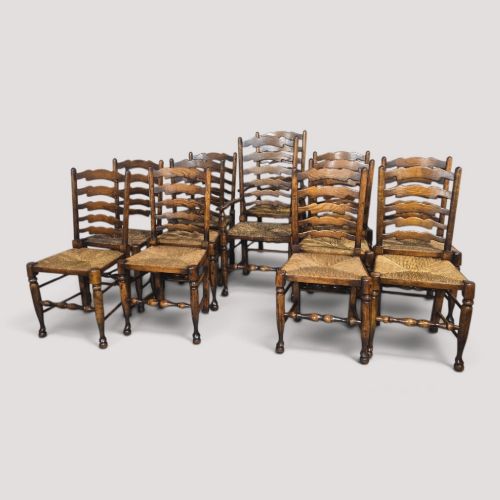
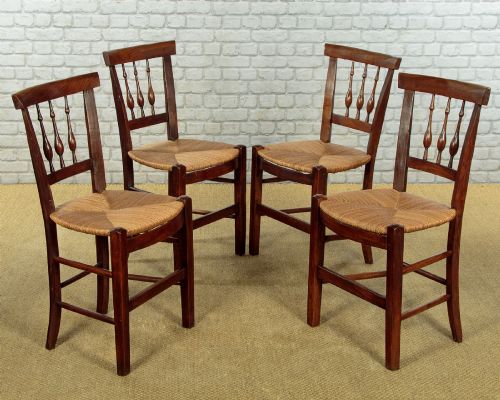
The selection on this page centres on dining chairs and armchairs configured in sets or single pieces. Construction materials highlight native hardwoods including oak, elm, ash, and fruitwood, shaped into ladder backs and spindle backs.
How they were made
Makers utilised native timbers like oak, elm, ash, and fruitwood for the structural frames, often combining woods for spindles, legs, and stretchers. Turning lathes shaped uprights and rungs while green wood techniques sometimes secured rigid joints.
Seats are woven by hand using natural rush materials, twisted into cord and tightly patterned across the seat frames. This traditional method distributes weight evenly across the supportive wooden rails.
Farmhouse Rush Chairs Retail Price Guide 2026
Typical asking prices for farmhouse rush chairs among the pieces listed under this phrase on Sellingantiques today, from the lower quarter to the upper quarter. They describe what is for sale here now, not the wider market.
Listings feature oak, elm, ash, and fruitwood timbers across nineteenth and twentieth-century dining chairs and armchairs.
What varies in quality
Quality rests in the integrity of the timber frame and the tightness of the rush weave. Heavier solid construction in oak or elm indicates superior durability compared to lighter hardwood builds.
The visual appeal of the timber surface, particularly a deep polished patina developed over decades of use, separates standard examples from finer pieces.
The Farmhouse Rush Chairs Glossary
- Ladder back
- A chair back featuring horizontal wooden slats resembling the rungs of a ladder. This traditional form provides sturdy back support in country seating.
- Spindle back
- A chair back constructed with vertical turned wooden rods or spindles. These slender members distribute pressure evenly across the upper frame.
- Rush
- Marshland plants twisted into strong cords for weaving chair seats. This organic material yields a resilient and pliable surface.
- Vernacular
- Everyday utilitarian objects built by regional craftspeople using local traditions and materials rather than academic design formulas. These pieces reflect practical domestic needs.
- Patina
- The surface sheen and colour depth acquired by wood through age, handling, and wax polishing. This quality signals long-term domestic use.
Farmhouse Rush Chairs: Frequently Asked Questions
How were rush seats made?
Makers harvested natural rush plants, drying them before twisting the material into long cords. These cords were then tightly hand-woven across the open seat frame.
This method creates a dense, supportive mat that flexes slightly under weight. The natural fibres respond well to occasional damp cloth cleaning and proper humidity.
How do I clean rush seats?
Clean rush seats by gently dusting with a soft brush or vacuuming using a low suction attachment. Avoid soaking the woven fibres with excessive water.
Keep the timber frames polished with traditional wax to maintain the wood finish. Proper indoor humidity prevents the rush material from becoming brittle over time.
How to tell periods apart?
Dating relies on observing timber types, turning styles, and construction wear patterns across the frame. Georgian and early nineteenth-century pieces often display hand-turned spindles and heavier elm or oak sections.
Later Victorian and early twentieth-century examples show variations in lathe work and assembly methods. Comparing the frame construction details helps clarify the manufacturing era.