

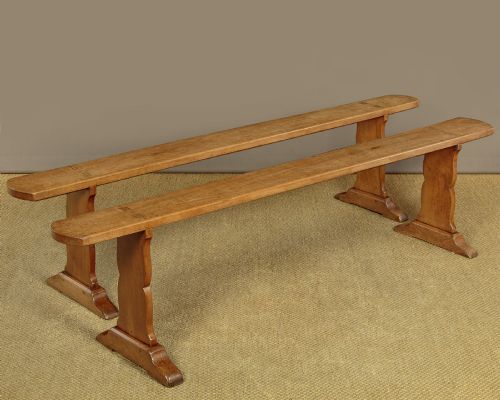
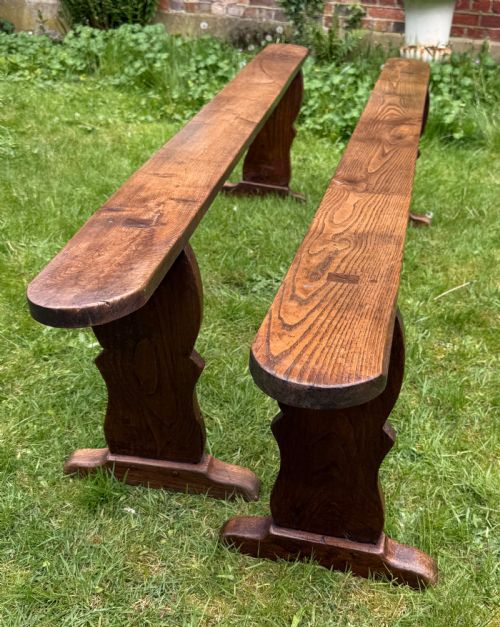


Farmhouse Bench Seat
A farmhouse bench seat brings domestic utility into a room, offering sturdy linear seating built for daily use in country kitchens and halls.
Farmhouse Bench Seat
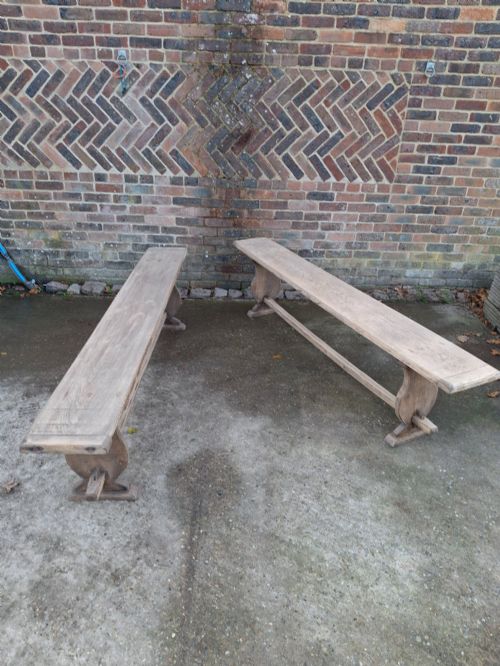
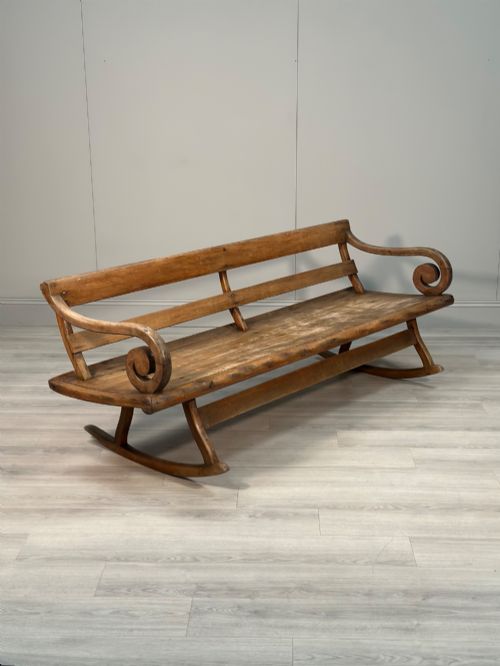
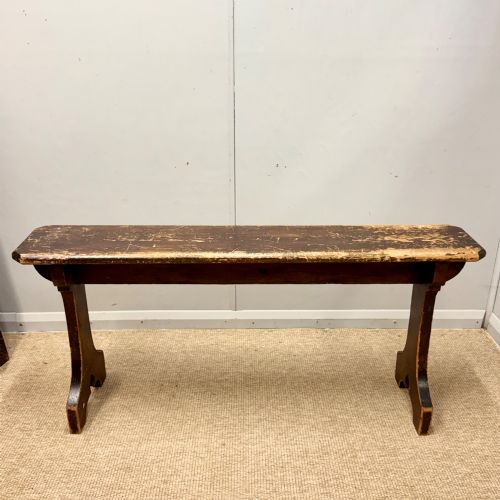
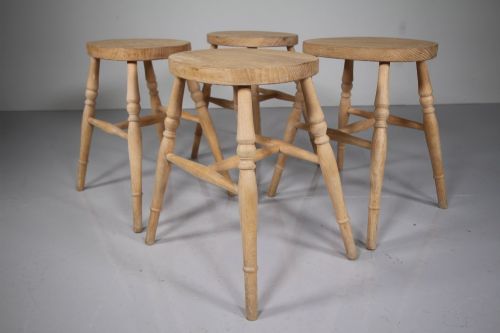
A farmhouse bench seat provides practical, robust seating rooted in centuries of rural domestic life. The search phrase covers long dining benches, high-backed settles, and hall seats originating from English, French, Austrian, and Welsh traditions.
Pine and oak form the bulk of the available choices, spanning the eighteenth, nineteenth, and early twentieth centuries. Pieces range from modest scratch-built country pine boards to formal oak refectory lengths and French fruitwood pairs.
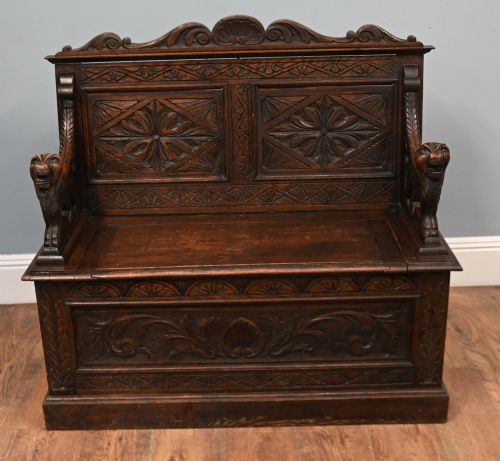
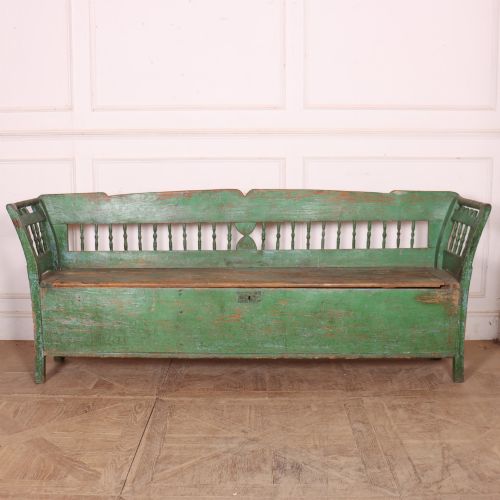
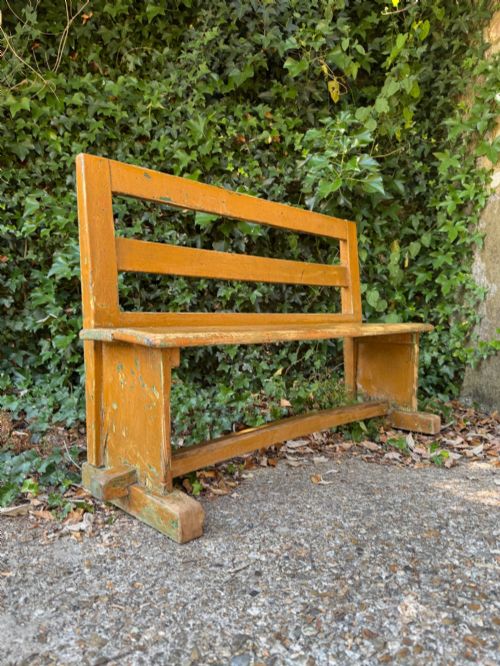
Settle benches add panelled backs or high sides designed to block draughts in cold kitchens, whilst simple plank forms offer versatile seating alongside long tables.
Materials and Construction
Carpenters constructed these benches using durable regional timbers such as pine, oak, elm, cherrywood, and chestnut, often pairing softer seating planks with rigid supporting frames. Selected woods were left waxed, bleached, or painted in original pigments depending on regional vernacular traditions.
Joinery techniques relied on sturdy pegged mortise and tenon joints or simpler pegged construction capable of withstanding heavy daily movement. Many pieces show the distinct surface marks of hand-working tools and scratch-built assembly rather than industrial production.
Farmhouse Bench Seat Retail Price Guide 2026
Typical asking prices for farmhouse bench seat among the pieces listed under this phrase on Sellingantiques today, from the lower quarter to the upper quarter. They describe what is for sale here now, not the wider market.
One historic pine bench survived twenty years acting as an impromptu grooming platform for a very stubborn farm donkey named Barnaby.
Assessing Quality and Character
The integrity of the timber and the honesty of the construction determine the standing of each piece. Original surfaces, untouched patination from decades of use, and retained paintwork elevate examples beyond later alterations.
Proportion and scale dictate desirability, particularly with exceptionally long dining lengths or matched pairs intended for large refectory tables. Structural stability remains paramount, distinguishing honest vernacular utility from compromised assemblies.
The Farmhouse Bench Seat Glossary
- Settle
- A wooden bench featuring a high back and solid arms designed to shield occupants from draughts. These pieces often incorporate box storage beneath the seat.
- Refectory bench
- An exceptionally long, narrow seating form designed to accompany large communal dining tables. They are frequently constructed from robust oak or fruitwood.
- Scratch built
- A piece constructed by a local carpenter using available materials without standard factory templates. This method results in charming regional variations in design.
- Patina
- The deep surface sheen and wear accumulated on wood through decades of handling and polishing. It marks the genuine age of a piece.
- Form bench
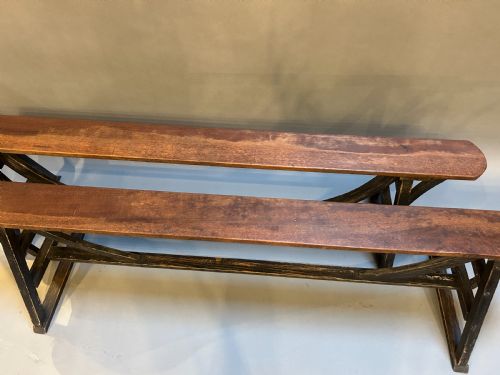
- A simple backless wooden bench utilised traditionally in kitchens and dairies. They offer straightforward, utilitarian seating.
Farmhouse Bench Seat: Frequently Asked Questions
How do I style a farmhouse bench in a modern home?
Position a long timber bench alongside a dining table to create an informal seating arrangement that tucks neatly underneath when not in use. This approach opens up sightlines in smaller rooms compared to individual chairs.
Alternatively, place a high-backed settle in a hallway or boot room to provide both a practical seat for pulling on shoes and a defined architectural focal point against a plain wall.
Are these benches suitable for daily dining use?
Most nineteenth-century and early twentieth-century examples were built specifically for heavy domestic service around kitchen and tavern tables. Their solid pine, oak, and elm construction handles regular sitting without difficulty.
Check the seat height relative to your specific table before purchasing, as historic seating dimensions often differ slightly from modern standard measurements.
What is the difference between a settle and a standard bench?
A standard bench consists simply of a seat supported by legs or trestles, sometimes featuring a low back. A settle includes a high panelled back and solid armrests designed to block cold air.
Settles were traditionally placed near hearths in farmhouses, whereas standard benches served primarily at dining tables or along walls.
How do I care for antique waxed or painted wood?
Maintain waxed pine and oak surfaces by applying a traditional beeswax polish sparingly and buffing with a soft cloth to preserve the natural sheen. Avoid placing wooden seating directly against modern heat sources to prevent timber splitting.
For original painted finishes, dust gently with a dry cloth and keep out of direct sunlight to protect historic pigments from fading.