

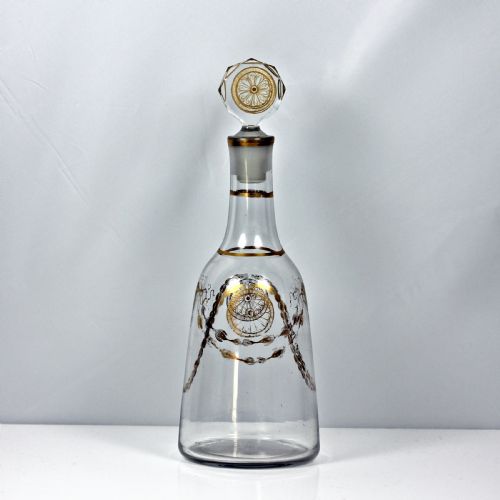


Faceted Glass Wine Bottle
These faceted glass wine bottle items are heavy serving vessels formed with sharp geometric planes, prized for catching candle or daylight on a dining table.
Faceted Glass Wine Bottle
When you search for a faceted glass wine bottle, you are looking at utilitarian serving vessels designed for the table and sideboard, most frequently encountered here as decanters and ewers. The pieces span several distinct eras, stretching from Georgian examples through the Victorian period and into Edwardian and early twentieth century production.
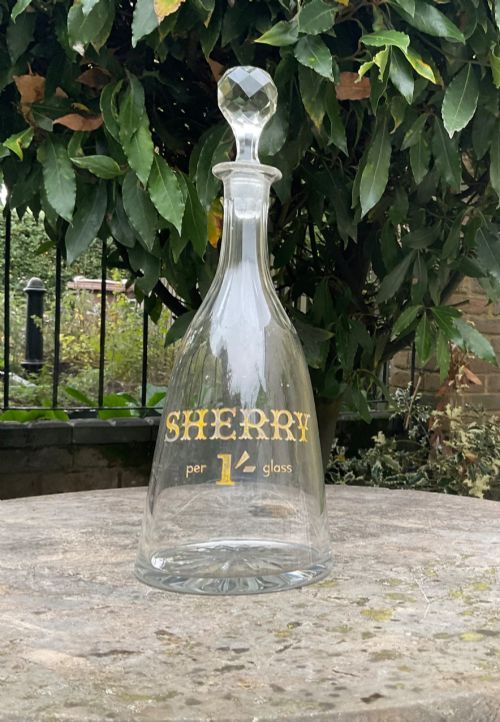
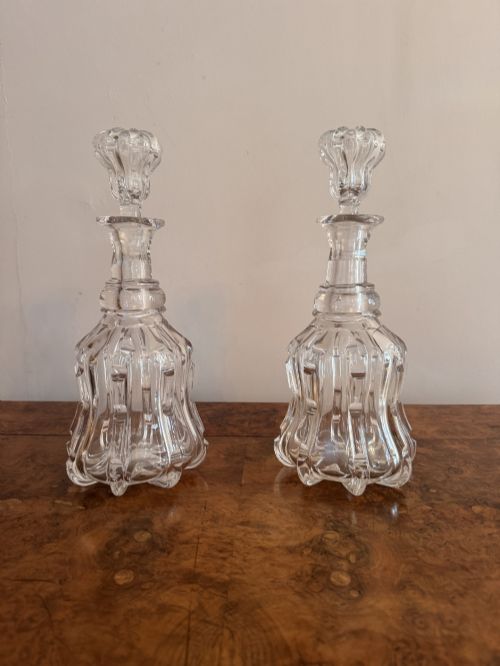
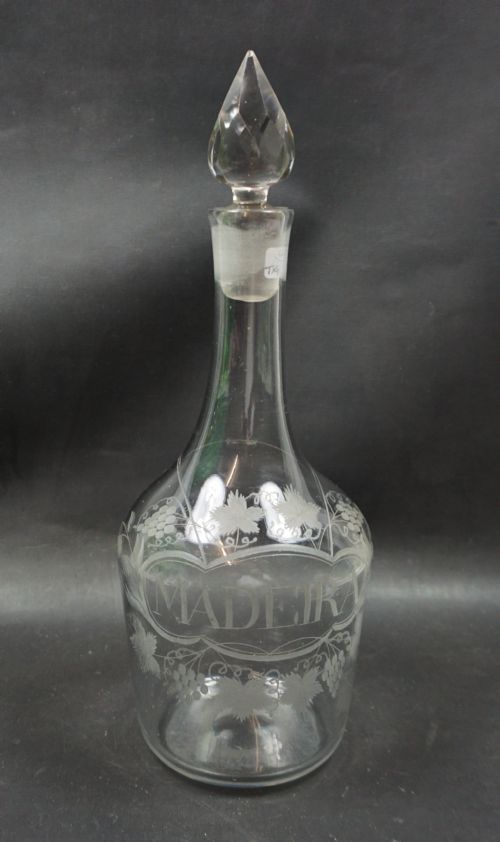
The forms range from single bottles to pairs and trios, taking shapes such as bell profiles, shoulder profiles, and half sized formats. Many examples carry period labels or delicate engraved decoration, reflecting their original purpose of holding and serving wine.
Origins stretch across the eighteenth, nineteenth, and early twentieth centuries, capturing shifts in domestic dining habits. The selection includes works associated with the atelier of James Giles alongside uncredited English production.
Materials and construction methods
The physical substance of these objects relies on glass, crystal, lead crystal, and lead glass, all worked to achieve high optical clarity and substantial weight. Artisans shaped these materials into robust forms capable of enduring daily use in domestic settings.
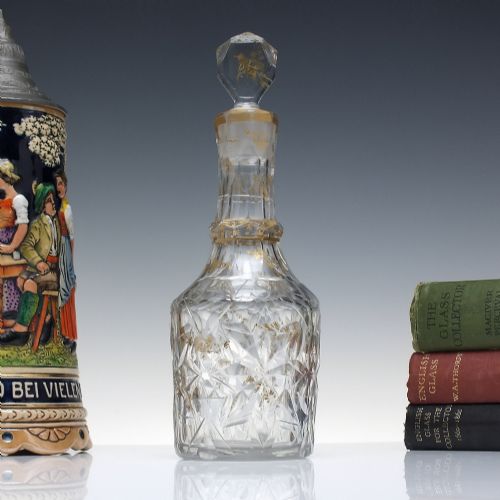
Surface planes were achieved through cutting and engraving techniques, sometimes heightened with gold leaf. This reduction of the glass surface creates the characteristic facets that define the profile of each bottle.
Faceted Glass Wine Bottle Retail Price Guide 2026
Typical asking prices for faceted glass wine bottle among the pieces listed under this phrase on Sellingantiques today, from the lower quarter to the upper quarter. They describe what is for sale here now, not the wider market.
A Nelson glass decanter brings naval history straight to the sideboard.
Distinguishing quality across the range
Quality rests upon the crispness of the cutting and the weight of the metal itself, with finer pieces displaying sharp, clean geometric edges rather than soft or rounded transitions. The clarity of the crystal and the brilliance of any engraved or gilded decoration further separate standard domestic wares from exceptional studio output.
Proportion and scale also dictate the standing of an item, particularly when matched pairs or trios maintain uniform symmetry across every bottle. The presence of documented workshop attribution adds another layer of distinction to the craftsmanship.
Atelier of James Giles
The Faceted Glass Wine Bottle Glossary
- Decanter
- A vessel used for holding and serving wine. Most examples in this selection feature cut facets and fitted stoppers.
- Ewer
- A pitcher or jug with a wide spout, used alongside decanters for serving liquids at the table.
- Lead Crystal
- Glass containing lead oxide, which increases the weight, refractive index, and clarity of the finished object.
- Gilded
- Decorated with gold leaf or gold paint applied to the surface of the glass, as seen in eighteenth century studio work.
- Shoulder Decanter
- A bottle form characterised by a broad shoulder tapering down to a flat base, providing stability on the dining table.
Faceted Glass Wine Bottle: Frequently Asked Questions
How were these decanters used?
They were filled from larger casks or bottles to serve wine cleanly at dining tables and sideboards. Their heavy bases helped prevent tipping during transport.
Many retain engraved labels naming specific contents like Madeira or feature matching stoppers to preserve the wine.
How do I date an antique decanter?
Dating relies on observing the form, weight, cutting style, and any engraved lettering present on the glass. Georgian and eighteenth-century pieces often display specific shoulder profiles and distinct hand-cut facets.
Later Victorian and Edwardian examples show heavier press-moulded influences alongside refined hand cutting, matching the manufacturing standards of their respective decades.
Can I still use these for serving wine?
Yes, these sturdy glass and crystal vessels remain entirely functional for decanting and serving contemporary wines. Their robust lead glass construction was originally built for daily household service.
Careful hand washing preserves the historic glass and any delicate surface gilding or engraving.