

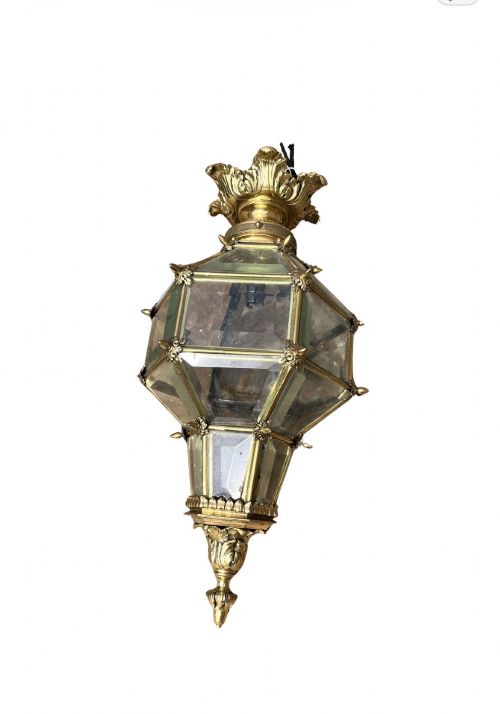

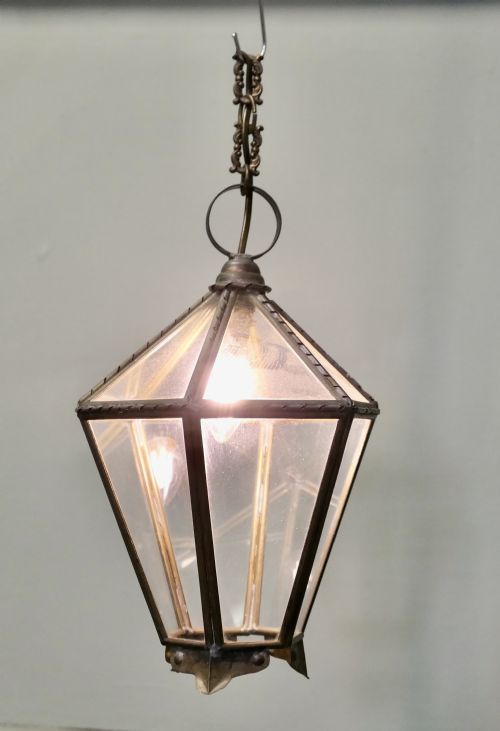


Faceted Glass Light
A faceted glass light catches and throws the room's daylight or evening glow through cut crystal, bevelled panels, and precise prism arrangements.
Faceted Glass Light
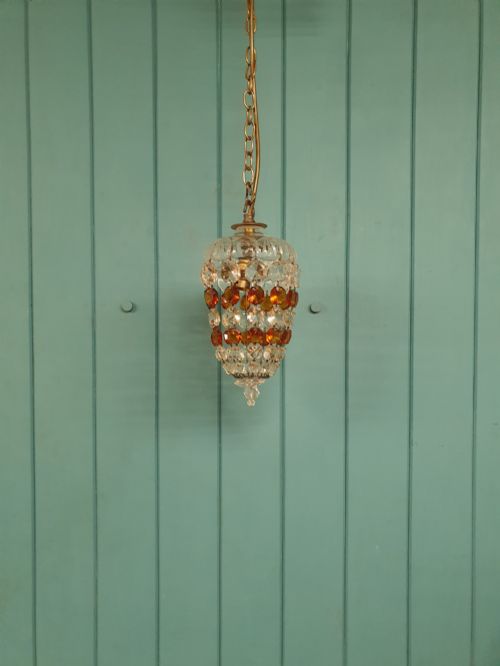
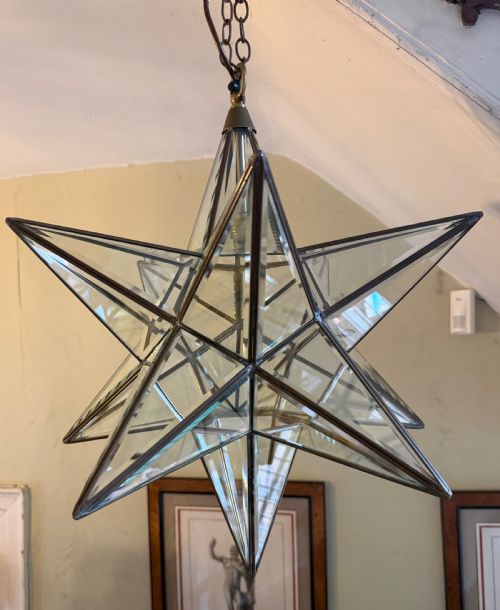
A faceted glass light brings together heavy brass, bronze, or chrome frames with cut crystal, glass, or frosted panels to illuminate rooms with distinct refractive patterns. When you search for a faceted glass light, you encounter hanging lanterns, dome top chandeliers, and wall lights spanning the nineteenth century through the art deco period.
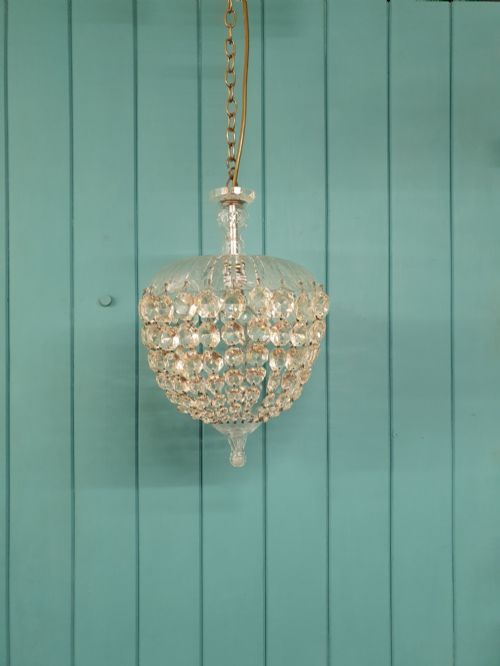
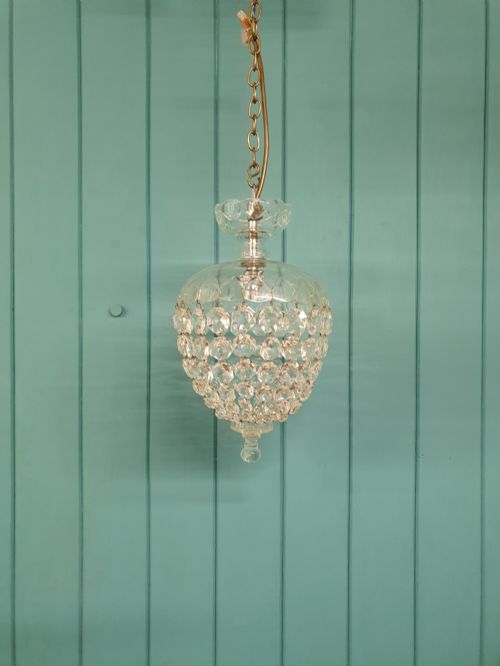
The selection ranges from early twentieth-century star lanterns and Edwardian dome fixtures to ornate Maria Theresa and French Louis XVI style chandeliers. Smaller pendant lights, table lamps, and candlesticks also appear, often utilising cut glass and crystal to maximise light diffusion across domestic interiors.
Edwardian and early twentieth-century examples dominate the selection, alongside items from the nineteenth century, eighteen-eighties, and nineteen-fifties. These pieces originate from diverse design traditions, including Arts and Crafts, Art Deco, and classical continental European styles.
What varies in quality
The weight and purity of the crystal or glass set the baseline for how crisply the fixture refracts light. Clear, heavy cut crystal creates sharp prismatic patterns, whereas lower grades diffuse light more softly and lack structural heft.
The quality of the underlying metal frame - whether solid brass, gilt bronze, or chrome - determines the longevity and rigidity of the piece. Finer examples feature hand-finished metalwork with tight joints and well-cast decorative motifs that complement the glass.
Faceted Glass Light Retail Price Guide 2026
Typical asking prices for faceted glass light among the pieces listed under this phrase on Sellingantiques today, from the lower quarter to the upper quarter. They describe what is for sale here now, not the wider market.
Some Edwardian dome chandeliers manage to look remarkably like glass mushrooms while stubbornly refusing to grow in the dark.
The Faceted Glass Light Glossary
- Faceted
- Cut into many small planar surfaces. These flat planes bounce light across the room in sharp beams.
- Prism
- A transparent optical element with flat polished surfaces that refract light. Prisms hang from chandeliers to disperse illumination into spectral colours.
- Tent and bag chandelier
- A lighting fixture featuring a conical upper section of strung crystals above a gathered lower bag of glass drops. This design became popular in English lighting from the nineteenth century onward.
- Bevelled glass
- Glass panes with angled edges cut and polished to a specific slope. This technique adds decorative depth to lantern panels.
Faceted Glass Light: Frequently Asked Questions
How do I clean a faceted glass light?
Remove delicate glass drops and panels where possible before washing them in warm, soapy water. Dry each piece thoroughly with a lint-free cloth to restore its refractive clarity.
Polish the brass, bronze, or chrome metal frame separately using a cloth appropriate for the specific metal finish. Avoid getting moisture into old electrical components during the cleaning process.
Can these lights take modern bulbs?
Most antique fixtures accommodate modern LED bulbs provided the physical dimensions and wattages match the original socket capacities. Consulting a professional electrician ensures the internal wiring safely supports contemporary illumination.
Choosing warm white bulbs helps replicate the softer quality of light originally intended for these vintage glass and crystal pieces.
How do I date a glass lantern?
Examine the construction methods of the metal frame and the style of the glass cutting to establish a period. Edwardian and art deco pieces often feature chrome or simpler brass mounts, whereas nineteenth-century designs display heavier gilt bronze or classical casting.
Patent marks, screw types, and wiring channels also offer clues regarding the decade of manufacture.
Where should I hang a star lantern?
Star lanterns suit entrance halls, stairwells, or high-ceilinged landings where their geometric glass panels cast dramatic shadows. Hanging them at a sufficient height protects the fragile points from accidental impact.
Ensure the ceiling rose and hanging hook securely support the combined weight of the metal frame and heavy glass.