




Faceted Glass Flask
A faceted glass flask is a portable vessel for scent or spirits that combines geometric cutting with coloured glass.
Faceted Glass Flask
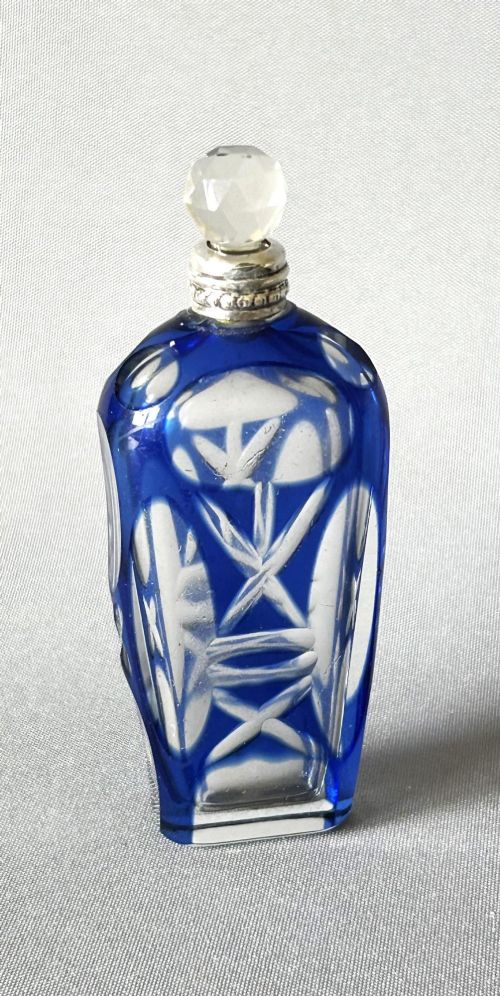
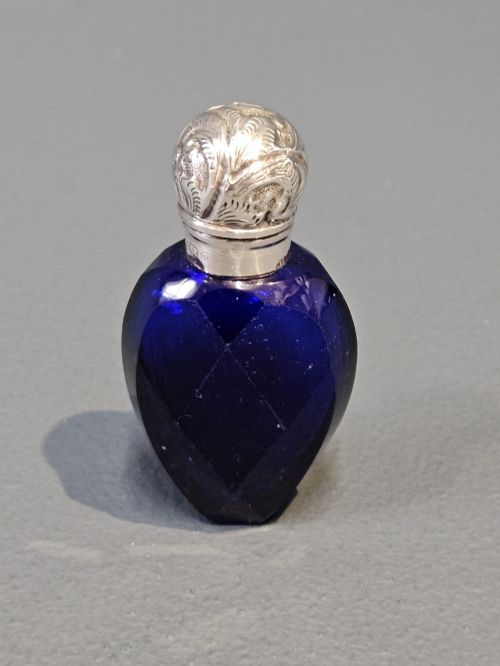
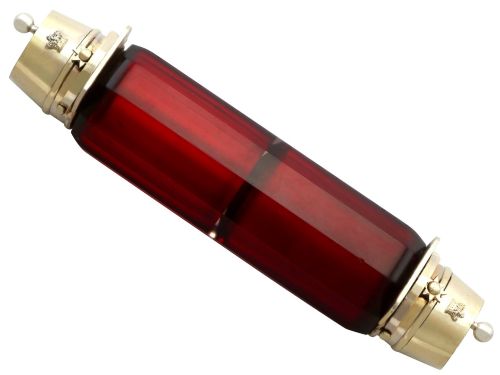
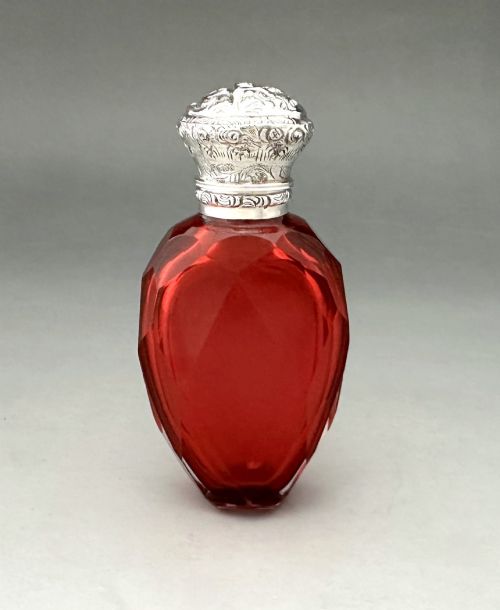
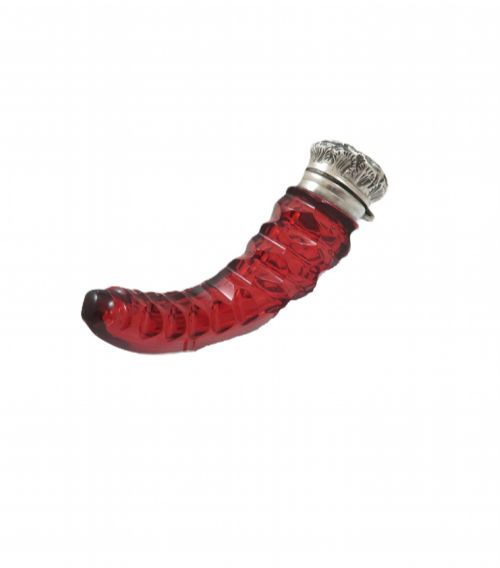
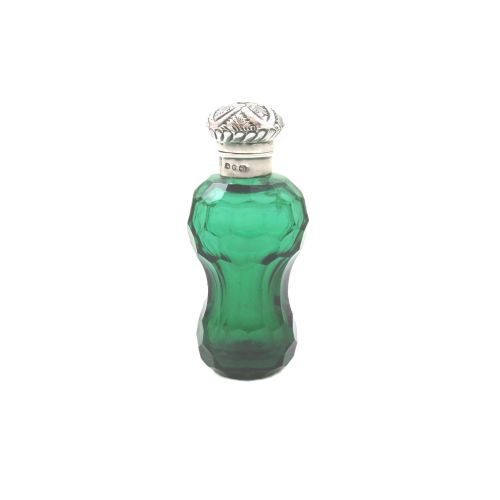
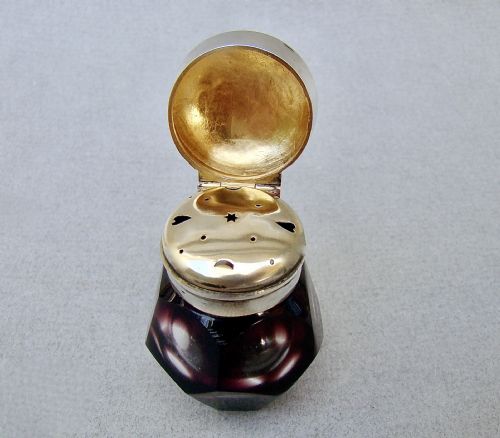
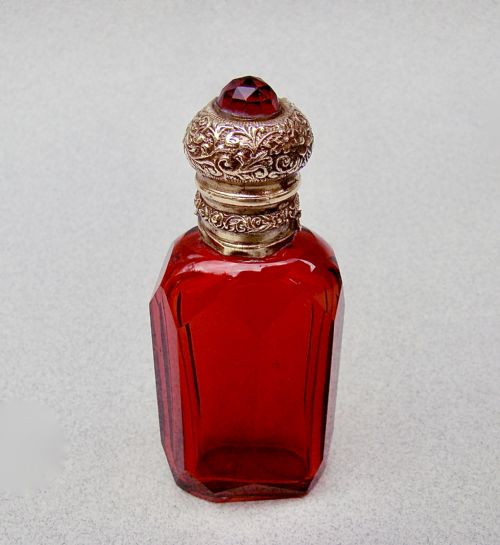
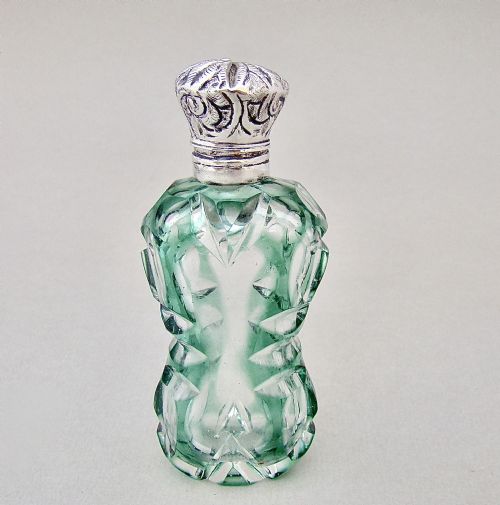
A faceted glass flask serves primarily as a scent bottle, perfume bottle, or spirit decanter, taking forms that date from the Victorian era through the Edwardian period and into the Art Deco style of 1930. The pieces you encounter most frequently on this page are Victorian scent bottles, often rendered in deep tones of ruby, green, amethyst, or cranberry glass.
Makers fashioned these vessels in various geometric shapes, sometimes mounting them in sterling silver or silver-gilt, and occasionally applying enamel decoration. French examples from the nineteenth century often incorporate ormolu mounts alongside coloured glass overlays, demonstrating a distinct continental aesthetic.
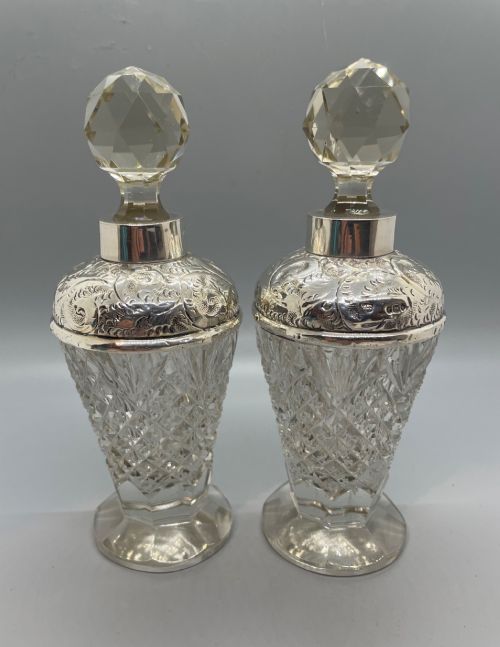
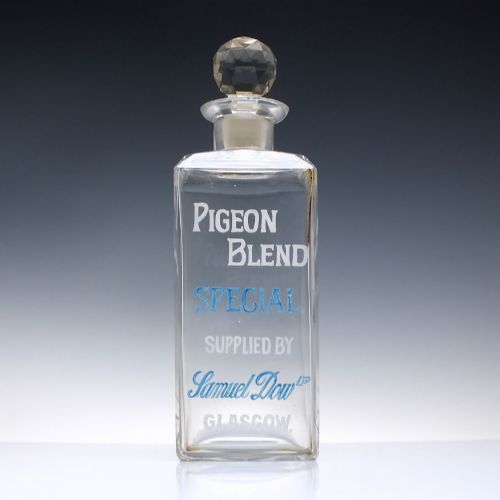
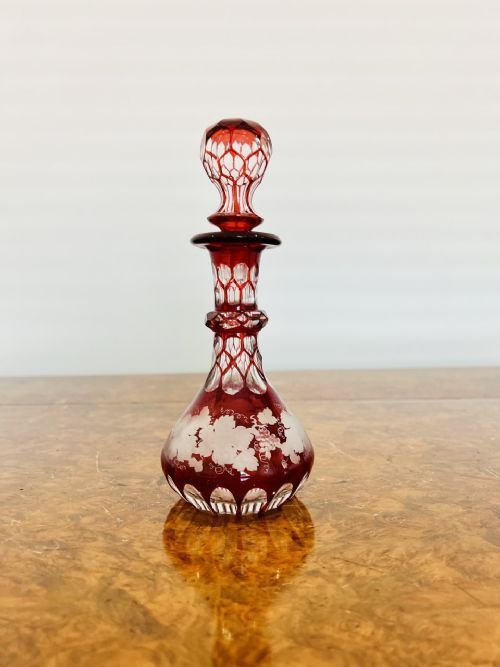
Collectors also find larger spirit containers, such as whisky decanters, which share the same heavy cut-glass construction as the smaller pocket-sized perfume flasks. The range spans simple pressed or cut surfaces to complex overlaid designs that catch the light from multiple angles.
What varies in quality
The precision and crispness of the wheel-cut facets define the standard of the glassware, where sharper angles and deeper cuts represent superior craftsmanship. Overlay glass, particularly where a coloured layer is cut away to reveal a different colour underneath, demands high technical skill to achieve even thickness and clean margins.
The quality of the metal mounts, including the weight of the sterling silver, the presence of clear hallmarks, and the intricacy of any enamel or ormolu work, elevates certain pieces above standard utilitarian bottles. Well-fitted stoppers and secure hinge mechanisms also distinguish better-made examples from simpler containers.
Faceted Glass Flask Retail Price Guide 2026
Typical asking prices for faceted glass flask among the pieces listed under this phrase on Sellingantiques today, from the lower quarter to the upper quarter. They describe what is for sale here now, not the wider market.
Some nineteenth-century flasks doubled as concealed vinaigrettes, carrying pungent smelling salts to revive passengers overcome by tight corsets.
Karl Palda·Sabino
The Faceted Glass Flask Glossary
- Faceted
- Formed with many flat, polished surfaces that reflect light. This technique is central to the visual appeal of these flasks.
- Vinaigrette
- A small ornamental box or bottle containing a sponge soaked in aromatic vinegar. These often feature an internal pierced grille made of silver.
- Ormolu
- Gilded bronze used for decorative mounts on nineteenth-century French pieces. It provides a warm, metallic contrast to coloured glass.
- Overlay
- A technique where a layer of coloured glass is fused over a clear or contrasting base glass before being cut away. This creates striking two-tone patterns.
- Opaline glass
- An opaque or semi-translucent glass popular in the nineteenth century. It has a milky appearance that diffuses light softly.
Faceted Glass Flask: Frequently Asked Questions
What is a faceted glass flask used for?
These vessels were designed to hold perfumes, scented waters, or spirits safely while travelling or for use at a dressing table. The tight-fitting caps and stoppers prevented precious liquids from evaporating.
Smaller examples served as pocket scent bottles or vinaigrettes, while larger versions functioned as tabletop perfume bottles or pocket decanters for spirits.
How do I date a faceted glass flask?
Dating relies on a combination of glass colour, style, and metal hallmarks found on the silver mounts. Victorian pieces often feature rich ruby or green glass with ornate sterling silver caps.
Art Deco flasks from the 1930s tend to display cleaner geometric lines, minimalist mounts, and modernist enamel work associated with makers like Karl Palda or Sabino.
Are the stoppers original?
Many surviving bottles retain their original glass stoppers or inner glass bungs beneath metal screw caps. Because stoppers were easily misplaced or broken, checking for a matching fit and identical glass tone is essential.
Original stoppers usually show the same degree of wear and matching facet work as the body of the flask itself.
How should I clean my glass flask?
Gentle cleaning with warm soapy water and a soft cloth is usually sufficient for both the glass exterior and silver mounts. Harsh chemical cleaners should be avoided, particularly on pieces with enamel decoration or gilt surfaces.
Care must be taken around hinged collars and inner cork or paper washers, which can degrade if immersed in water for too long.