


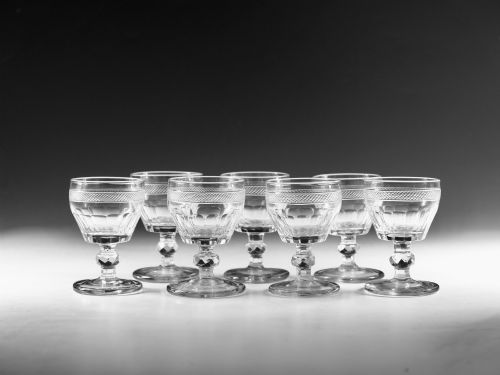


Faceted Cut Crystal Goblet
These faceted cut crystal goblet pieces offer brilliant light refraction and historical charm, making them a prized choice for collectors of fine antique glassware.
Faceted Cut Crystal Goblet
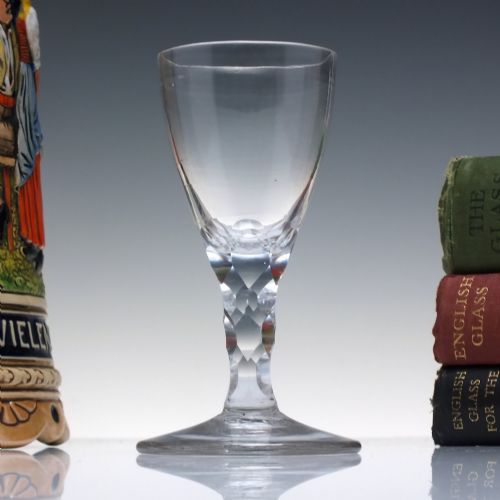
When you search for a faceted cut crystal goblet, you encounter drinking vessels defined by geometric facets cut into the stem or bowl, originating from the eighteenth and nineteenth centuries. These pieces reflect the shift toward brilliant glass manufacturing techniques during the Georgian, Regency, and Victorian eras.
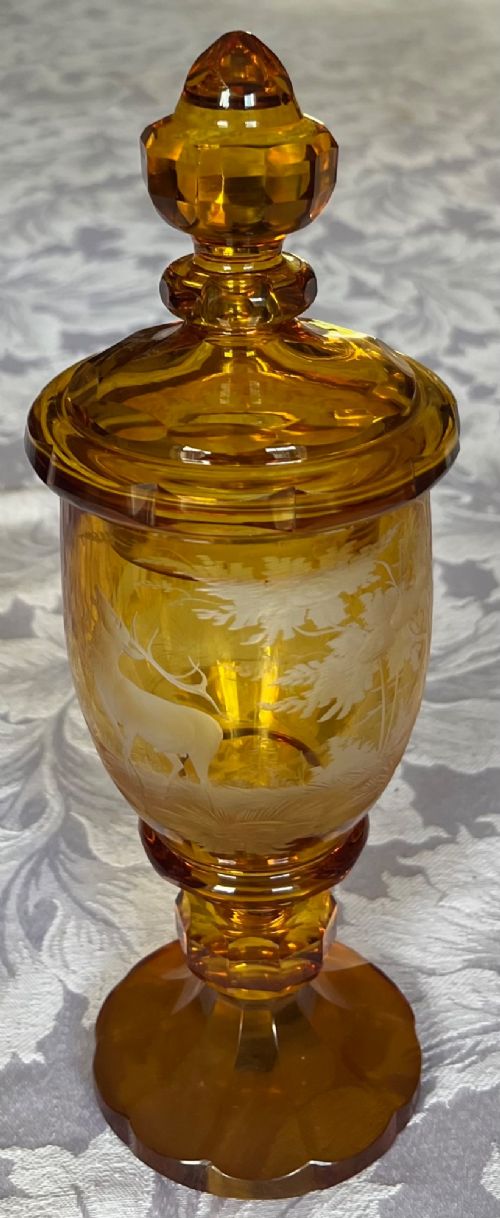
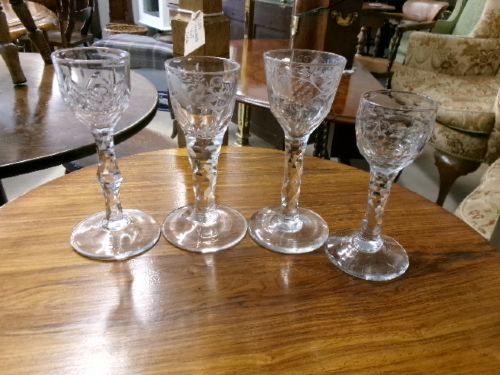
The versions you are most likely to meet on this page include eighteenth-century English wine glasses with facet-stemmed profiles and nineteenth-century Bohemian or English commemorative examples. Forms range from dedicated wine and port glasses to decorative vases and larger covered vessels.
Makers and regions varied widely, with English workshops producing delicate Jacobite and Giles-decorated stems alongside rich continental output from Bohemia. Surviving pieces demonstrate the enduring appeal of heavy lead crystal and clear glass shaped for formal dining and commemoration.
Materials and technique
Makers utilised lead crystal, lead glass, and clear glass to achieve maximum weight and refractive clarity. The high lead content allowed artisans to grind sharp, precise facets across stems and bowls without fracturing the material.
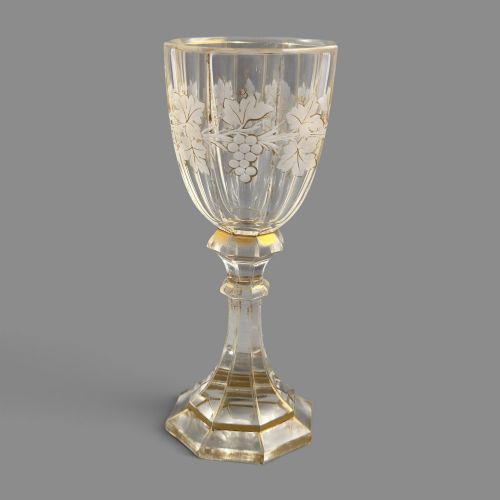
Cutting required skilled handwork on abrasive wheels, followed by polishing to restore transparency to the facets. Engraving and gilding were frequently applied to the smooth surfaces of the bowl to enhance ceremonial or commemorative designs.
Faceted Cut Crystal Goblet Retail Price Guide 2026
Typical asking prices for faceted cut crystal goblet among the pieces listed under this phrase on Sellingantiques today, from the lower quarter to the upper quarter. They describe what is for sale here now, not the wider market.
The inventory includes both English drinking glasses and Bohemian engraved vases with gilding.
Quality and craftsmanship
The distinction between ordinary and exceptional pieces lies in the crispness of the facet cuts and the symmetry of the stem. Superior examples exhibit sharp, clean angles that catch light evenly, whereas lesser items show softened edges and uneven grinding from hurried production.
The choice of material and supplementary decoration further separate the range. Heavy lead crystal with deep, unblemished cutting and well-preserved gilding or intricate engraving represents the pinnacle of period glasshouse output.
Moser·James Giles
The Faceted Cut Crystal Goblet Glossary
- Facet cut
- A decorative technique where flat geometric planes are ground into the surface of glass. This method creates multiple reflective surfaces that intensify the brilliance of the crystal.
- Lead crystal
- Glass containing a significant proportion of lead oxide. This specific composition increases the weight, refractive index, and workability required for deep cutting.
- Jacobite engraving
- Symbolic imagery etched onto eighteenth-century glassware supporting the exiled Stuart dynasty. These motifs often include roses and oak leaves.
- Gilding
- The application of a thin layer of gold or gold leaf to the surface of the glass. It is often fired onto the rim or engraved details of nineteenth-century pieces.
- Pontil mark
- A rough scar left on the base of a vessel where the punty rod was attached during manufacture. Its presence indicates traditional hand-blown and hand-finished glassmaking.
Faceted Cut Crystal Goblet: Frequently Asked Questions
What defines a faceted cut crystal goblet?
These drinking vessels are characterised by geometric flat surfaces ground directly into the crystal body or stem. The technique enhances how light passes through the heavy lead material.
Most examples date from the eighteenth and nineteenth centuries, reflecting traditional glass cutting methods used across England and Bohemia.
How do I care for antique crystal?
Wash these pieces gently by hand in lukewarm water using mild detergent. Avoid sudden temperature changes to protect the historic glass from thermal shock.
Store them upright on stable surfaces, ensuring they do not touch other glassware to prevent chipping the delicate cut rims and facets.
How can I tell eighteenth-century pieces apart?
Eighteenth-century examples often display distinctive facet-cut stems paired with drawn bowls and heavy foot bases. Examining the pontil scar on the bottom helps determine hand-finished origin.
Stylistic cues, such as Jacobite engravings or specific cutting patterns, also assist in separating Georgian production from later nineteenth-century revivals.