





Facet Cut Wine Glasses
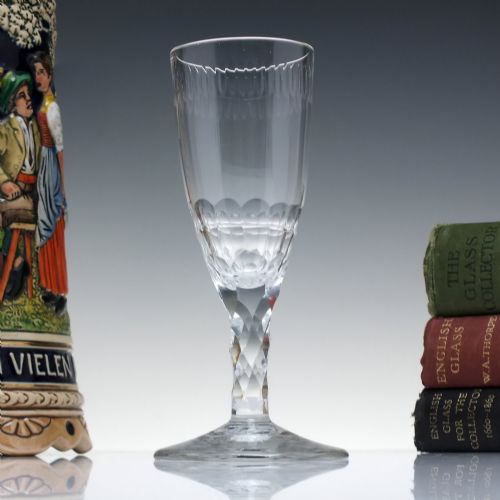
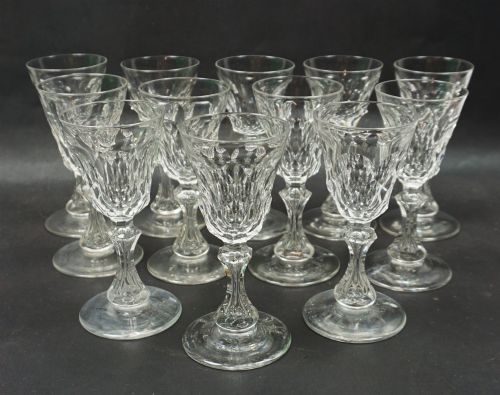
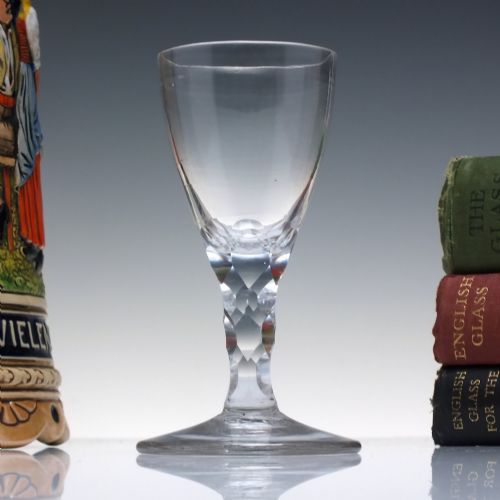
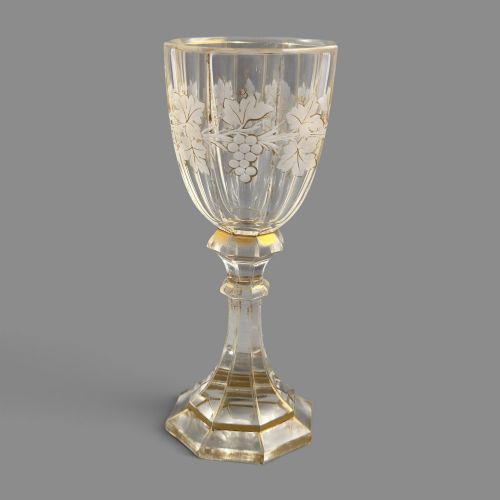
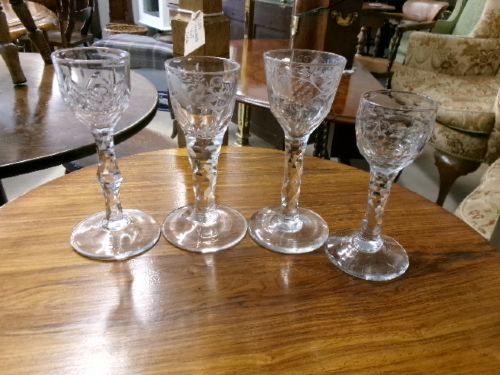
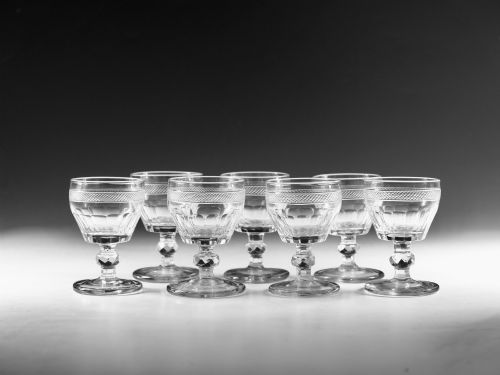
Facet cut wine glasses are drinking vessels shaped by wheel-cutting to create geometric stems and bowls, prized for catching the light on a dining table.
Facet Cut Wine Glasses
When searching for facet cut wine glasses, buyers encounter drinking vessels shaped primarily in the Georgian and 18th Century periods, alongside later Victorian, Edwardian, and 19th Century examples. These pieces typically feature stems or bowls shaped by mechanical or hand-cut facets that reflect light directly through the material.
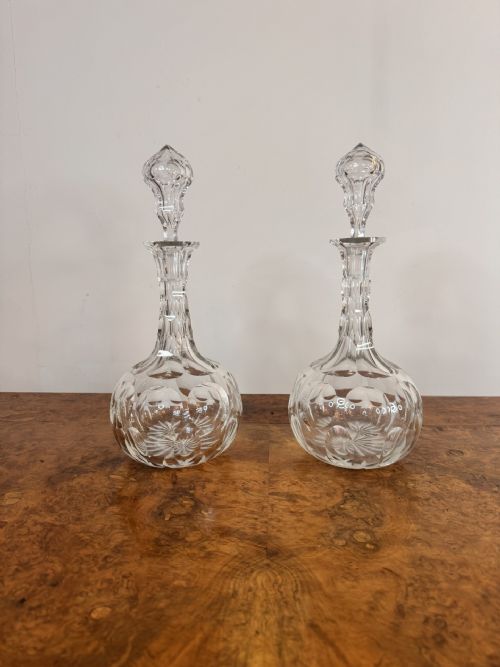
The selection ranges from early English wine glasses and cordials with facet stems to later Bohemian römer goblets and matched drinking sets. Alongside the glasses themselves, the listings include related serving vessels such as decanters, ewers, and port glasses from overlapping eras.
How they were made
Makers shaped these vessels using lead glass, lead crystal, and clear glass, relying on high-lead content to achieve clarity and weight. The raw metal was blown into moulds or free-blown before being cooled for secondary operations.
Artisans applied wheels to cut geometric facets directly into the stems and bodies, occasionally adding surface decoration through gilding or engraving. This abrasive cutting process required steady handling to maintain uniform angles across each facet.
Facet Cut Wine Glasses Retail Price Guide 2026
Typical asking prices for facet cut wine glasses among the pieces listed under this phrase on Sellingantiques today, from the lower quarter to the upper quarter. They describe what is for sale here now, not the wider market.
Secret political loyalties hide inside some 18th Century bowls, where subtle engravings whispered support for exiled kings over evening wine.
What varies in quality
Quality rests on the crispness of the cut facets and the optical purity of the glass material. Sharp, distinct geometric edges indicate superior wheel work, whereas softened or rounded facets suggest lower execution effort or heavy wear.
The visual balance of the vessel, including the proportions of the wide foot base relative to the bowl and stem, separates standard utility ware from finer decorated examples.
Moser·James Giles
The Facet Cut Wine Glasses Glossary
- Facet cut
- A decorative technique using abrasive wheels to grind flat planes onto the surface of glassware. This method catches ambient light and accentuates the clarity of the material.
- Lead crystal
- A glass formulation containing metallic oxides that increases weight, refractive index, and working time for deep cutting. It forms the base of heavier antique drinking vessels.
- Römer goblet
- A traditional Germanic large-bowled drinking vessel often featuring a hollow stem and applied decoration. These vessels frequently incorporate coloured glass or gilding.
- Jacobite engraving
- Symbolic imagery or portraiture applied to 18th Century drinking glasses in support of the exiled Stuart cause. Such decoration transforms standard vessels into historical artefacts.
- Wide foot base
- The broad circular support at the bottom of a stemware piece designed to provide stability. It balances the weight distribution of heavy faceted bowls.
Facet Cut Wine Glasses: Frequently Asked Questions
What defines a facet cut wine glass?
Facet cut wine glasses feature geometric planes ground into their stems or bowls using cutting wheels. These flat surfaces refract light and provide a distinct tactile grip compared to smooth-blown vessels.
The style appears predominantly across Georgian and 18th Century drinking glasses, continuing into later Victorian and Edwardian manufacturing traditions where lead crystal became standard.
How do I identify Georgian examples?
Georgian facet cut wine glasses typically display hand-cut stems with hexagonal or diamond facets rather than machine-pressed patterns. They often feature smaller bowls and wide foot bases designed for fortified wines.
The glass metal itself frequently shows minor inclusions or a heavier lead weight characteristic of 18th Century British and Irish glasshouses.
Were these glasses used daily?
Drinking vessels from the 18th and 19th centuries served formal dining and social occasions for consuming wine, port, and cordials. Their robust lead crystal construction suited regular service on dining tables.
Modern collectors often reserve antique stemware for special occasions or display them alongside period decanters and ewers.
How should I clean antique glass?
Antique glass requires gentle washing in warm water using mild soap rather than immersion in automated dishwashers. Sudden temperature changes can stress old crystal and cause fractures.
Storing stemware upright on stable surfaces prevents rim damage, while avoiding abrasive cloths preserves surface polish on gilded or engraved details.