






Facet Cut Glass Bottle
These heavy, refractive vessels catch the light across tables and dressing surfaces, offering substance and brilliance in equal measure.
Facet Cut Glass Bottle
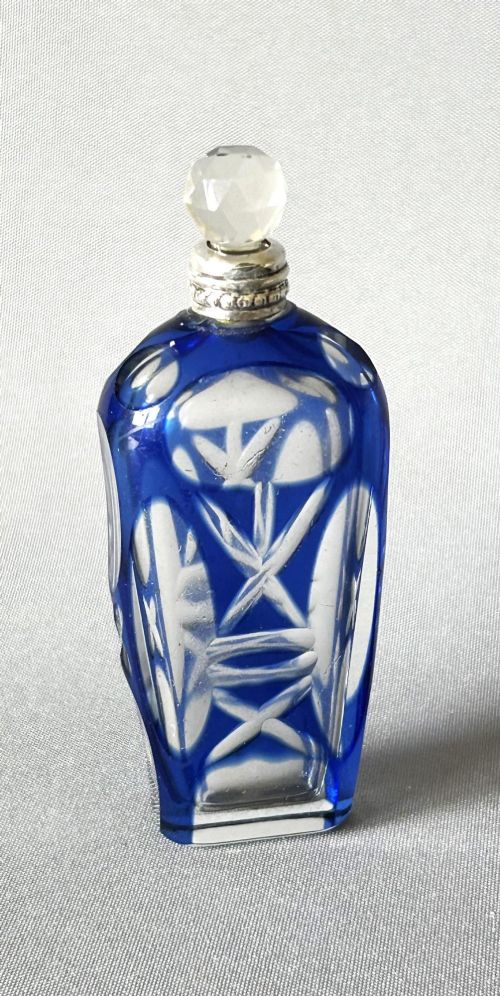
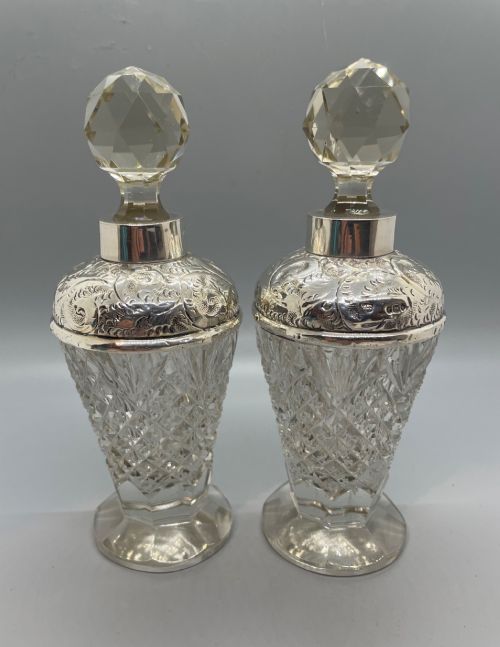
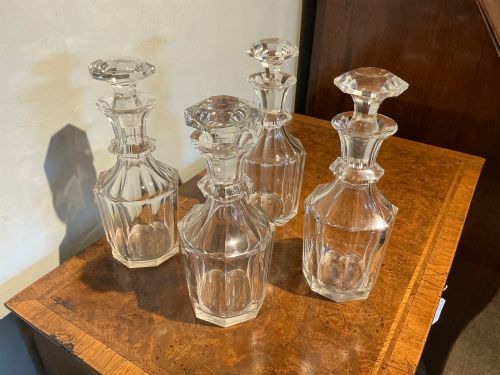
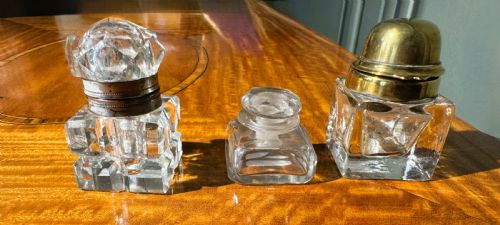
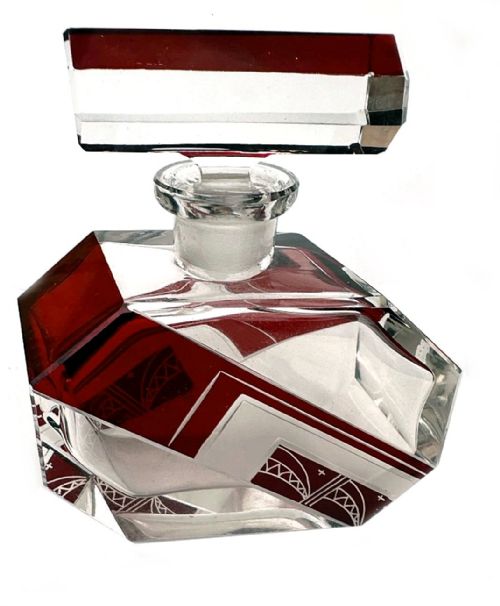
A facet cut glass bottle brings together geometric grinding and clear or coloured material, serving as a decanter, scent container or inkwell.
Most examples encountered here span the Victorian, Edwardian and Art Deco periods, ranging from large beverage decanters to miniature perfume flasks.
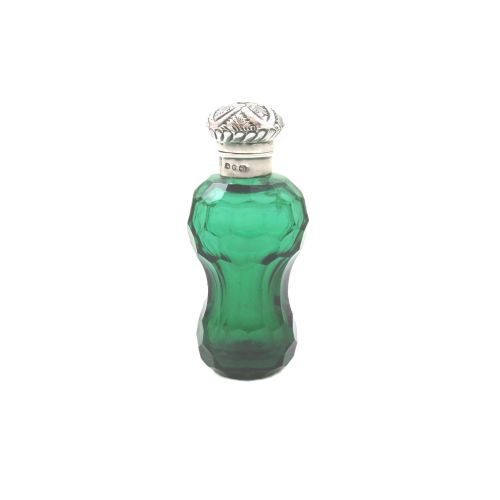
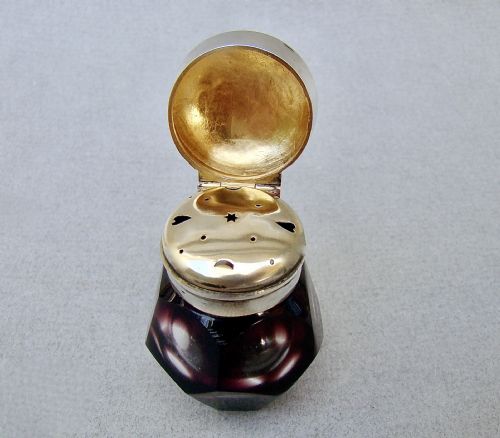
Makers utilised clear lead crystal, ruby glass, amethyst glass and green glass, frequently pairing the vessels with sterling silver collars, caps or enamel work.
Materials and cutting techniques
Craftsmen shaped these objects by blowing glass into moulds or free-blowing the blanks before grinding flat facets across the exterior with abrasive wheels.
Makers then polished the cut surfaces to achieve high transparency, occasionally combining the glass body with cast sterling silver mounts, hinged caps or engraved silver collars.
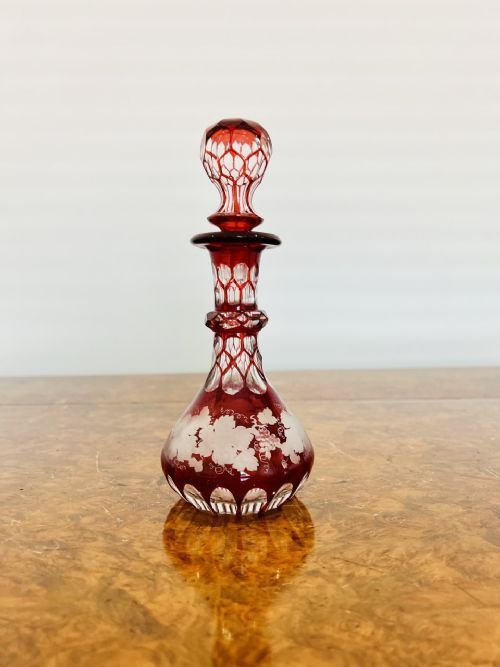
Overlay techniques involved casing coloured glass over a clear core, allowing the cutter to slice through the outer layer and reveal sharp contrasts beneath.
Facet Cut Glass Bottle Retail Price Guide 2026
Typical asking prices for facet cut glass bottle among the pieces listed under this phrase on Sellingantiques today, from the lower quarter to the upper quarter. They describe what is for sale here now, not the wider market.
Listings span from the Georgian era through Victorian, Edwardian and Art Deco periods, showcasing lead crystal, silver, and enamel.
Assessing craftsmanship and execution
Quality rests upon the crispness of the facet edges and the depth of the polish within each cut, which determines how sharply the vessel refracts light.
Superior pieces display heavy lead crystal with balanced proportions and tightly fitting silver mounts or stoppers that match the period of the glass.
Makers such as Karl Palda or firms like Betjemann Brothers introduced refined enamel detailing or specialised locking mechanisms that elevate the standard of manufacture.
Karl Palda·Betjemann Brothers
The Facet Cut Glass Bottle Glossary
- Facet cut
- Geometric surface grinding that creates flat planes across glass to reflect light. These precise cuts define the visual weight of the vessel.
- Overlay
- A manufacturing technique where a layer of coloured glass covers a clear base. Cutters grind through the outer colour to expose the glass underneath.
- Lead crystal
- Glass containing lead oxide that increases weight and refractive index. This material allows deeper, sharper cutting than standard soda glass.
- Vinaigrette
- A small ornamental container with a pierced inner grille holding a sponge soaked in aromatic vinegar. These portable pieces often used coloured glass and silver caps.
- Decanter
- A vessel designed for holding and serving liquids such as wine or spirits. They frequently feature heavy stoppers and cut glass bodies for stability.
Facet Cut Glass Bottle: Frequently Asked Questions
How do I clean an old glass bottle safely?
Fill the vessel with warm water and mild detergent, avoiding sudden temperature changes that might crack aged material. Use specialised bottle brushes carefully on the interior without applying pressure to delicate silver mounts.
Dry the exterior thoroughly with a lint-free cloth to maintain the clarity of the polished facets.
What is the difference between a scent bottle and a decanter?
Scent bottles are small personal items designed for perfume or smelling salts, often fitted with tight silver caps or double-ended stoppers. Decanters are larger vessels intended for table service and holding beverages.
Both forms utilise heavy facet cutting, but their scale and neck configurations reflect their distinct domestic uses.
How can I date a Victorian glass bottle?
Examine the silver hallmarks on the collars or caps, which provide exact assay years for the metal mounts. The depth of the cut glass, colour choices like cranberry or green, and stylistic indicators such as Edwardian bell shapes or Art Deco geometry also help establish the era.
Pontil marks on the base indicate older manufacturing methods common in nineteenth-century production.
Are original stoppers important for these pieces?
Original stoppers that match the cut pattern and internal wear of the bottle contribute significantly to the integrity of the piece. Finding matched pairs or correct replacements requires careful attention to the grinding on the stopper peg.
Many antique bottles survived with their original silver collars or locking mechanisms intact.