


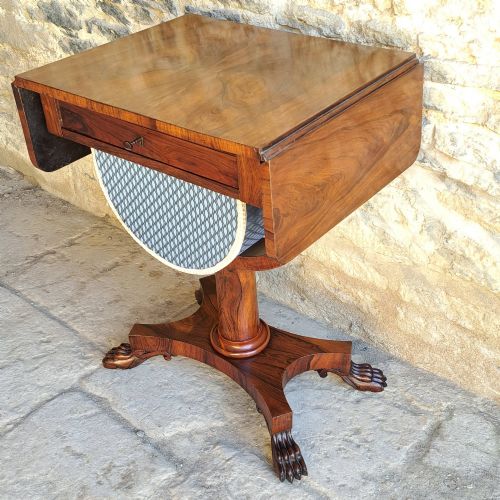


Fabric Workbox
A fabric workbox brings the refined practicality of nineteenth-century needlework directly into a modern room as a striking small table.
Fabric Workbox
A fabric workbox typically takes the form of a freestanding sewing table or work table designed to contain materials and implements for domestic needlecraft. These pieces combine a useful surface, often utilised as a lamp table, with internal compartments or an attached fabric bag.
The selections span the Regency, William IV, Victorian, and Edwardian periods, with nineteenth-century examples dominating the available forms. Mahogany and rosewood appear frequently alongside burr walnut, creating varied woods for different interiors.
Buyers will encounter occasional tables and side tables that double as sewing stands, alongside occasional ottomans. These items served ladies in the drawing room for sewing, embroidery, and correspondence.
How they were made
Cabinet makers built these pieces using solid and veneered timbers including rosewood, mahogany, and burr walnut over a sturdy wooden carcase. Decorative grain patterns, particularly on burr walnut and feathered mahogany surfaces, display the timber's natural figure.
Brass fittings provide structural support and secure closures, while textile components integrate into the design to hold fabrics and sewing tools.
Fabric Workbox Retail Price Guide 2026
Typical asking prices for fabric workbox among the pieces listed under this phrase on Sellingantiques today, from the lower quarter to the upper quarter. They describe what is for sale here now, not the wider market.
Victorian ladies stored hidden pins and gossip inside these clever little compartments.
What varies in quality
The choice of timber creates the primary distinction in quality, with figured burr walnut and richly grained rosewood commanding greater visual presence than plainer woods. Finer examples exhibit meticulous cabinet work in the construction of interior compartments and fitted drawers.
Proportion and the integration of the fabric workbox element dictate the elegance of the silhouette, separating standard utility pieces from finer decorative furniture.
The Fabric Workbox Glossary
- Work table
- A small freestanding table equipped with drawers, compartments, or an attached textile bag designed specifically for sewing and needlework. These items functioned primarily in nineteenth-century drawing rooms.
- Burr walnut
- A highly decorative wood veneer taken from the warted growths on walnut trees, prized for its swirling grain patterns. Cabinet makers utilised this timber on prominent surfaces of Victorian sewing tables.
- Rosewood
- A dense, dark timber with distinct figuring, widely favoured during the Regency and Victorian eras for fine occasional furniture. Its rich colour deepens with age.
- Regency
- An English design period spanning the early nineteenth century, characterised by classical restraint and elegant proportions. Pieces from this era often feature clean mahogany surfaces and restrained brass details.
- William IV
- A transitional style bridging the Regency and Victorian periods, known for substantial proportions and bold scrolling supports. Furniture from this reign displays confident use of solid mahogany and rosewood.
Fabric Workbox: Frequently Asked Questions
What is a fabric workbox?
A fabric workbox is a dedicated piece of nineteenth-century furniture designed to house sewing materials, threads, and tools. They typically combine a small tabletop surface with internal compartments or an integrated textile bag.
These versatile tables functioned primarily in the drawing room, allowing ladies to keep their needlework neatly organised. Today, they serve equally well as compact lamp tables or side tables in sitting rooms.
How do I date a sewing table?
Dating relies heavily on timber choices, construction methods, and prevailing historical styles seen in the piece. Regency and William IV examples often feature solid mahogany or rosewood with architectural lines, whereas Victorian pieces frequently showcase burr walnut.
Later Edwardian versions tend toward lighter construction in mahogany. Examining the interior fittings and secondary woods provides further clues to the decade of manufacture.
Where did people use workboxes?
These tables belonged in the formal reception rooms of nineteenth-century homes, such as drawing rooms and parlours. They provided a convenient station for hand sewing, embroidery, and writing letters.
Their modest footprint allowed them to sit beside chairs or sofas without crowding the room. This practical scale makes them exceptionally useful in modern interior layouts.
Can I use an antique workbox today?
These pieces integrate smoothly into contemporary living spaces as lamp tables, bedside stands, or decorative side tables. The interior compartments remain practical for storing small modern items, stationery, or craft supplies.
Their historic character adds warmth and texture to a room while offering genuine surface utility. Treating the wood with appropriate care ensures the furniture endures daily use.