

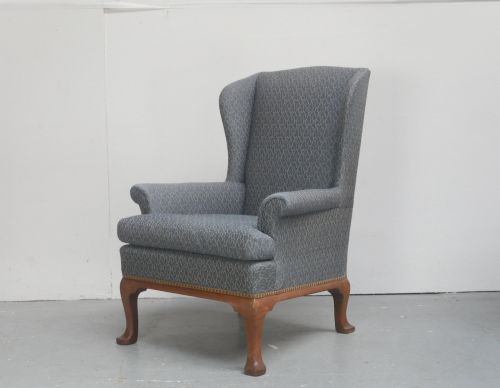
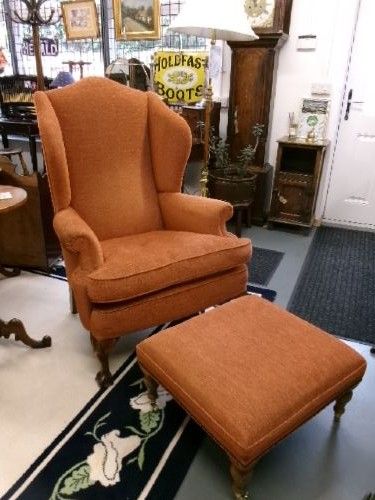
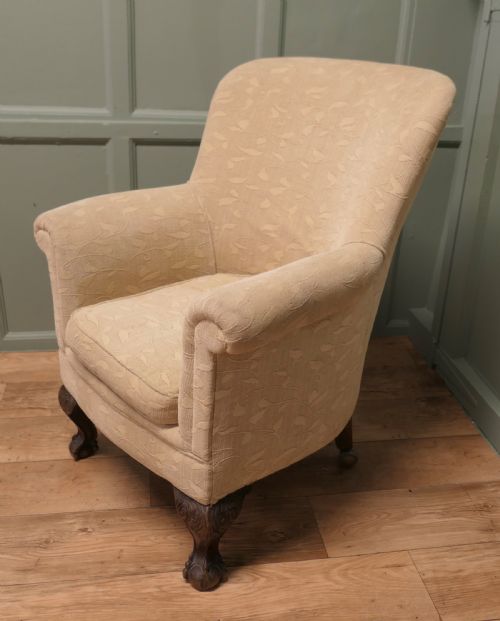
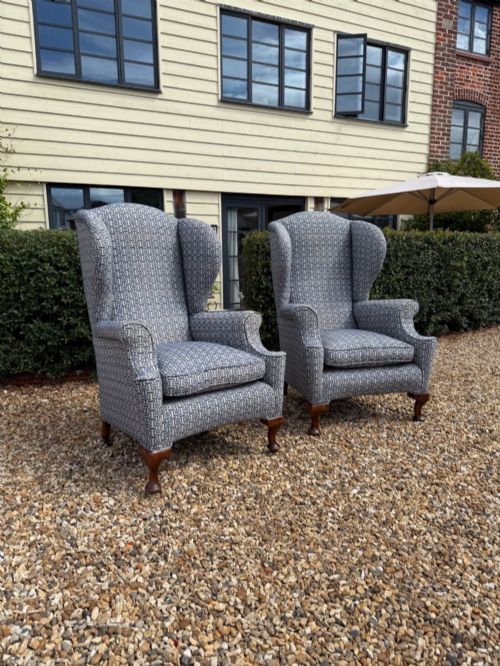
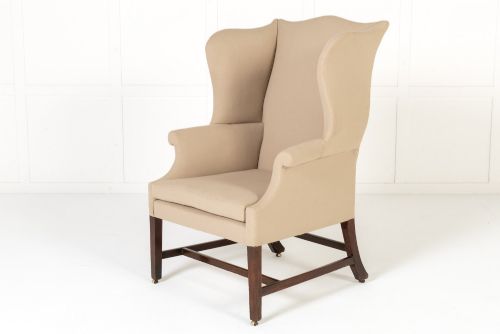
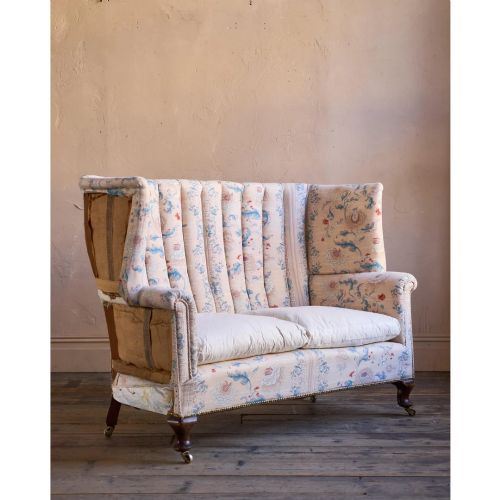
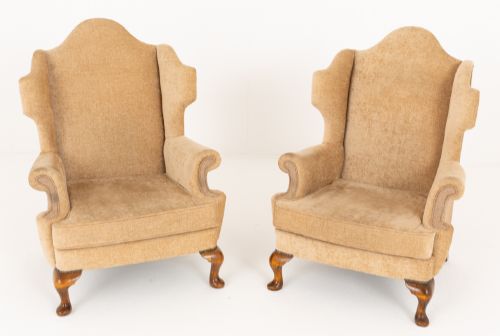


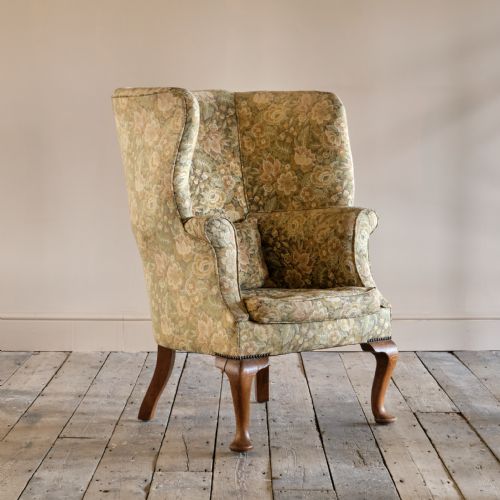


Fabric Wingback Chair
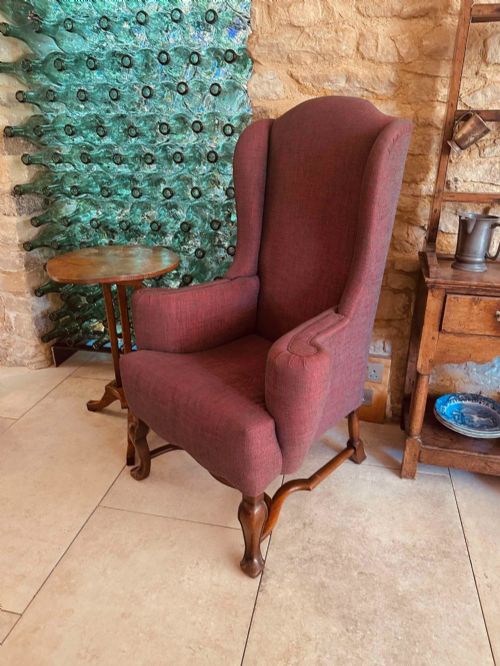
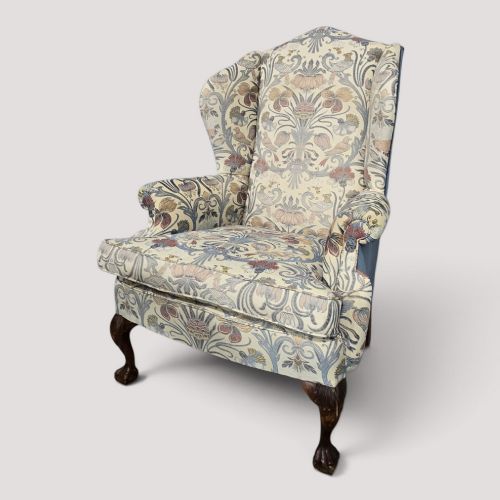
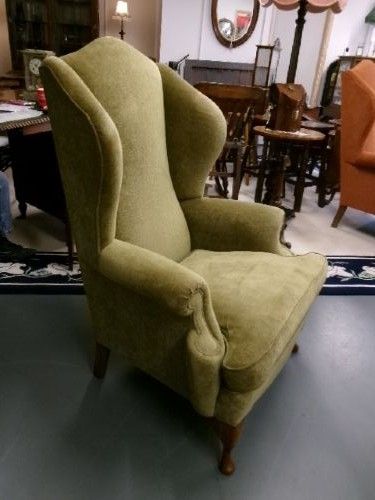
These fabric wingback chair examples offer deep side panels and high backs to block drafts, combining traditional comfort with period upholstery.
Fabric Wingback Chair
A fabric wingback chair provides a supportive seating form featuring distinctive side wings originally designed to deflect draughts from open fires. The selection spans periods from the 18th century through the Victorian, Edwardian, and 1920 eras, encompassing both original period pieces and later revival styles.
Most examples encountered here are armchairs or barrel-backed variants, alongside occasional sofas and settees. Wood frames appear in mahogany, walnut, and oak, paired with diverse upholstery fabrics ranging from floral patterns to recycled cotton and ticking.
How they were made
Frames are constructed from hardwoods such as mahogany, walnut, and oak, frequently shaped with hand-carving or turned supports. Joinery relies on traditional carpentry methods suited to sustaining heavy upholstery loads.
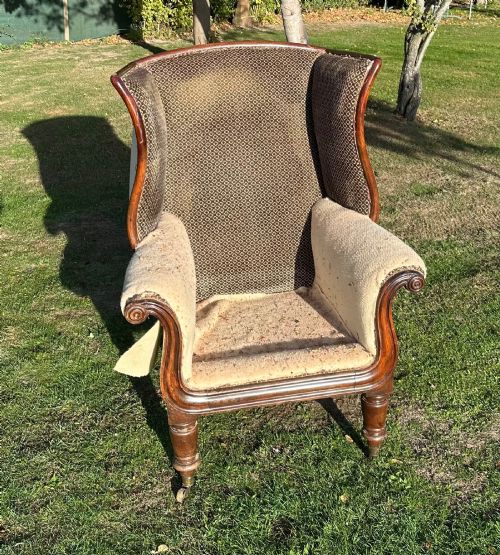
Upholstery techniques involve securing fabric over internal padding and webbing, sometimes finished with brass details or ribbed texturing. Frames occasionally feature exposed wood on legs and arm terminals while enclosing the main body in textile.
Fabric Wingback Chair Retail Price Guide 2026
Typical asking prices for fabric wingback chair among the pieces listed under this phrase on Sellingantiques today, from the lower quarter to the upper quarter. They describe what is for sale here now, not the wider market.
Listings feature wood frames in mahogany, walnut, oak, and general hardwood, spanning periods from the 18th century to the 1920s.
What varies in quality
Quality rests in the proportions of the frame and the integrity of the underlying woodwork, where substantial timber and careful carving distinguish finer pieces from standard production. The harmony between the original frame geometry and subsequent upholstery choices dictates the overall success of the piece.
Provenance and maker attribution elevate certain examples, particularly those bearing the marks of established workshops. The choice and execution of the textile covering, whether historic silk or later patterned cotton, significantly influence the character and presentation.
Whytock and Reid·Howard and Sons·Thomas Sopwith·Thomas Chippendale
The Fabric Wingback Chair Glossary
- Wingback
- An armchair featuring projecting side panels attached to the arms or back to trap heat and block draughts. This form evolved during the 17th century and remained popular across Georgian and Victorian periods.
- Barrel back
- A seating form where the upholstered back curves continuously around to form the arms in a semi-circular shape. This style provides an enclosed, supportive seat.
- Mahogany
- A durable tropical hardwood utilised extensively in furniture frames for its strength and rich grain. It accepts fine carving and polished finishes well.
- Walnut
- A dense, dark timber favoured for cabinet work and chair frames during the 18th and 19th centuries. It offers stability and distinctive grain patterns.
- Queen Anne style
- A design aesthetic characterised by curved lines, cabriole legs, and understated elegance. Revivals of this style recurred in later periods.
Fabric Wingback Chair: Frequently Asked Questions
How do I identify an 18th century wingback chair?
Examination of the internal frame construction and timber species provides the primary clues for dating an 18th century piece. Hand-cut joinery and period tool marks distinguish genuine early examples from later revivals.
Proportions tend to be more restrained in older pieces, reflecting the seating fashions of the Georgian era before Victorian upholstery introduced heavier padding.
Can I reupholster a vintage fabric wingback chair?
Many buyers acquire these chairs specifically for re-upholstery to match modern interiors or to restore worn textiles. Frames sold explicitly for this purpose allow for custom fabric selection.
Retaining the original webbing and padding structure depends on the condition of the internal materials and the desired firmness of the seat.
How do I care for antique upholstery fabric?
Vacuuming gently with a soft brush attachment removes surface dust without stressing fragile textile fibres. Avoiding direct sunlight prevents fading in delicate materials like silk or printed cotton.
Professional cleaning is recommended for antique textiles to preserve the integrity of the weave and prevent shrinkage.