



Fabric Piano Stool
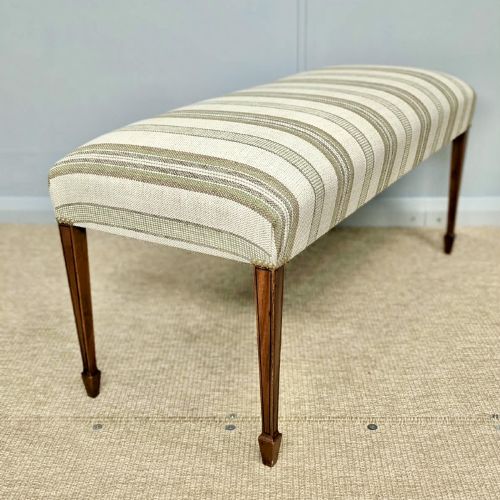
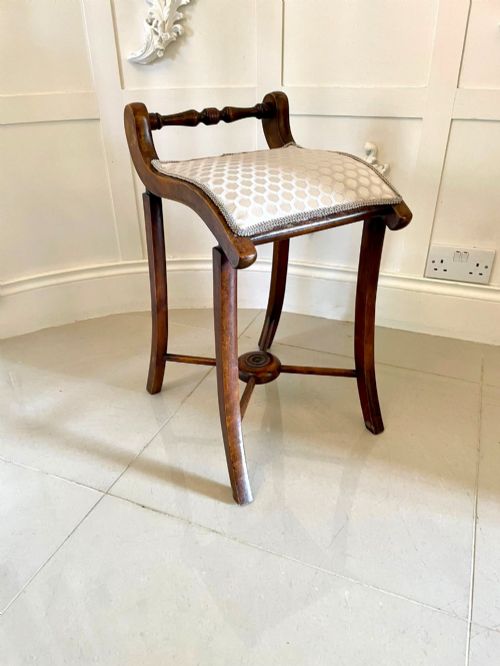
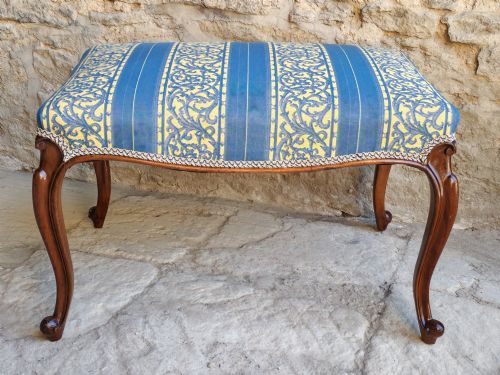
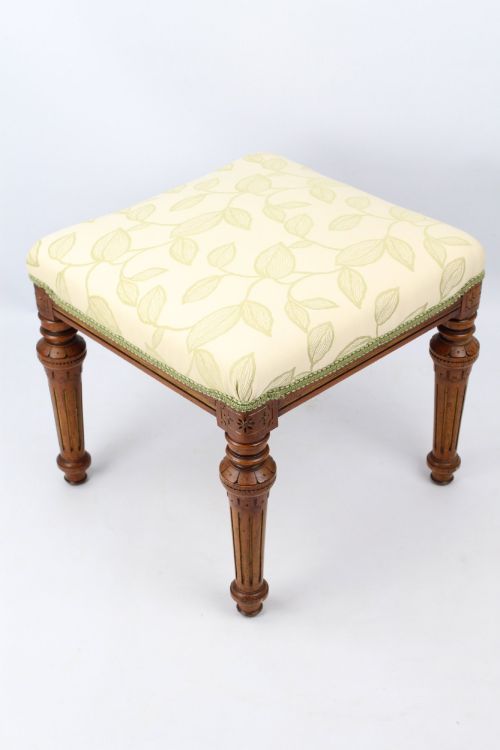
Fabric piano stool examples bring together period timber frames and upholstered seats designed for the music room.
Fabric Piano Stool
A fabric piano stool serves as both a functional seat and a period furnishing, often incorporating adjustable mechanisms or revolving tops for the player. These seating options emerge from the Victorian, Edwardian, Regency, and William IV eras, capturing specific shifts in domestic music room design.
The pieces listed on this page span several decades of production, including swivel bases, deep buttoned upholstery, and duet configurations. Mahogany and walnut dominate the structural forms, while ebonised wood and gilt oak appear alongside French and Louis XV revival styles.
Buyers will encounter various forms ranging from standard revolving piano stools to music chairs and dressing table stools with fabric seats. Each version reflects the seating requirements of the nineteenth and early twentieth centuries.
Materials and construction methods
Craftsmen built these frames primarily from solid mahogany and walnut, occasionally utilising rosewood, ebonised wood, or oak. Timber selection dictated the structural integrity of the rotating and adjustable mechanisms housed within the stool columns.
Upholstery fabric sits atop padded foundations, with deep buttoning appearing on select Victorian examples. Metal components such as brass hardware and castors facilitate movement and height adjustment on surviving pieces.
Fabric Piano Stool Retail Price Guide 2026
Typical asking prices for fabric piano stool among the pieces listed under this phrase on Sellingantiques today, from the lower quarter to the upper quarter. They describe what is for sale here now, not the wider market.
Some Victorian piano stools contain hidden screw threads that creak politely when the pianist adjusts their height before a sonata.
Assessing quality in period seating
The standard of carving and timber selection distinguishes superior pieces from standard workshop output. Dense mahogany or figured walnut indicates a higher grade of production compared to simpler utility items.
Mechanical complexity also separates examples, particularly smooth-operating swivel bases and adjustable screw mechanisms. The execution of upholstery work, from fabric choice to buttoning, influences the overall refinement of the seat.
The Fabric Piano Stool Glossary
- Revolving piano stool
- A seat featuring a mechanism that allows the top to spin for height adjustment. This design became common during the nineteenth century.
- Ebonised wood
- Timber stained or painted black to imitate ebony. This finish frequently appears on Victorian music room furniture.
- Duet piano stool
- A wider seating platform designed to accommodate two players at the keyboard. These pieces often feature Edwardian mahogany frames.
- Deep buttoning
- An upholstery technique where twine is pulled through padding and secured to create a geometric pattern of indentations. It provides structural support to the fabric seat.
Fabric Piano Stool: Frequently Asked Questions
How do I date a piano stool?
Dating relies on examining the timber species, joinery methods, and stylistic cues present in the frame. Regency pieces display distinct neoclassical lines, while Victorian examples often incorporate turned columns and heavy upholstery.
Edwardian items tend to show lighter mahogany construction with simpler revolving mechanisms.
Did all piano stools swivel?
Not all period piano stools rotate, as many were produced as fixed-height benches or duet stools. Revolving tops and adjustable screw mechanisms were specific options chosen for player comfort.
Fixed stools with original fabric seats also served as dressing table chairs or general seating.
Where should I place a piano stool?
These pieces function well in living spaces as occasional seating or beside desks and dressing tables. Their compact footprints allow them to fit easily into corners or small alcoves.
Placing them away from direct heat sources helps preserve the timber frames and original upholstery fabrics.