


Fabric Lounge Chair
A fabric lounge chair offers deep comfort and traditional seating, ranging from Victorian button backs to Art Deco club designs.
Fabric Lounge Chair
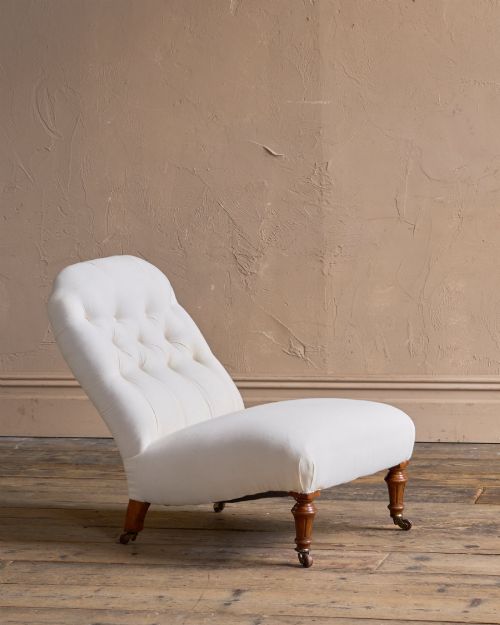
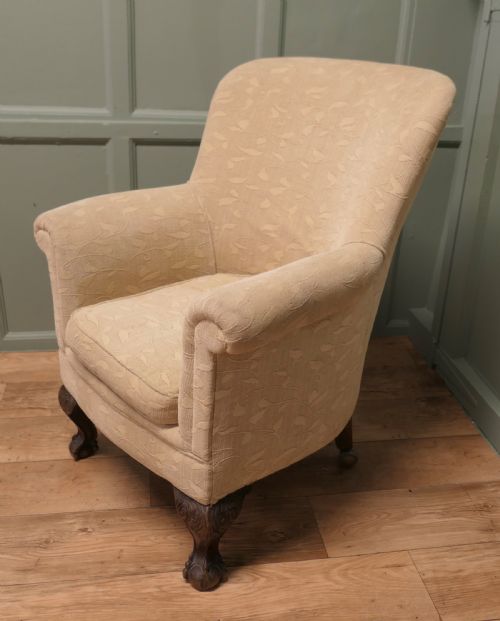
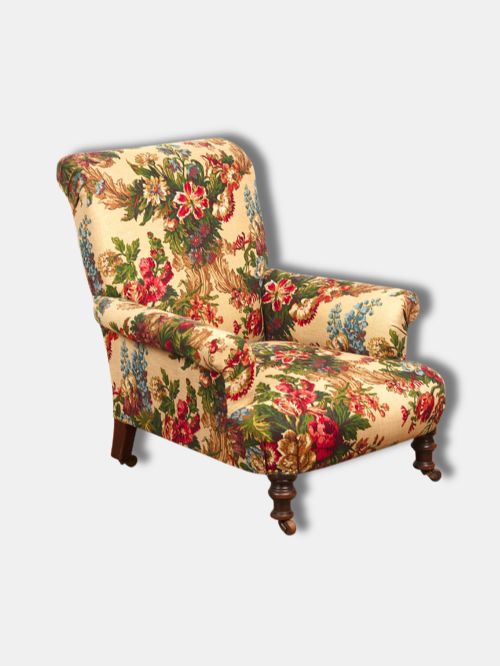
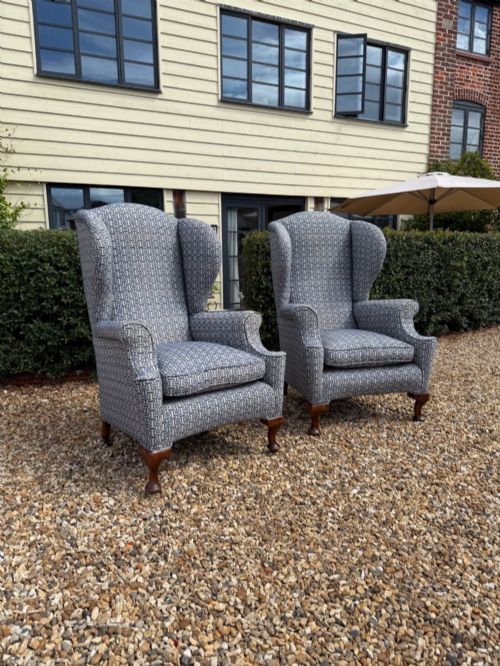
When you search for a fabric lounge chair, you encounter a selection of seating spanning the nineteenth and twentieth centuries, including Victorian, Edwardian, and Art Deco periods. The forms include armchairs, wingbacks, slipper chairs, and scroll back designs originating from English country houses, France, and Scotland.
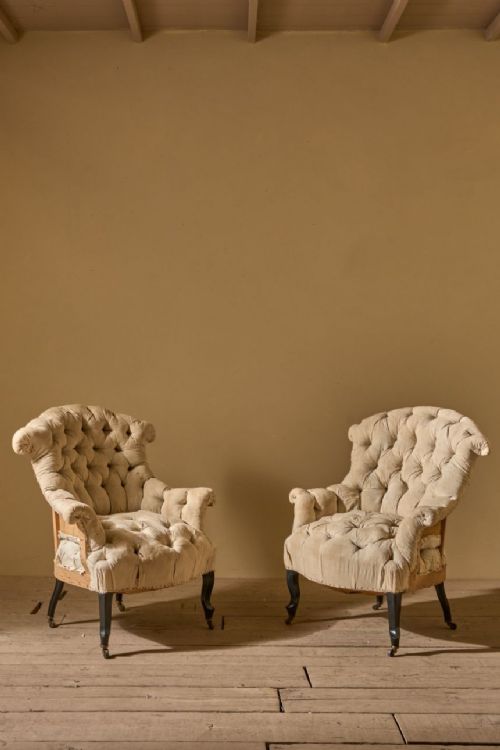
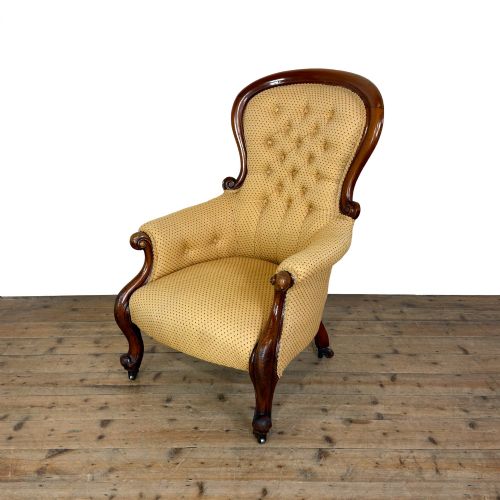
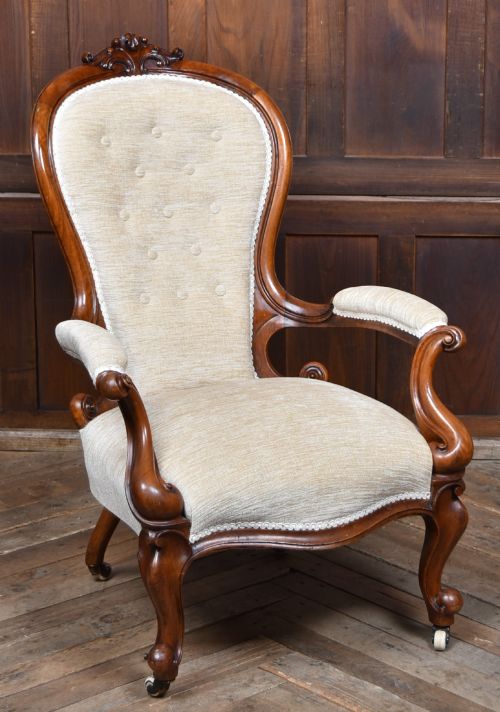
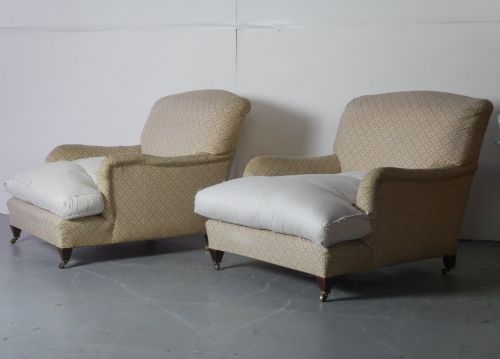
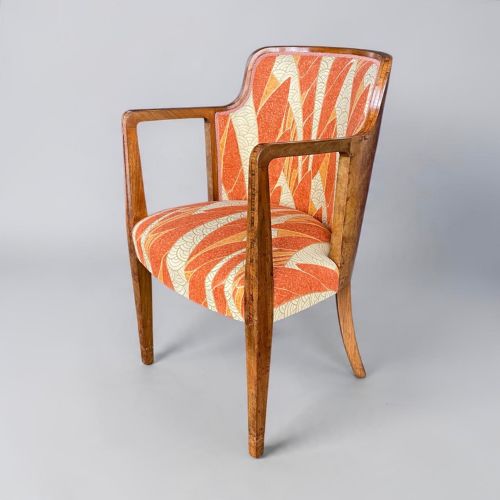
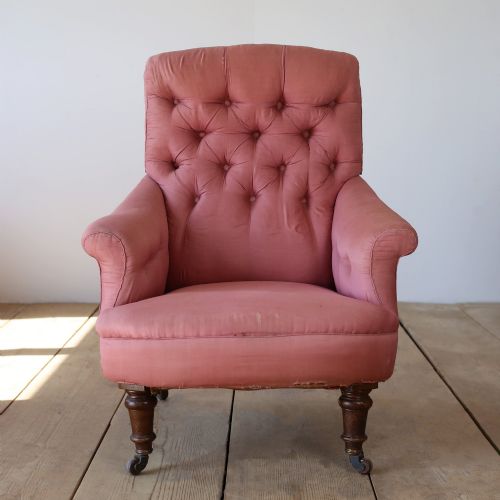
Victorian examples often feature spoon backs, walnut frames, or button upholstery, while later 1930s pieces lean towards Art Deco club shapes and tank suites. Many listings comprise matched pairs, offering symmetry for a living space or drawing room.
The selection also incorporates daybeds and chaise longues upholstered in materials such as calico and damask. Pieces range from straightforward occasional tub chairs to large proportioned Grafton style armchairs.
Materials and construction methods
The underlying frames of these chairs rely on solid hardwoods such as mahogany, walnut, satin birch, and satinwood, occasionally accented with brass details and metal elements. Timber forms the structural core, supporting sprung or padded seats.
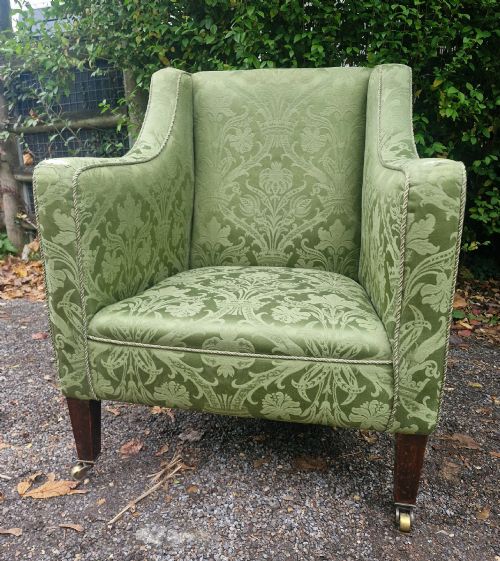
Upholstery uses traditional textiles including damask, calico, and floral fabrics, sometimes applied over buttoned backs or fishtail contours. Maker signatures or attribution marks appear on select frames from cabinet makers and upholsterers.
Fabric Lounge Chair Retail Price Guide 2026
Typical asking prices for fabric lounge chair among the pieces listed under this phrase on Sellingantiques today, from the lower quarter to the upper quarter. They describe what is for sale here now, not the wider market.
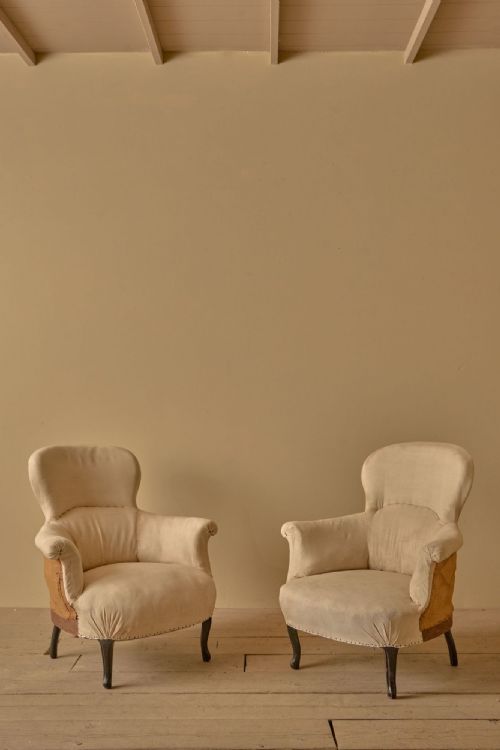
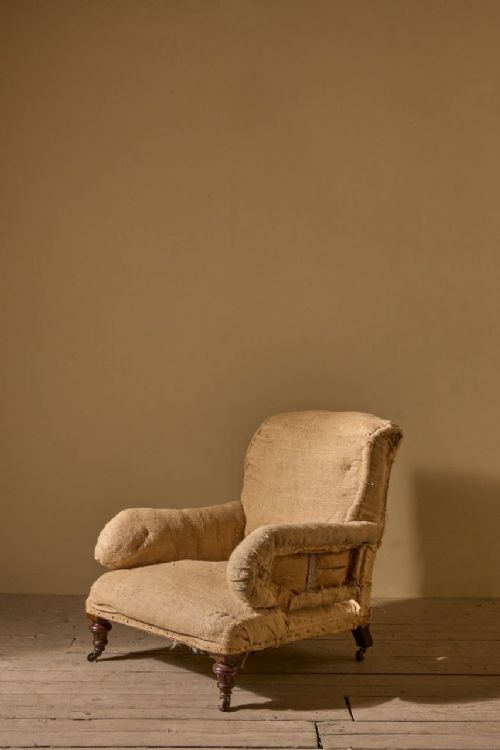
Several armchairs arrive ready for a new life, including French chairs specifically noted as waiting for fresh upholstery.
Distinctions in craftsmanship and proportion
Quality reveals itself in the scale and proportion of the frame, from small Scottish armchairs to large wing armchairs with generous dimensions. The integrity of the woodwork, whether carved walnut or inlaid satinwood, sets finer examples apart.
The execution of the upholstery, including buttoning and fabric selection such as damask or floral patterns, demonstrates the standard of the finish. Maker attribution to established firms like Howard and Sons or Whytock and Reid adds notable distinction.
Strahan and Co Dublin·Whytock and Reid·Howard and Sons·Hindley and Sons
The Fabric Lounge Chair Glossary
- Spoon back
- An upholstered chair back shaped like the bowl of a spoon, popular during the Victorian period. This profile fits the natural curve of the human spine.
- Wingback
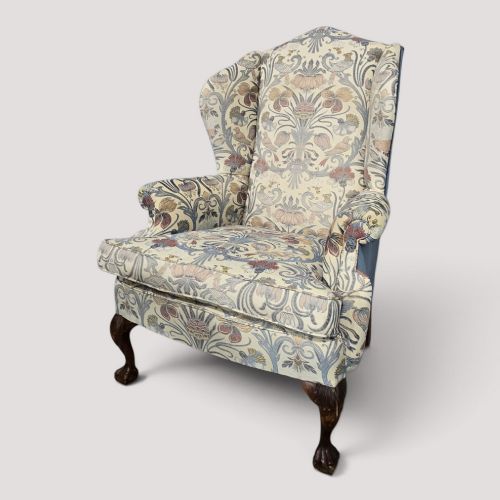
- An armchair with side panels, or wings, attached to the back of the chair designed to shield the user from draughts. These panels often flow into low arms.
- Satinwood
- A hard, durable timber with a golden sheen used for fine furniture framing and inlay work. It brings a bright finish to early twentieth-century pieces.
- Damask
- A reversible figured fabric woven on a jacquard loom with patterns visible on both sides. It provides a textured and decorative finish for traditional upholstery.
- Calico
- A plain-woven textile made from unbleached cotton, frequently used as an underlying upholstery layer. It acts as a sturdy base before final top covers are applied.
Fabric Lounge Chair: Frequently Asked Questions
What defines a Victorian armchair?
Victorian armchairs typically feature dark timber frames in walnut or mahogany, with prominent upholstery details such as button backs or spoon back profiles. They reflect mid-to-late nineteenth-century manufacturing styles.
These chairs often utilise heavy padding and structured springs to ensure comfort, paired with floral fabrics or damask coverings.
How do Art Deco chairs differ?
Art Deco chairs from the 1930s favour streamlined, rounded shapes like club chairs and tank suites rather than ornate Victorian carvings. They prioritize bold, simplified silhouettes.
These pieces suit modern interior layouts while retaining substantial proportions for lounging.
Where were scroll back chairs used?
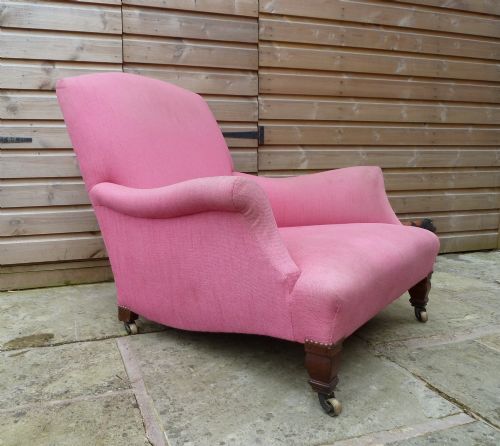
Scroll back armchairs frequently furnished English country houses during the late nineteenth and early twentieth centuries. Their curved backs offered a relaxed profile for drawing rooms.
Such seating pairs well with traditional living spaces and large proportioned rooms.
What is a slipper chair?
A slipper chair is a low-set upholstered seat traditionally used in bedrooms for changing shoes. Its short legs keep the sitter closer to the floor.
These compact chairs often feature button backs and require minimal floor space.