

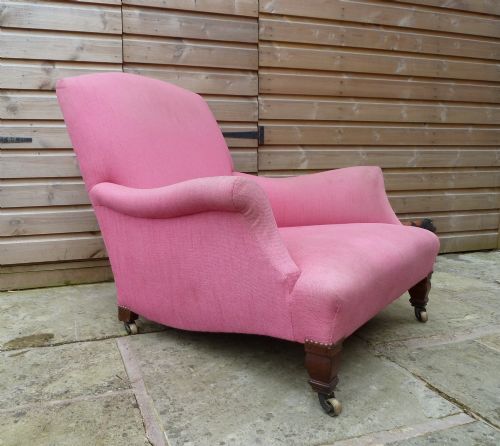
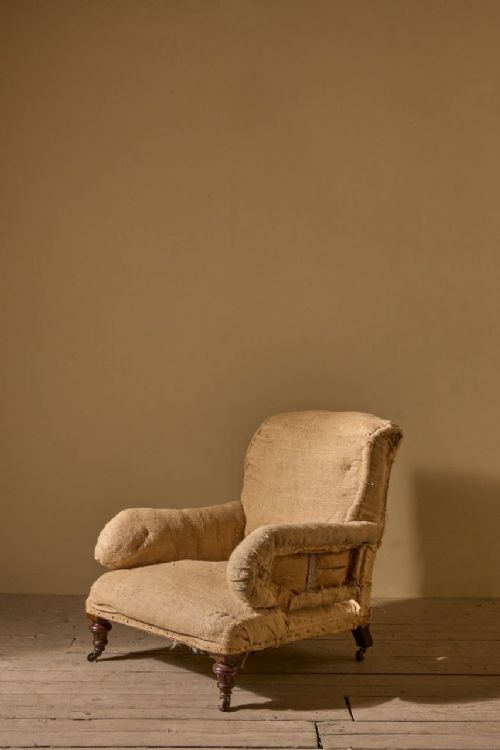
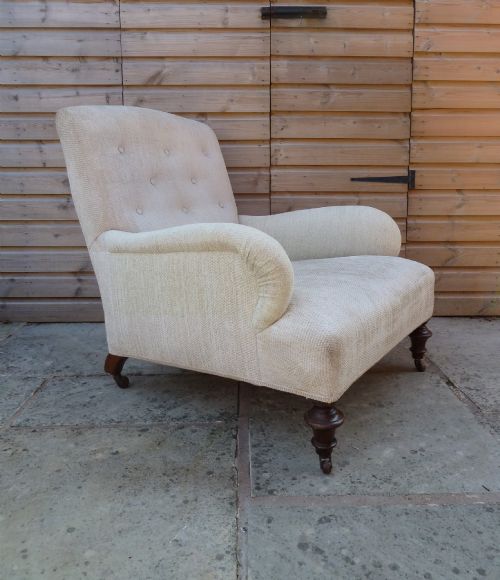
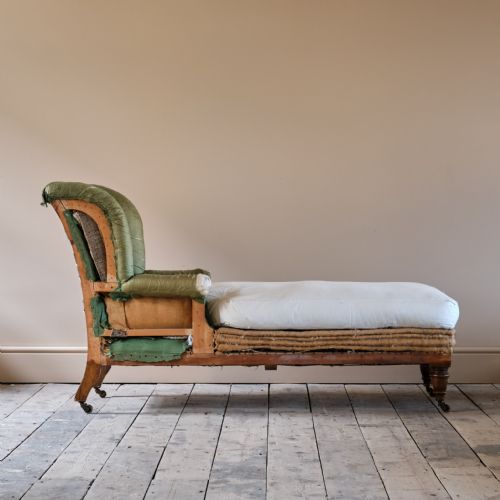


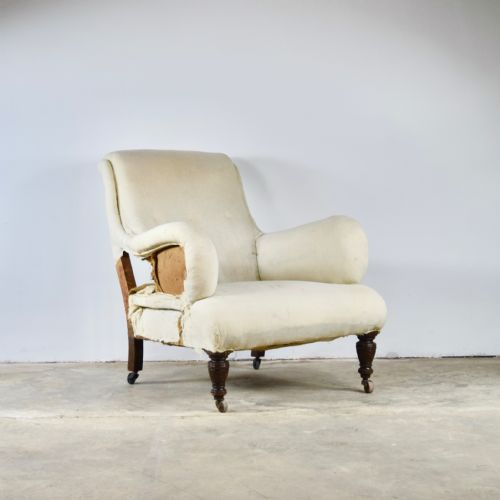


Fabric Howard Style Chair
These fabric howard style chairs deliver deep-seated comfort with traditional English country house character.
Fabric Howard Style Chair
A fabric howard style chair is a deeply padded, low-slung armchair designed for relaxed lounging, commonly found in 19th-century, Victorian, and Edwardian country house interiors. You will encounter various forms here, including club easy armchairs, slipper chairs, daybeds, and matching sofas.
The pieces on this page span the 19th century through to later 20th-century interpretations, capturing the evolution of generous English seating. Most examples lean heavily into traditional upholstery styles, featuring low wooden supports and expansive sprung seats.
How they were made
Constructed around sturdy hardwood and timber internal frames, these chairs utilise durable materials designed to withstand decades of heavy use. Hardwood components provide the structural integrity required to support deep coil springing.
Upholstery relies on traditional textiles such as cotton, velvet, and original ticking fabric, often paired with exposed mahogany, walnut, or brass castor feet. The combination of dense interior stuffing and robust fabric finishes defines the classic silhouette.
Fabric Howard Style Chair Retail Price Guide 2026
Typical asking prices for fabric howard style chair among the pieces listed under this phrase on Sellingantiques today, from the lower quarter to the upper quarter. They describe what is for sale here now, not the wider market.
Some chairs spent a century hidden under slipcovers, preserving the original fabric in startlingly bright condition.
What varies in quality
The distinction between standard and superior examples lies in the integrity of the internal upholstery buildup and the weight of the frame. Expertly tensioned springs and hand-stitched edges maintain the characteristic low profile without sagging over time.
Material selection also dictates the hierarchy, with finer period textiles, substantial hardwood frames, and original maker stamps marking out the most accomplished workshops. Lesser pieces may display heavier, less refined proportions or replacement modern webbing that alters the intended sit.
Howard and Sons·James Shoolbred·Trollope and Sons
The Fabric Howard Style Chair Glossary
- Ticking
- A tightly woven cotton fabric traditionally used as a durable base cover for heavy upholstery. Its striped pattern is iconic to vintage country house seating.
- Bridgewater
- A classic English armchair shape characterised by low, rolled arms and a deep seat designed for maximum relaxation. This form is frequently associated with top-tier Victorian upholstery.
- Slipper chair
- A low-set upholstered chair traditionally used in bedrooms for ease of dressing. These pieces lack arms and sit close to the floor on short wooden legs.
- Daybed
- An elongated piece of furniture combining seating and reclining functions. These share the deep upholstery and sprung comfort of standard armchairs.
Fabric Howard Style Chair: Frequently Asked Questions
How do I identify a genuine period piece?
Look for traditional stuffing materials, hand-stitched upholstery techniques, and substantial hardwood internal frames beneath the outer fabric. Maker stamps on the castors or legs often confirm the origin.
Compare the proportions against documented Edwardian and Victorian examples to verify the period silhouette.
Are original ticking fabrics durable enough for daily use?
Original cotton ticking is tightly woven and remarkably resilient, designed to endure decades of heavy domestic friction. Many surviving examples retain their strength despite showing age.
Inspect the fabric closely for thinning areas before committing to heavy everyday seating.
What is the difference between a club armchair and a slipper chair?
Club armchairs offer deep seats with supportive low arms built for lounging in studies and drawing rooms. Slipper chairs feature a compact, armless design that sits lower to the floor.
Both styles utilise heavy internal springing but serve entirely different spatial roles in a room.
How do I care for antique upholstery?
Vacuum the fabric regularly using a low-suction attachment to remove dust from the deep creases and folds. Protect the piece from direct sunlight to prevent fading of cotton and velvet textiles.
Professional cleaning is recommended for delicate historical fabrics to preserve the underlying structure.