

Extending Pillar Dining Table
When you search for an extending pillar dining table, you find timber pedestals built to lengthen for large dinners.
Extending Pillar Dining Table
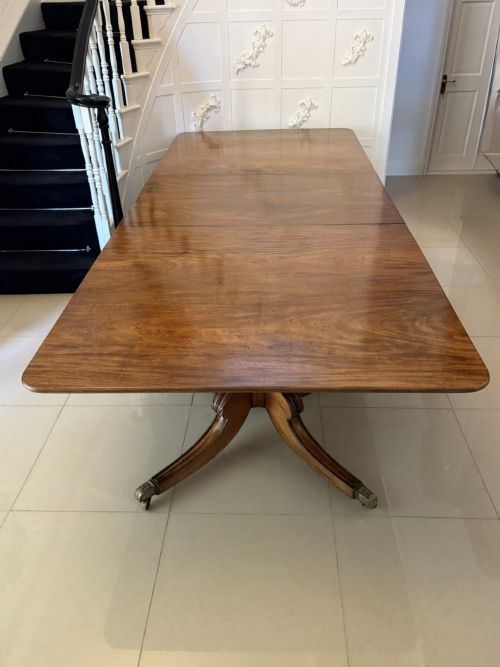
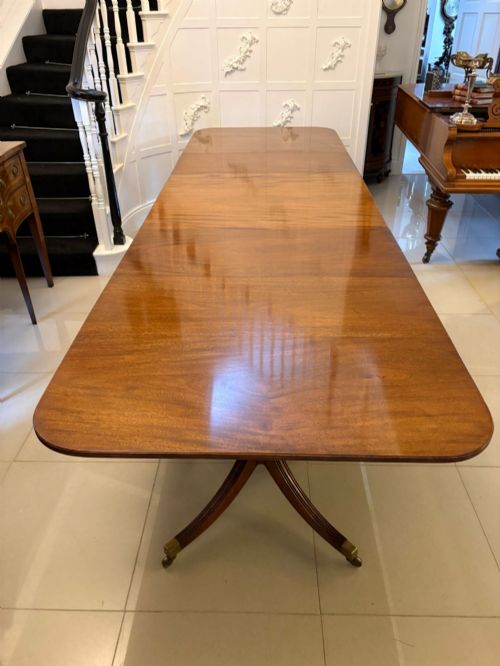
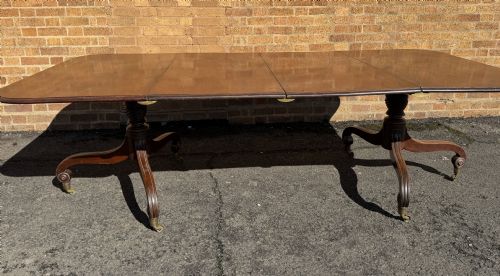
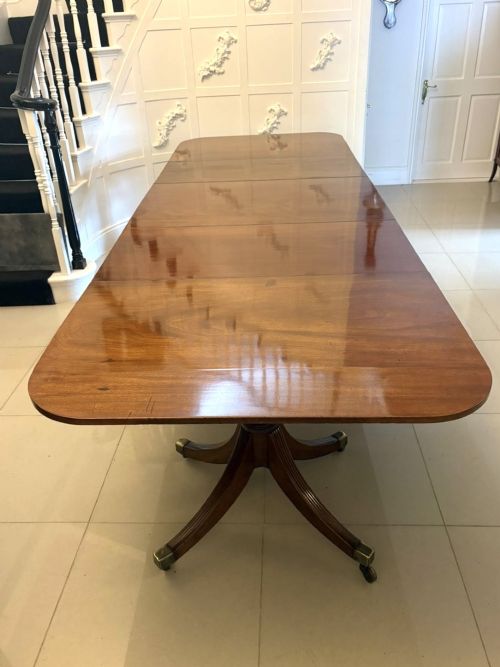
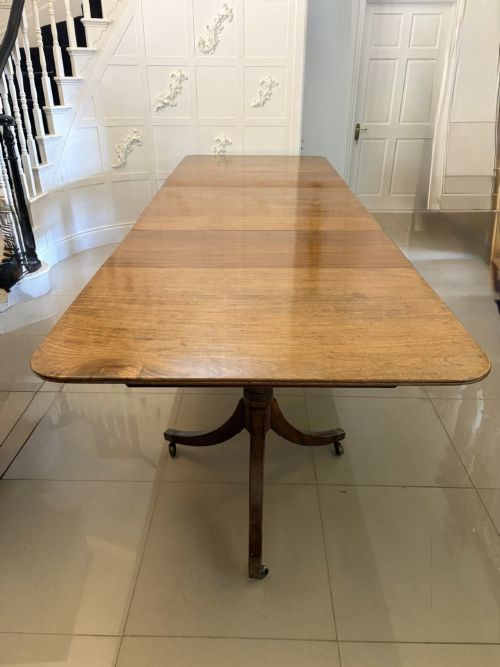
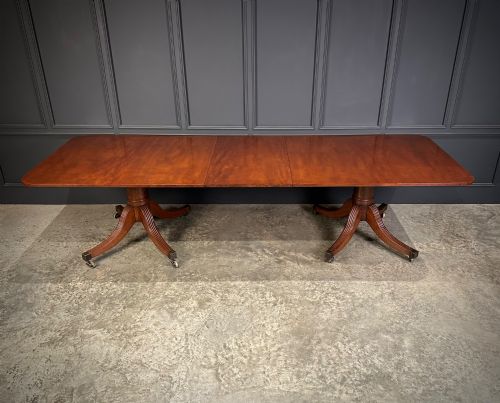
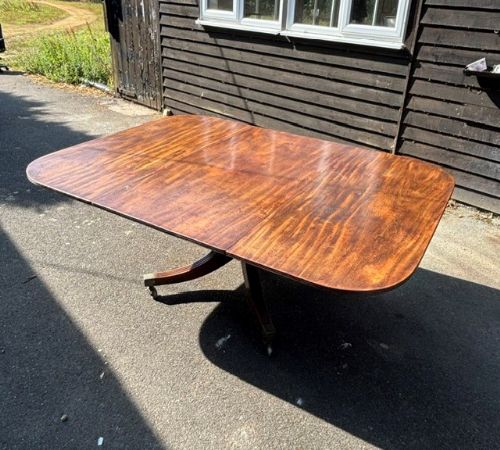
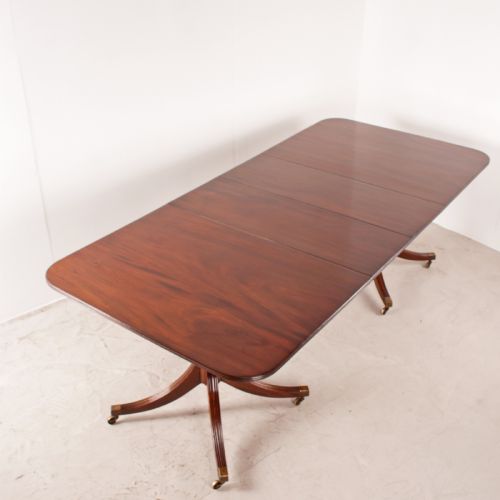
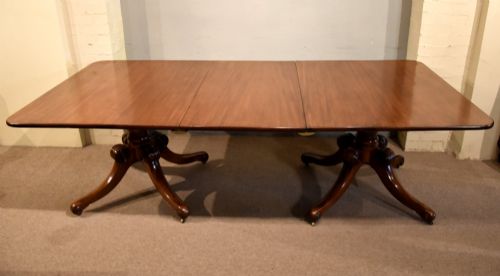
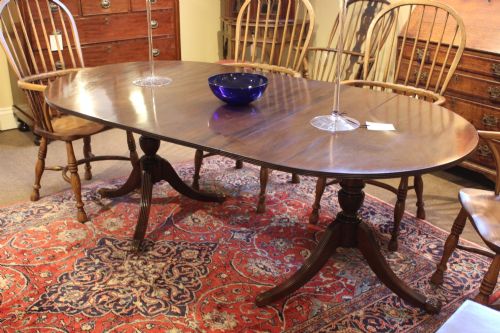
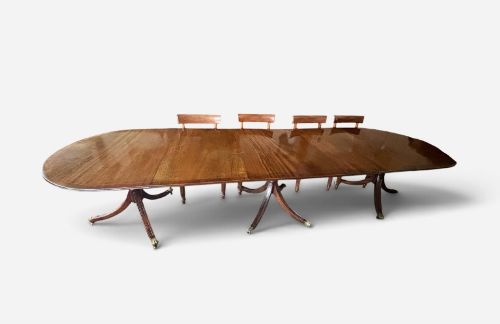
An extending pillar dining table combines upright wooden pedestals with removable leaves to accommodate varying numbers of diners, from intimate groups to large gatherings of over twenty people.
Makers such as Thomas Butler, Whytock & Reid, and William Trotter appear among the historic workshop examples, alongside pieces dating through the nineteenth and early twentieth centuries.
How they were made
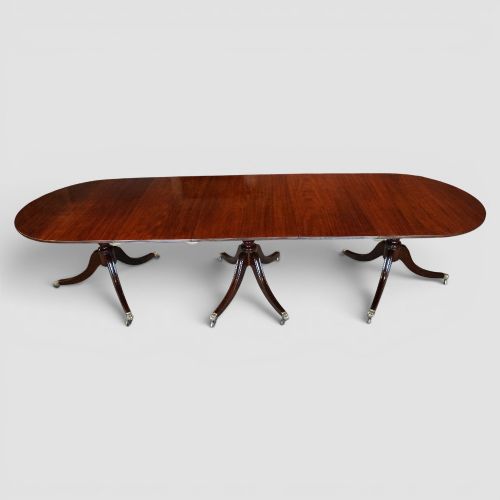
Carpenters constructed these tables using solid and figured mahogany, often integrating Spanish mahogany and occasionally burr walnut, matched with brass mechanisms and castors.
Extending mechanisms relied on pull-out frames or clever pull actions that allowed leaves to drop in or slide smoothly into the centre of the pedestals.
One remarkably adaptable specimen transforms right before your eyes as a metamorphic dining table.
What varies in quality
Quality rests in the choice of figured mahogany timbers, the precision of the pillar turnings, and the smooth operation of the extending mechanism.
Examples with original brass fittings, well-balanced proportions across multiple pedestals, and maker attributions mark the higher end of the range.
Thomas Butler·Whytock & Reid·William Trotter
The Extending Pillar Dining Table Glossary
- Twin-pillar
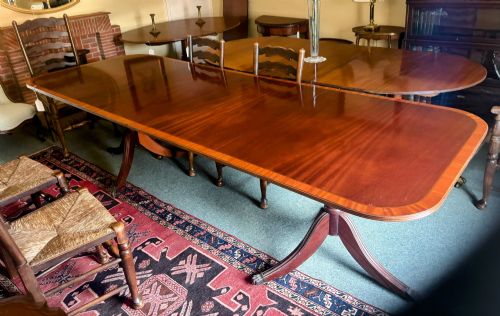
- A dining table supported by two central pedestals. This format typically suits medium-sized rooms and allows comfortable seating for eight to twelve people.
- Triple-pillar
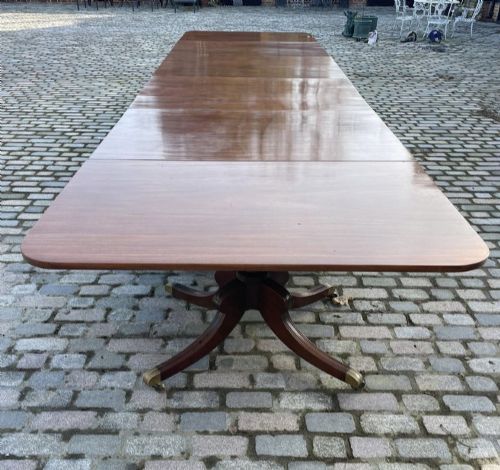
- A table resting on three separate pedestals. This construction supports longer tops designed to seat sixteen to twenty-eight guests.
- Leaf
- A removable section of timber inserted to extend the surface area of the table. Leaves allow the overall length to adapt to different dining occasions.
- D-end
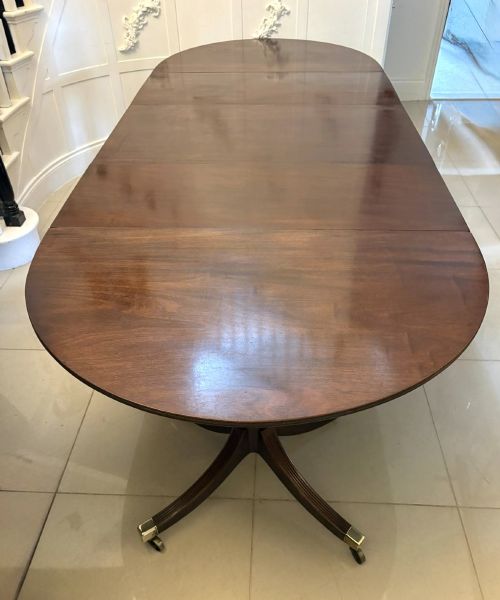
- A table end shaped like a capital letter D, created when the leaves are removed and the ends push together. This form is common in Regency and Georgian designs.
- Metamorphic
- A descriptor for furniture that transforms its function or form through mechanical ingenuity. These tables adjust in surprising ways beyond simple pulling actions.
Extending Pillar Dining Table: Frequently Asked Questions
How do I seat more guests at my table?
You pull the pedestals apart along the internal runners and drop the removable leaves into the created gap. Securing brass clips underneath holds everything firm.
Larger triple-pillar versions accommodate multiple leaves, letting you scale the length from a modest family dinner up to a massive banquet.
Are these tables sturdy when fully extended?
The weight of dense mahogany combined with multiple pedestals provides a remarkably stable base even at maximum length. Central pillars distribute the downward load evenly across the floor.
Well-designed pull-out actions maintain structural integrity without sagging in the middle when loaded with heavy table settings.
What is the difference between twin and triple pillar?
Twin-pillar tables use two pedestals and generally suit lengths seating up to twelve people. They fit standard dining rooms while offering clear legroom.
Triple-pillar tables add a third central support to carry much longer tops, making them necessary for grand dining spaces seating sixteen or more.
How do I distinguish a Regency piece from a revival?
Period pieces from the Regency and Georgian eras show authentic timber ageing, hand-cut joinery, and period-specific brass castors. Grain patterns display deep natural patination.
Revival pieces from the twentieth century often replicate these classic designs with precise machinery work while utilising similar figured mahogany stocks.