


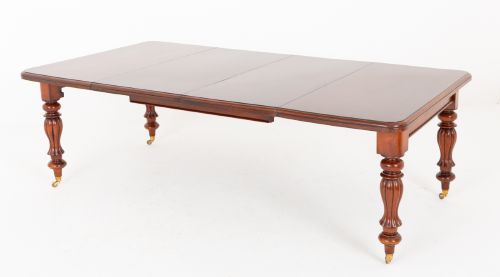
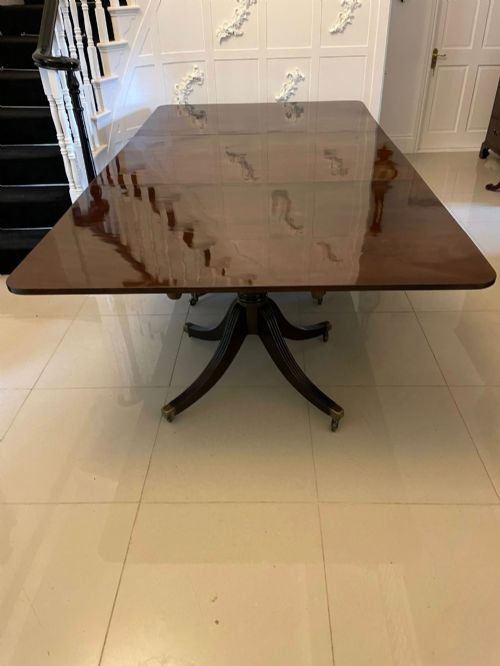
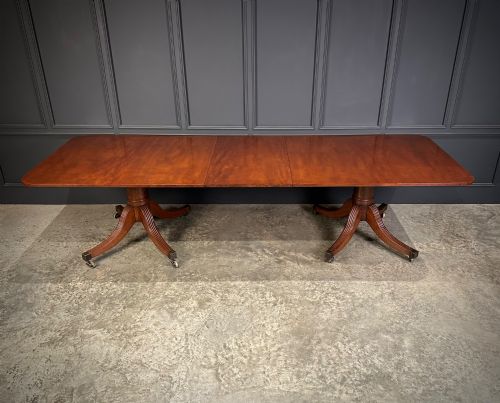
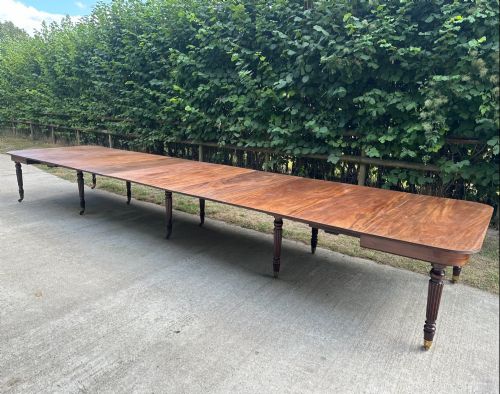
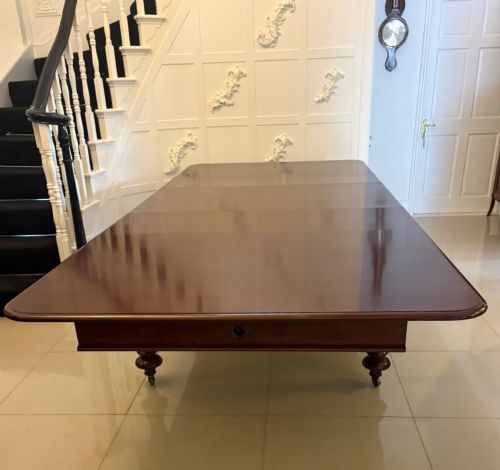
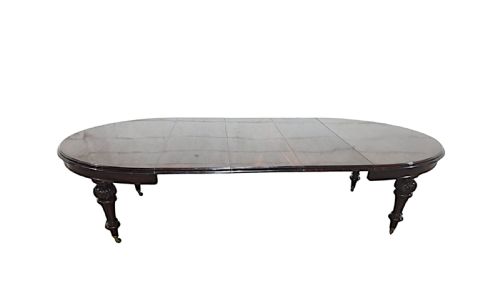
Extending Mahogany Banquet Table
An extending mahogany banquet table brings scale and presence to large dining rooms through substantial timber and modular leaves.
Extending Mahogany Banquet Table
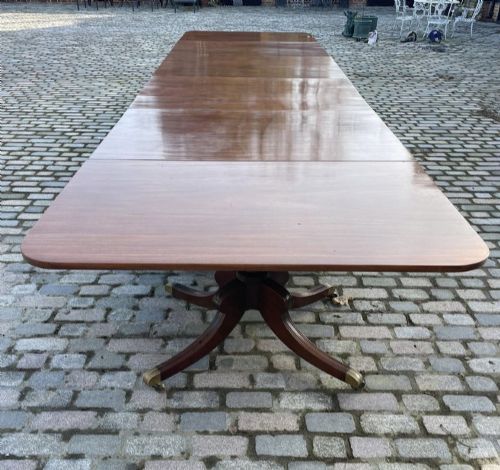
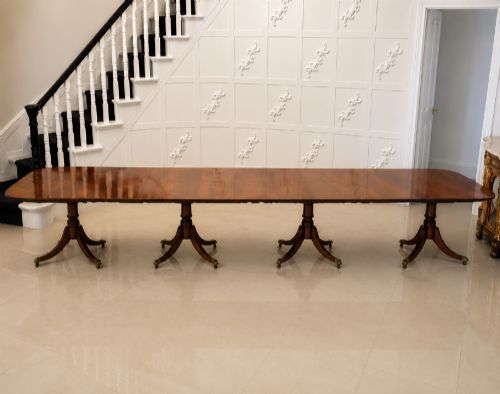
When searching for an extending mahogany banquet table, you encounter large dining pieces designed to accommodate numerous guests through removable leaves and pillar supports. These tables span Georgian, Regency, William IV, and Victorian periods, alongside later revival pieces.
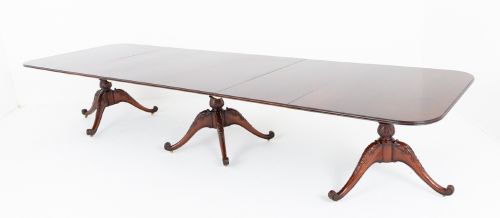
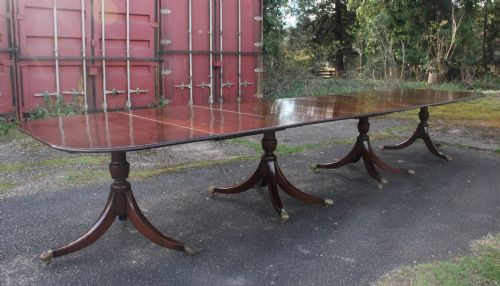
The most common forms on this page include multi-pedestal tables seating anywhere from ten to over twenty-eight guests. They utilise solid timbers and figured mahogany veneers, often accompanied by extra leaves to alter the overall length for different gatherings.
Origins range from English and Irish workshops to specific cabinet makers of the nineteenth century. Buyers select these items for formal dining spaces where length, seating capacity, and timber figure matter equally.
What separates examples of different quality
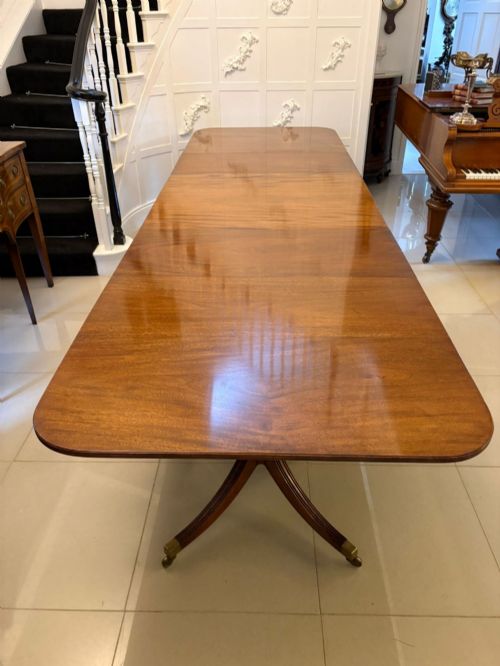
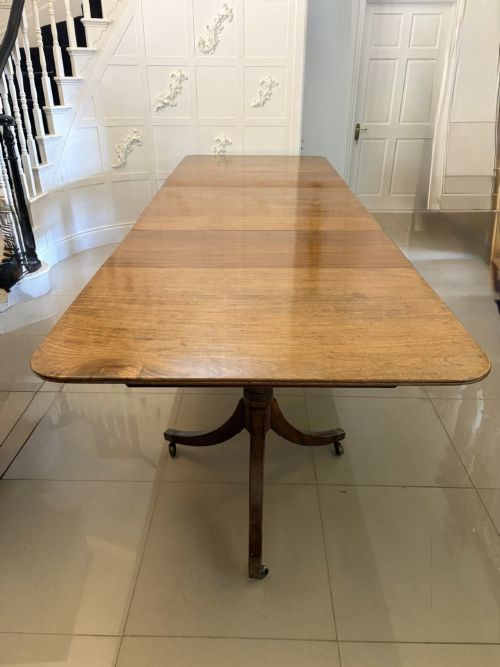
Quality rests primarily in the selection of the mahogany timber and the depth of the figure across the top and leaves. Tables exhibiting rich grain patterns and consistent colour throughout show superior material selection by the maker.
The engineering of the pedestal bases and the smooth operation of the extension mechanism dictate practical merit. Heavier multi-pillar formats require robust internal construction to support numerous leaves without sagging.
Some tables require up to six separate pedestals and five leaves to accommodate twenty-eight diners for a proper banquet.
Gillows·Wylie & Lochead·Whytock & Reid·William and Gibton·Robert Adam
The Extending Mahogany Banquet Table Glossary
- Figured mahogany
- Timber selected for its decorative, rippled grain patterns. This wood was prized for formal dining furniture to create visual depth on large tabletops.
- Pedestal
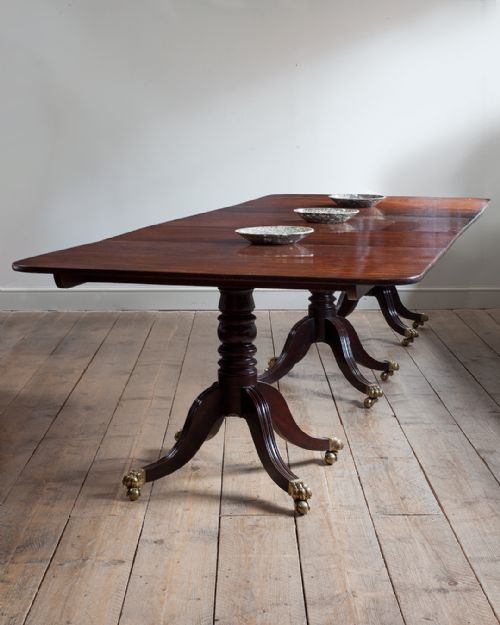
- A central pillar support resting on branching legs. Multiple pillars distribute weight evenly on very long dining tables.
- Wind-out
- A mechanical extension system operated by a handle. This internal screw mechanism parts the table halves to receive additional leaves.
- D-End
- A table end shaped in the semi-circular outline of the letter D. These sections often detach or serve as console ends.
- Reeded
- Parallel rounded mouldings carved into table legs or pillars. This decorative turning method appeared frequently on Regency furniture.
Extending Mahogany Banquet Table: Frequently Asked Questions
How do multi-pedestal dining tables extend?
Many tables utilise removable drop-in leaves supported by a central framework or wind-out screw mechanisms. Turning a handle parts the table sections so additional timber panels can drop securely into place.
Larger banquet tables rely on three, four, or six pedestals to distribute weight evenly across the floor once fully extended to maximum capacity.
How many people can these banquet tables seat?
Seating capacity varies by length, ranging from ten or twelve guests on twin-pillar models up to twenty-eight guests on massive four-pillar or six-pillar formats. Extra leaves determine the exact number.
Buyers select lengths based on their room dimensions and the frequency of large gatherings.
What is figured mahogany?
Figured mahogany refers to timber boards selected for their exceptional grain patterns, such as flame or fiddleback figures. Cabinet makers reserved these premium veneers for the most prominent surfaces.
Under polish, figured timber catches the light and displays considerable depth compared to plain straight-grained mahogany.
How do I distinguish Regency from Victorian tables?
Regency and George III tables often feature restrained lines, reeded legs, and brass paw castors. The timber finish tends to be lighter or warm golden-brown.
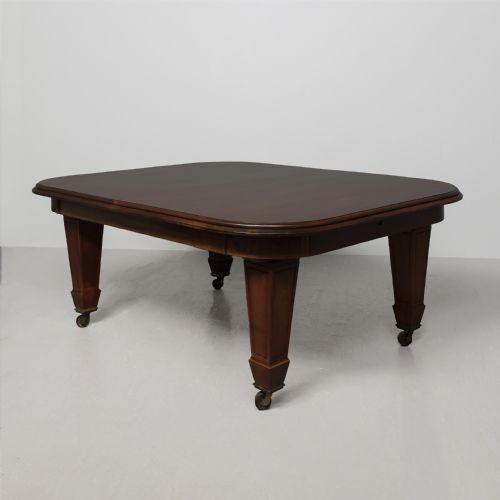
Victorian and late nineteenth-century examples frequently present heavier proportions, darker figured mahogany, and robust pedestal bases designed for substantial family dining.