


Extending French Farmhouse Table
An extending French farmhouse table brings robust utility and generous proportions to a dining room, designed to seat large gatherings with ease.
Extending French Farmhouse Table
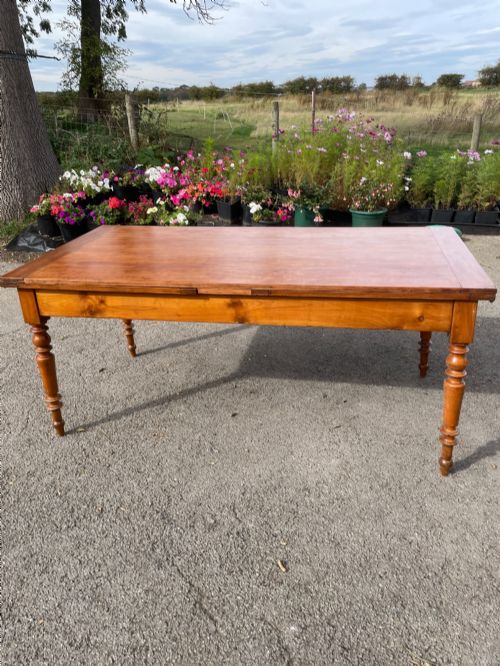
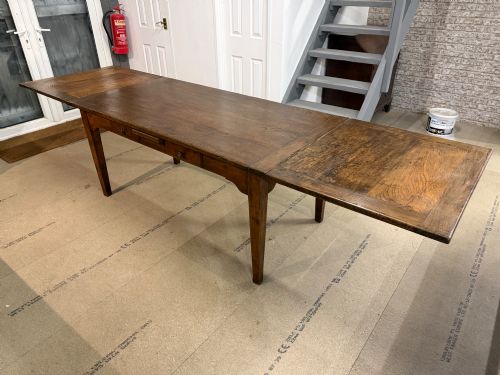
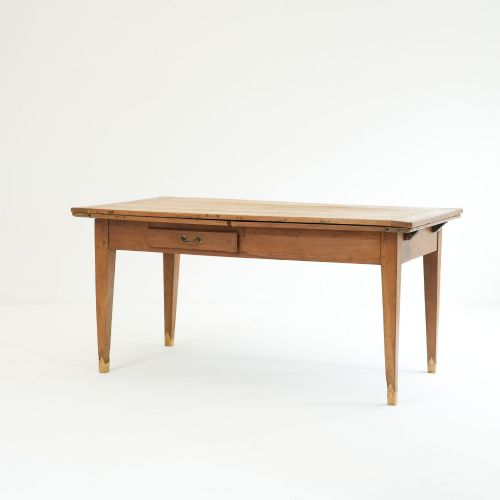
An extending French farmhouse table is a practical dining piece built to accommodate large numbers of people in rural kitchens and dining rooms. When searching for an extending French farmhouse table, buyers encounter formats that utilise clever mechanism types like draw leaves and double extending frames to increase surface space.
The pieces on this page stem from periods ranging from the seventeenth century through to the early twentieth century. Common stylistic expressions include rustic farmhouse, French provincial, French country, and Basque regional designs.
Dining tables dominate the object types, appearing in varied scales from small formats to large three-metre lengths. Oak, cherry wood, and pine provide the primary timber choices for these functional domestic surfaces.
Evaluating Quality and Proportion
The quality of an extending French farmhouse table rests on the selection of timber and the precision of its extension mechanism. Superior examples feature dense hardwoods like cherry or oak with well-matched grain patterns across the main top and the pull-out leaves.
Construction details differentiate the output of regional workshops from standard utility furniture. Refined proportions, sturdy underframes, and smooth-operating draw leaf systems separate exceptional dining tables from simpler utilitarian versions.
Listings feature tables constructed from solid oak, cherry wood, pine, fruitwood, chestnut, and apple wood, spanning the seventeenth to early twentieth centuries.
The Extending French Farmhouse Table Glossary
- Draw leaf
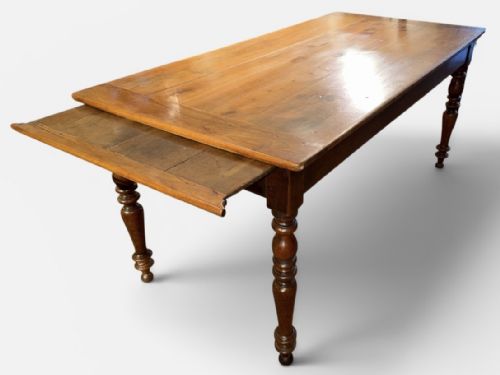
- A table extension system where two leaves store underneath the main top and pull out from the ends to lengthen the surface. This mechanism allows the surface area to increase without requiring loose boards.
- Double extending
- A design featuring extension leaves at both ends of the table to maximise seating capacity. This configuration provides substantial length adjustments for large dining spaces.
- Refectory
- A long dining table style traditionally used in communal dining halls. These rectangular pieces provide stable, long-format surfaces for everyday meals.
- Fruitwood
- An umbrella term for timber harvested from fruit-bearing trees such as cherry, apple, and pear. Cabinetmakers valued these dense woods for their fine grain and warm colour tones.
- Parquetry
- Geometric wood inlay work arranged in patterns on a surface. This decorative technique appears on select tabletops to add visual texture to the grain.
Extending French Farmhouse Table: Frequently Asked Questions
How do extending mechanisms work on these tables?
Most historic extending tables utilise a draw leaf system where secondary leaves slide out from beneath the main surface. Users simply pull each end outward to expand the usable length.
Other formats rely on double extending frames that operate on internal wooden runners. These mechanisms allow the main top sections to separate smoothly as the leaves glide into place.
What woods were used for French farmhouse tables?
Carpenters utilised locally available timber, resulting in a prevalence of cherry wood, oak, pine, and various fruitwoods. Hardwoods provided the durability needed for heavy kitchen preparation and daily family dining.
Pine appears on more rustic or utility-focused examples, whilst chestnut and apple wood feature in specific regional traditions like Basque designs.
How do I date an antique farmhouse table?
Dating relies on examining the construction methods, tool marks left on the timber, and the style of the legs and underframe. Hand-cut joints and pegged tenons typically indicate older, nineteenth or seventeenth-century construction.
Hardware materials like brass components and the complexity of the extension mechanisms also offer clues regarding the period of manufacture.
Can I use an antique table every day?
These pieces were built as durable working furniture for rural kitchens and farmhouses, making them well-suited to daily use. Their solid timber construction handles regular dining and family activities with ease.
Applying appropriate care and protective measures helps preserve the historic wood finishes against daily wear and moisture.