
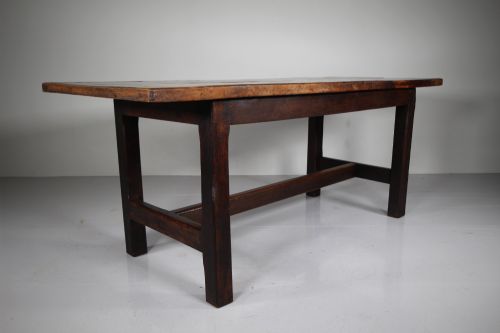
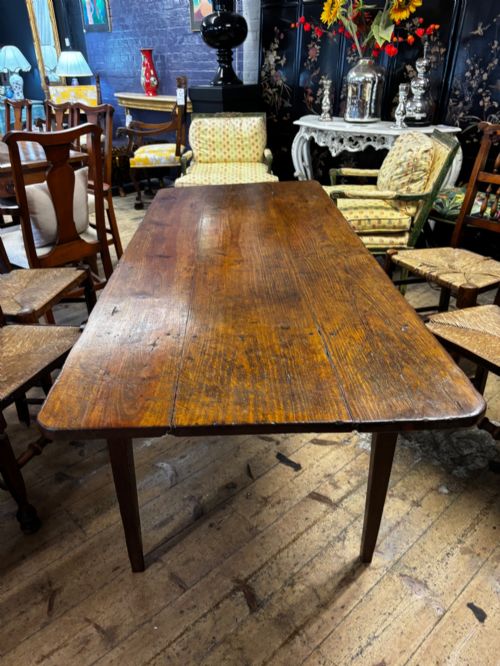
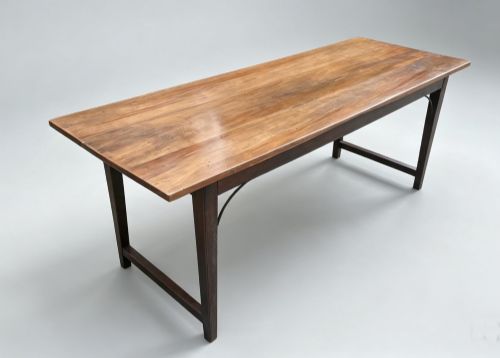
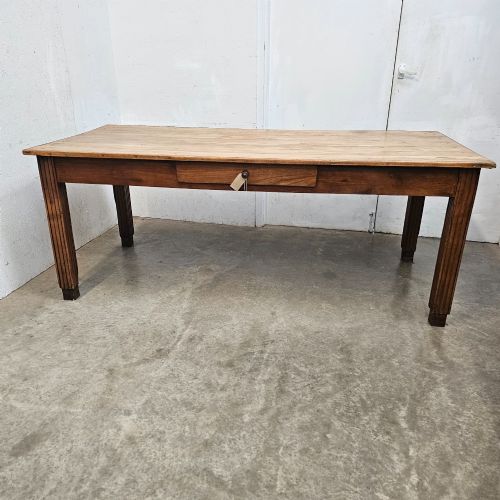
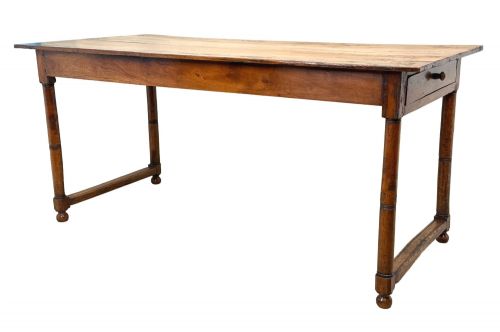

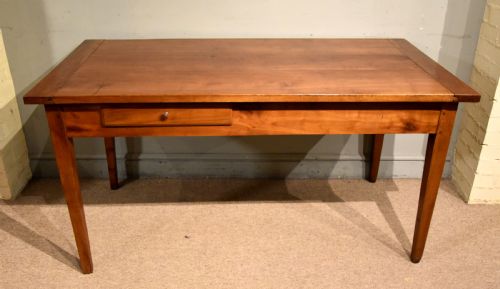

Fruitwood Farmhouse Dining Table
A fruitwood farmhouse dining table brings warmth to a room with its rich grain and honest vernacular construction.
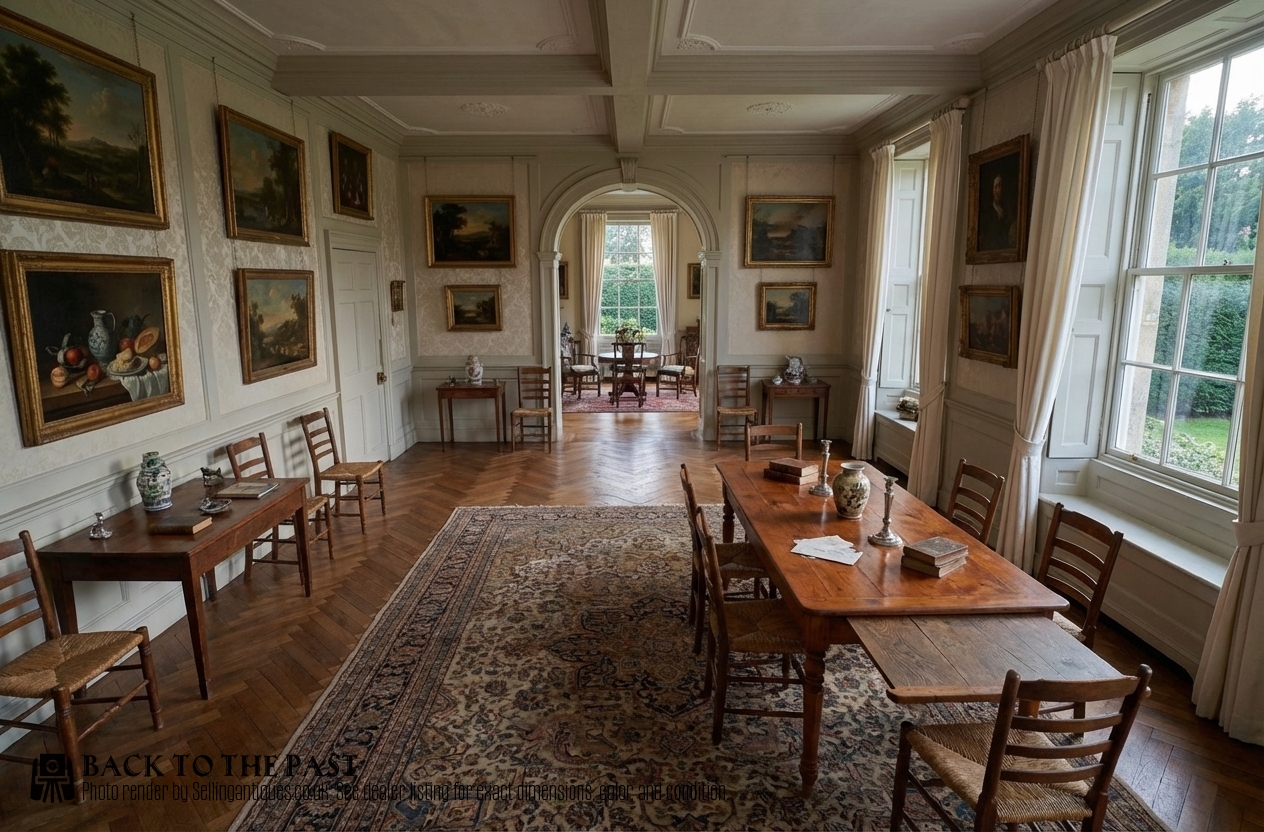
Fruitwood Farmhouse Dining Table
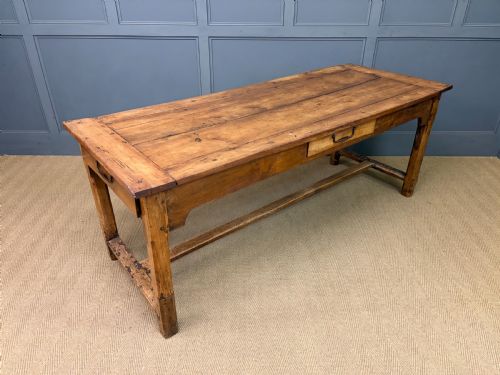
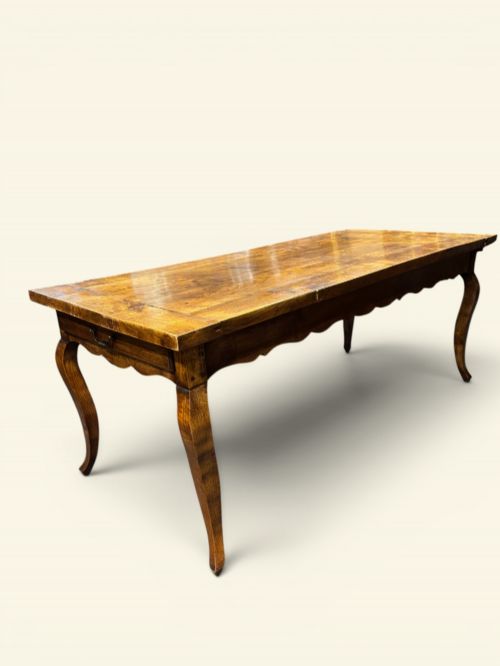
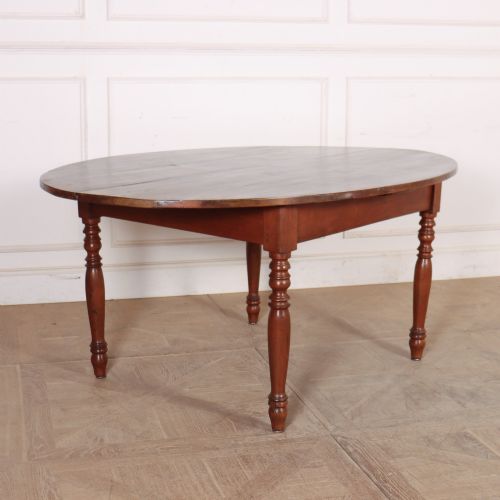
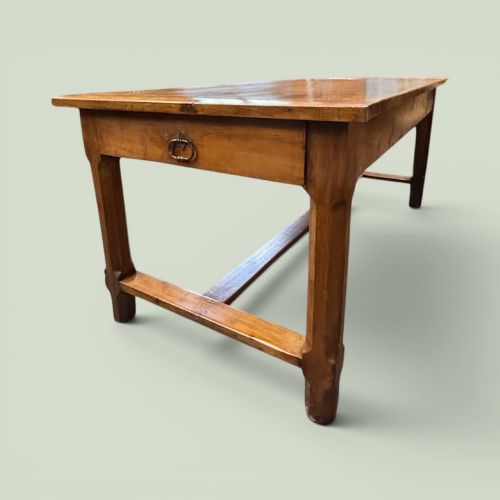
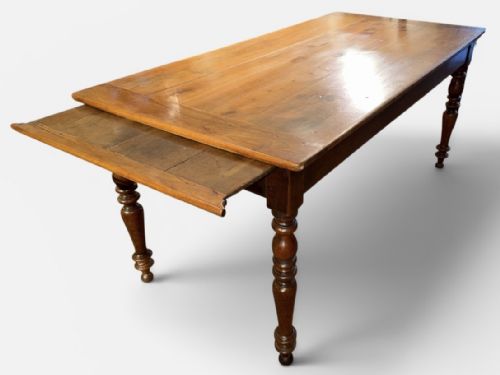
A fruitwood farmhouse dining table is a domestic surface built for hard daily use in kitchens and dining rooms. Most examples seen here originate from French provincial regions and date through the nineteenth century, including variants with refectory bases or practical extensions.
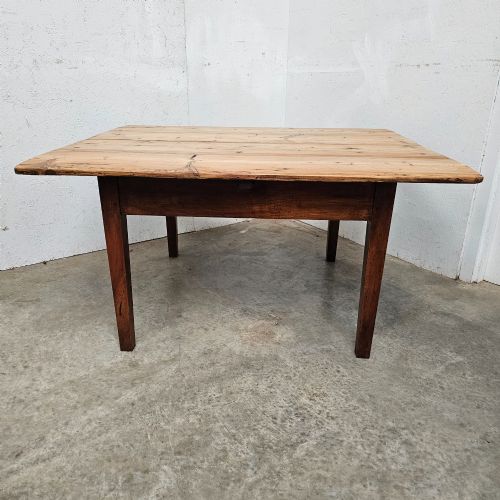
The form prioritises utility alongside robust timber construction. Buyers encounter compact small-scale tables alongside very large extending formats designed to accommodate multiple diners.
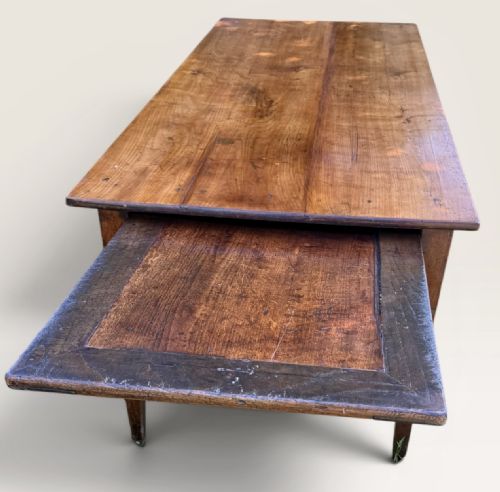
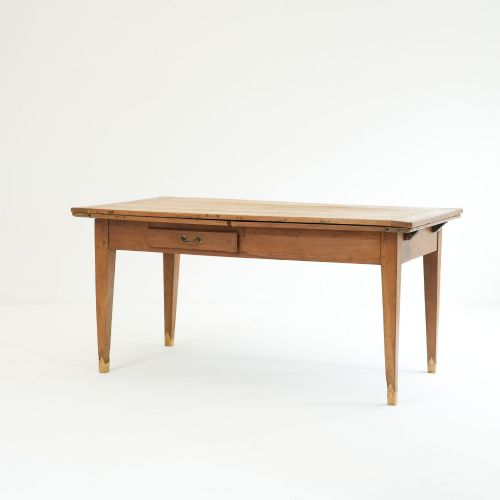
Regional variations appear frequently, spanning rustic country styles and French provincial designs. These pieces often incorporate functional additions such as bread slides or storage drawers built directly into the aprons.
What varies in quality
Quality rests primarily in the selection of the timber and the integrity of the original construction. Dense fruitwood with rich, warm colour and minimal past repairs commands greater appreciation than heavily altered timber.
The sophistication of the mechanism also sets examples apart. Simple plank tops contrast with complex extending designs, draw leaves, or built-in bread slides executed with precise joinery.
Secret bread slides hide beneath tabletops, waiting to catch crumbs dropped by hungry nineteenth-century diners.
The Fruitwood Farmhouse Dining Table Glossary
- Fruitwood
- Timber milled from fruit-bearing trees such as cherry or pear, prized for a warm patina and smooth grain. It develops a deep lustre through decades of daily polishing.
- Bread slide
- A pull-out wooden board mounted beneath the tabletop, historically used for slicing bread or cooling loaves. It extends the functional surface area when preparing meals.
- Refectory table
- A long, narrow dining table traditionally built for communal dining halls. These examples feature sturdy legs connected by low stretchers for added rigidity.
- Draw leaf table
- A table with pull-out leaves stored beneath the main top that extend the surface length. This mechanism allows the table to expand quickly for larger gatherings.
- Provincial
- Describing furniture made in regional areas rather than capital cities. These pieces reflect local tastes and available materials rather than formal court styles.
Fruitwood Farmhouse Dining Table: Frequently Asked Questions
How do I clean fruitwood?
Clean the surface using a soft, slightly damp cloth to remove dust and everyday debris. Avoid harsh chemical sprays that strip the natural oils from the timber.
Maintain the lustre by applying a quality beeswax periodically and buffing it gently with a dry cloth. This protects the grain without creating a synthetic shine.
Are these tables suitable for daily use?
These tables were originally built for heavy kitchen labour and communal dining, making them inherently robust. Their solid fruitwood construction withstands regular family life.
Use protective mats under hot dishes and liquids to preserve the historic finish. Minor knocks and marks simply add to the authentic character of the piece.
What is a bread slide?
A bread slide is a pull-out wooden shelf positioned just beneath the main tabletop. Historically, bakers used this surface to slice bread close to the oven before serving.
Today, it offers convenient extra space for resting plates or utensils during meals. It remains a key indicator of traditional farmhouse table design.
How do I date an old table?
Dating relies on examining construction methods, tool marks, and timber characteristics. Hand-sawn boards and pegged joinery typically point towards nineteenth-century craftsmanship or earlier.
Wear patterns around the edges and the natural ageing of the fruitwood provide further clues. Comparing the apron design and hardware helps narrow down the period.