



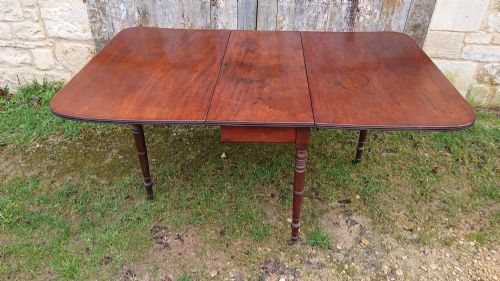
Expandable Mahogany Leaf Table
An expandable mahogany leaf table adapts to dinner parties of any scale with clever extending mechanisms and rich timber grain.
Expandable Mahogany Leaf Table
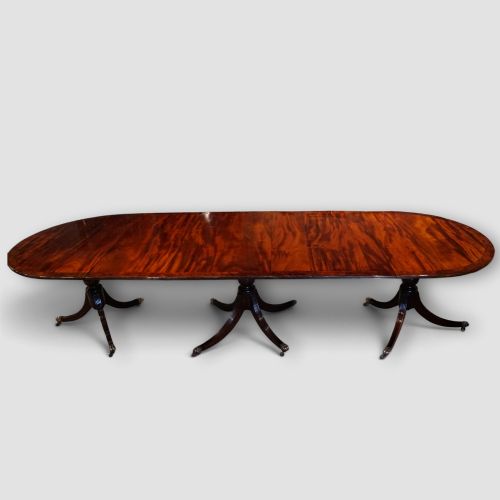
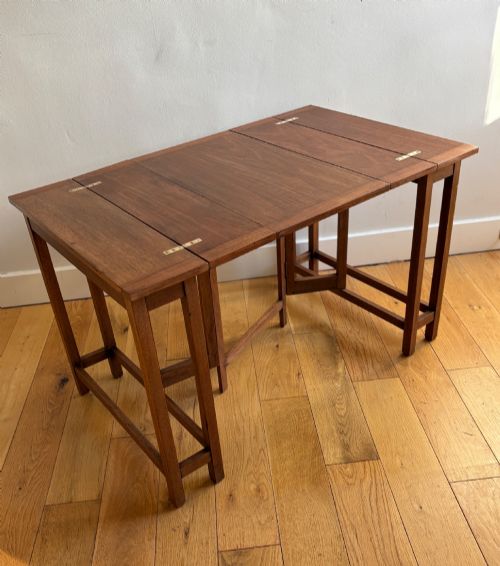
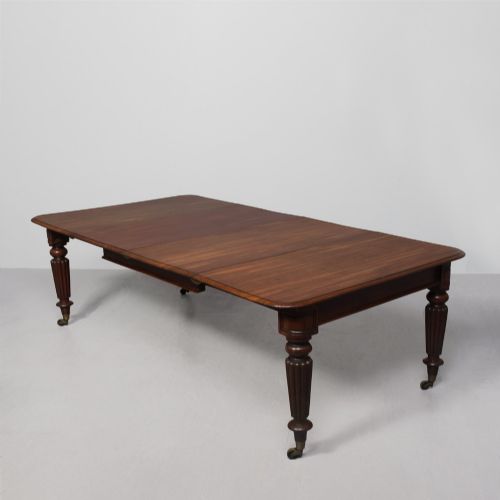
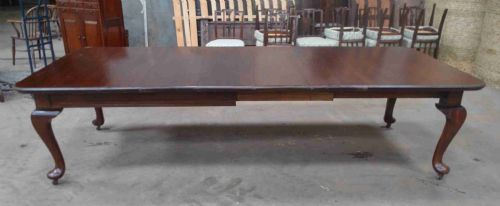
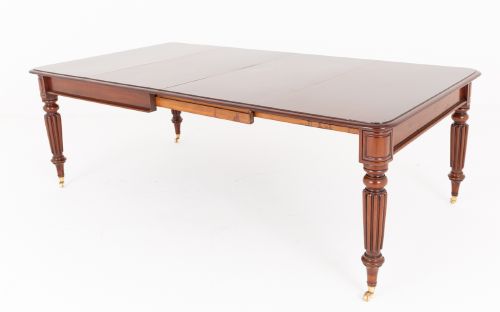
An expandable mahogany leaf table brings formal dining flexibility through various period designs. You encounter formats ranging from two-pillar and Cumberland models to grand drop-leaf and multi-leaf dining tables.
The pieces on this page span the Regency, William IV, George IV, and Victorian eras, along with Edwardian examples. Tables with carved claw and ball legs or figured flame mahogany represent the more elaborate Victorian output.
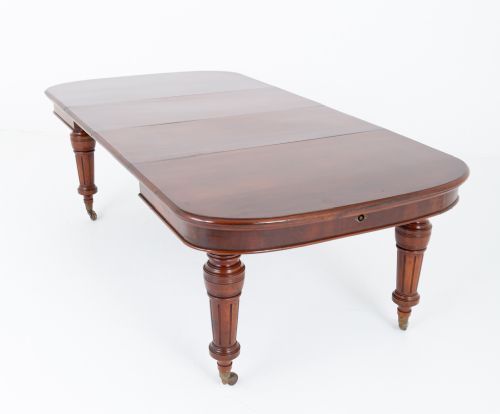
Most variants provide extra leaves to seat anywhere from eight to ten guests. Early nineteenth-century folding and drop-leaf formats sit alongside substantial nineteenth-century extending banquet tables.
Materials and construction
Makers utilised solid mahogany and figured flame mahogany veneers over structural timbers to build these tables. Brass components frequently appear in the extending mechanisms, castor fittings, and drop-leaf hinges.
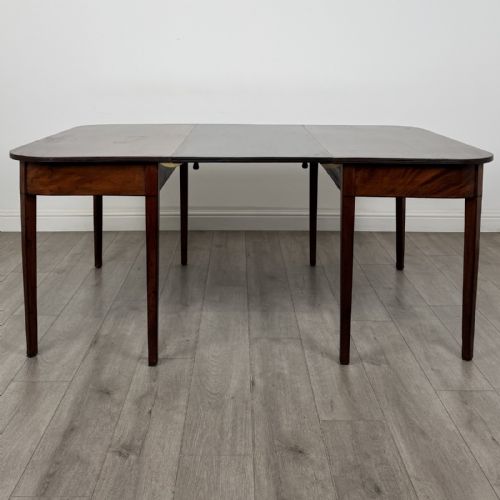
Extending systems rely on wooden runners and leaf insertions that allow the central frame to pull apart smoothly. Drop-leaf and gateleg actions provide folding versatility in smaller Regency and Georgian formats.
Expandable Mahogany Leaf Table Retail Price Guide 2026
Typical asking prices for expandable mahogany leaf table among the pieces listed under this phrase on Sellingantiques today, from the lower quarter to the upper quarter. They describe what is for sale here now, not the wider market.
Listings feature mahogany, flame mahogany, brass, and porcelain elements across Victorian, Regency, William IV, and Edwardian periods.
Judging timber and maker attribution
The distinction between standard workshop production and top-tier cabinet-making rests in the selection of figured timber. Superior examples exhibit rich flame mahogany grain patterns and substantial, well-seasoned boards across every added leaf.
Carved ornamentation, such as the detailing on claw and ball legs, signals elevated craftsmanship. Stamped maker signatures on the wood frame elevate a piece far above unmarked provincial tables.
Gillows Lancaster
The Expandable Mahogany Leaf Table Glossary
- Flame mahogany
- A highly figured veneer cut from the fork of the mahogany tree, producing distinctive flame-like patterns across the table top.
- Cumberland table
- A compact Regency dining table with drop leaves and a pivoting action that folds flat when not in use.
- Drop-leaf table
- A table with hinged flaps on either side that fold down to save space or lift up to enlarge the surface.
- Extension leaf
- A removable board inserted into the centre of an extending dining table to increase its overall seating capacity.
Expandable Mahogany Leaf Table: Frequently Asked Questions
How do the extension leaves work?
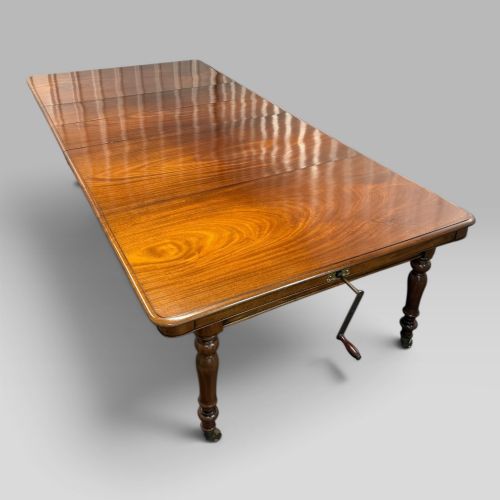
The main frame pulls apart along internal wooden runners to create a central gap. Additional timber leaves drop securely into this space and lock together.
Most tables use a winding handle mechanism or simple manual sliding action to close the gap tight against the inserted leaves.
How many people can sit at these tables?
Seating capacity varies depending on the number of leaves inserted into the frame. Many configurations accommodate eight to ten diners comfortably.
Smaller drop-leaf and Cumberland formats suit intimate dining rooms before expanding for larger gatherings.
How do I care for mahogany table tops?
Polish the timber regularly with traditional beeswax to nourish the grain and maintain a natural sheen. Avoid placing hot dishes or wet glasses directly onto the polished surface.
Keep the table away from direct heat sources and strong sunlight to prevent the mahogany finish from fading or drying out.
How do I identify a Regency table?
Regency pieces often feature clean architectural lines, rosewood or brass inlay, and pillar supports with brass claw castors. Look for lighter mahogany tones compared to later Victorian timber.
Proportions tend to remain neat and restrained, reflecting classical design influences popular in the early nineteenth century.