
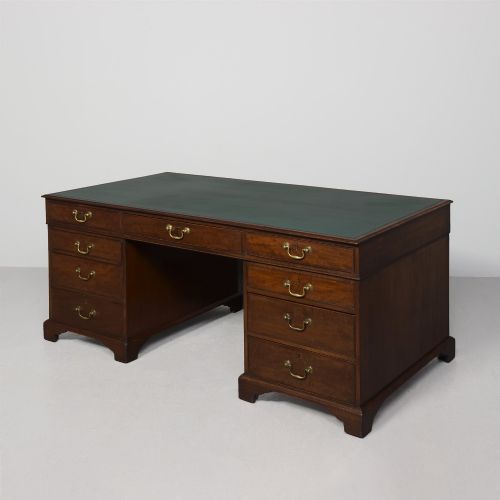
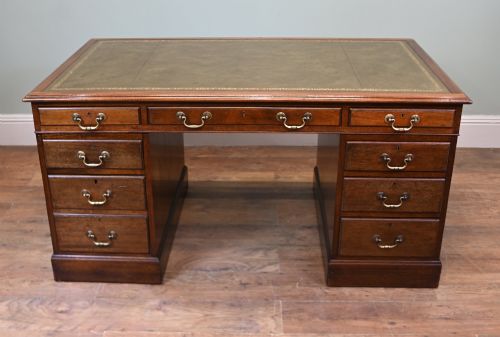
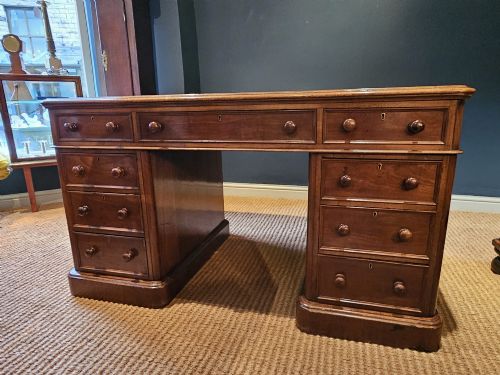
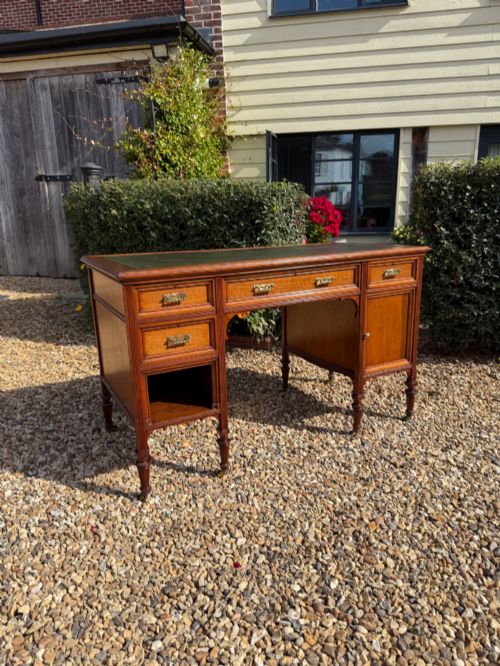
Executive Partners Desk
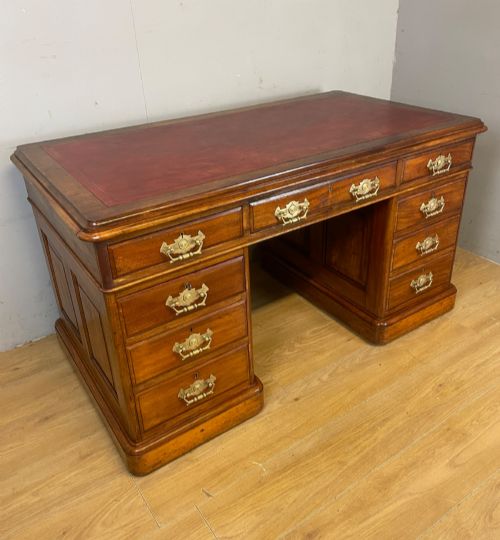
An executive partners desk is a substantial double-sided piece designed for two people to work face-to-face, bringing grand proportions and extensive storage to a study.
Executive Partners Desk
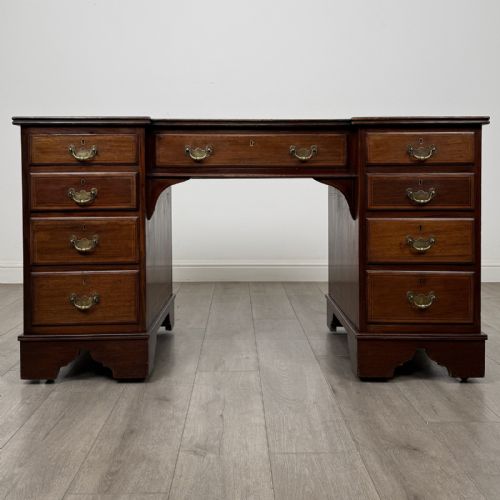
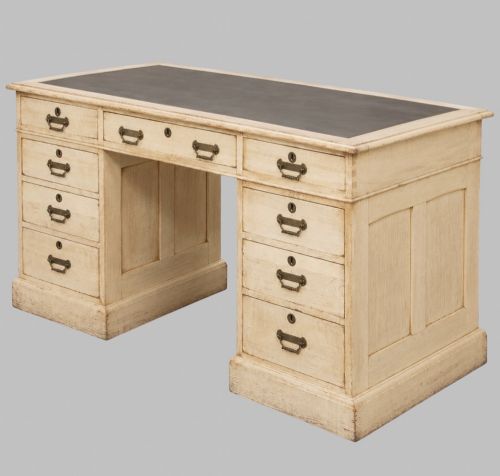
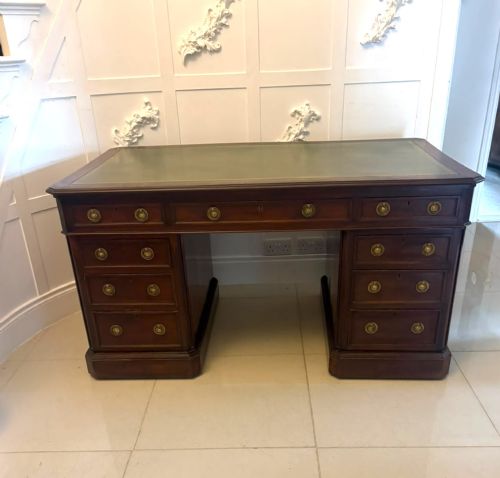
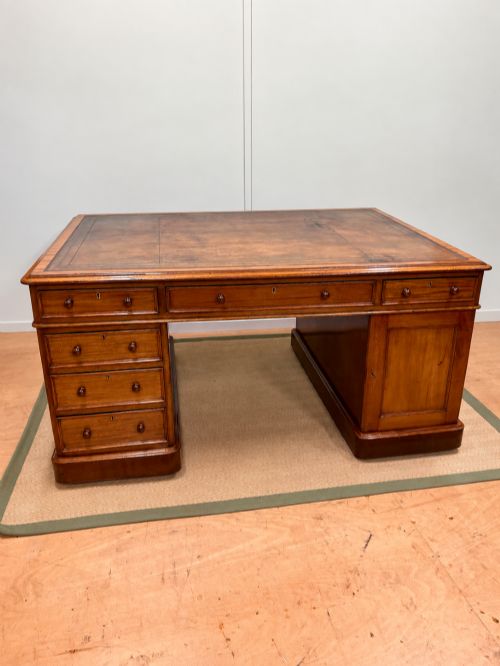
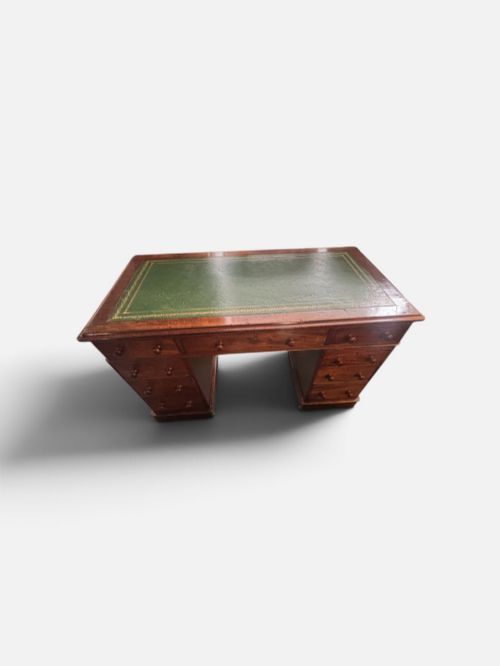
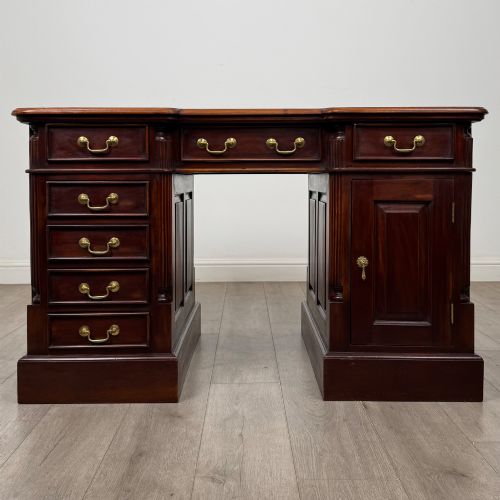
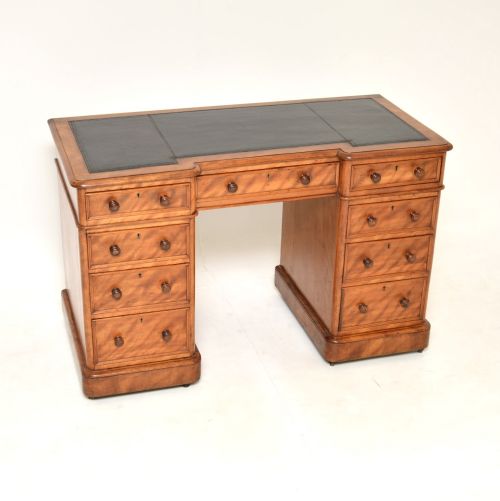
An executive partners desk provides opposing banks of drawers or cupboards beneath a large writing surface, allowing two users to sit opposite one another. These tables emerge primarily from the Victorian and Edwardian eras, spanning the nineteenth and early twentieth centuries.
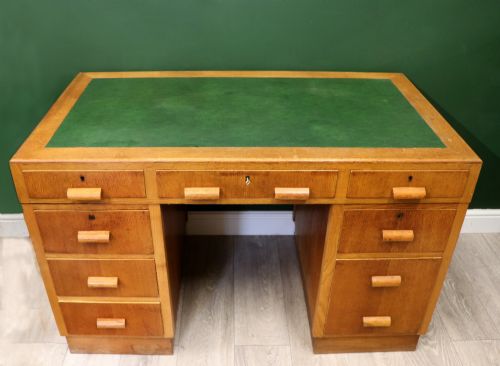
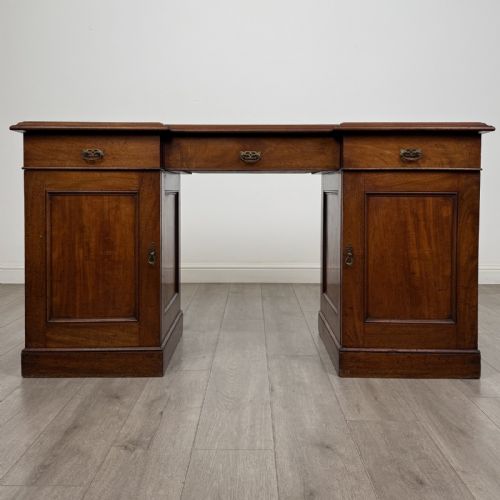
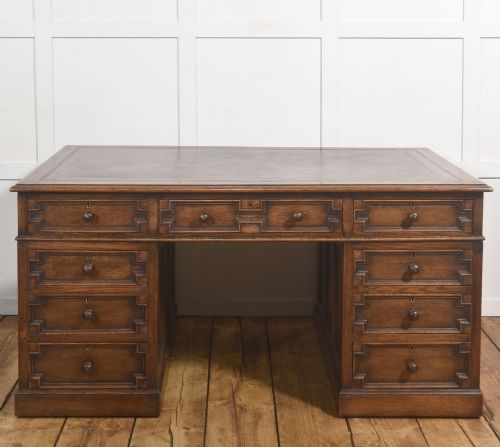
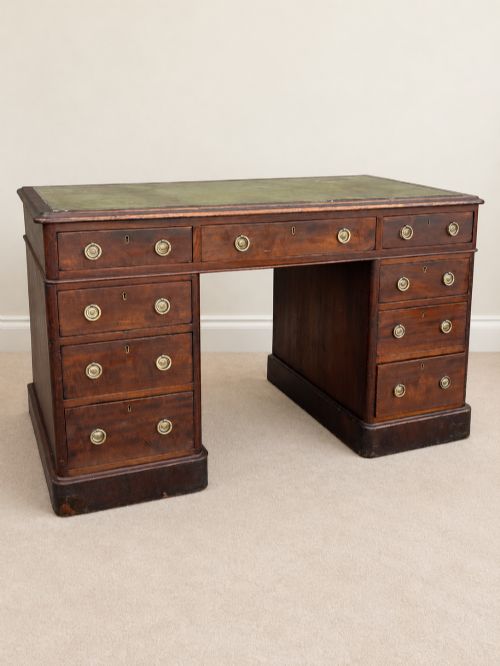
The versions most commonly met on this page are constructed in rich timbers like mahogany, walnut, and oak. They range from traditional breakfront configurations to freestanding library tables with inset leather writing tops.
Makers of the period designed these pieces for grand offices and libraries, incorporating functional details such as writing slides, fitted stationery drawers, and panelled pedestals. Revival styles including Chippendale, Queen Anne, and Jacobean appear alongside straightforward Victorian designs.
Judging Quality and Execution
The distinction between standard examples and top-tier pieces lies in the choice of timber and the depth of carving. Finely figured burr walnut and carefully selected mahogany veneers show superior cabinet-making skill compared to plain secondary woods.
Construction details such as dovetailed drawer linings, original brass hardware, and secondary panel work on the reverse sides indicate high workshop standards. Pieces bearing the stamps of established cabinet makers reflect superior provenance and design ambition.
The inventory spans Victorian, Edwardian, George III, and Art Deco styles, with dates ranging from the early nineteenth century to the 1930s.
Howard and Sons·Trollope and Sons·Maple and Co·Charles Andrea Nosotti·Edwards and Roberts
The Executive Partners Desk Glossary
- Partners desk
- A large double-sided desk with drawer pedestals on both sides, allowing two people to work opposite each other. These pieces were traditionally used by business partners or in libraries.
- Breakfront
- A piece of furniture where the central section projects forward from the flanking pedestals or cabinets. This architectural arrangement adds visual depth to large desks.
- Writing slide
- A pull-out board located above the drawers that provides extra surface area for papers without cluttering the main desk. They are commonly faced in matching timber.
- Bureau plat
- A freestanding writing table fitted with drawers, originating in France. These tables lack the heavy pedestals of standard English partners desks.
Executive Partners Desk: Frequently Asked Questions
What is a partners desk?
A partners desk is a large double-sided desk featuring drawers and cupboards on both the front and the back. This layout allows two people to sit opposite each other and work independently.
Historically utilised in banks, boardrooms, and large private libraries, these desks offer substantial surface area and deep storage within the twin pedestals.
How do I care for the leather top?
The leather writing surface benefits from regular dusting with a soft, dry cloth and occasional treatment with specialist leather balms to prevent cracking. Avoid using harsh chemical cleaners or placing hot cups directly on the hide.
Keeping the room humidity stable helps preserve both the leather top and the timber carcase surrounding it.
Where were these desks placed?
Because both sides are finished with drawers or fielded panels, partners desks were traditionally positioned in the centre of a room rather than pushed against a wall. This allowed them to be approached from any angle.
In period offices and libraries, they served as central anchor points for the entire room's layout.
How can I tell Victorian from Edwardian?
Victorian desks generally date from the mid to late nineteenth century and often feature heavy mahogany construction, bold mouldings, and deep, dark finishes. Edwardian pieces, made around the turn of the twentieth century, can exhibit lighter woods like satinwood or bleached oak.
Stylistic revivals during both eras draw on earlier Georgian and Jacobean motifs, so construction methods and drawer linings help confirm the true date.