




European Street Art
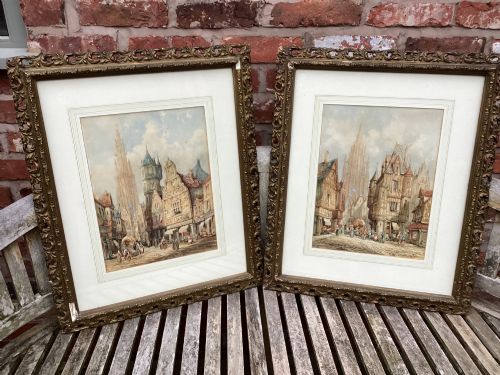
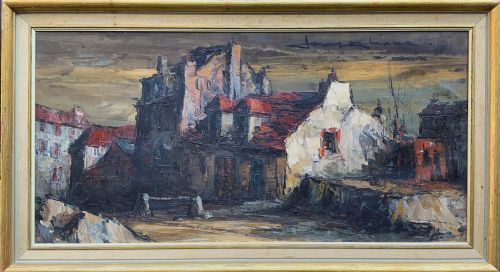
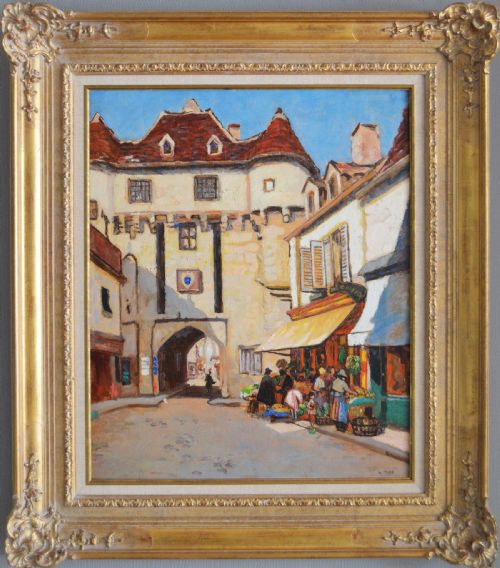
These european street art pieces capture bustling markets and quiet squares in oil and watercolour.
European Street Art
European street art comprises historical townscape paintings and architectural views depicting urban scenes across the continent. When searching for european street art, collectors encounter nineteenth-century canvases and twentieth-century watercolours showing markets, cathedrals, and streets.
The pieces listed span periods from the Georgian era through the mid-twentieth century, capturing Continental European towns. These artworks present architectural studies and street life rendered by named artists and period painters.
Most examples take the form of framed oil paintings or watercolours on paper and board. They record historical streetscapes from locations including France and Belgium.
How they were made
Artists painted these urban views using oil paint on canvas or board, and watercolour on paper. Painters applied pigment with brushwork to capture the light on stone buildings and market stalls.
Many works reside in period frames constructed from wood, frequently finished with giltwood or gold leaf. These frames complement the scale of the townscape compositions.
European Street Art Retail Price Guide 2026
Typical asking prices for european street art among the pieces listed under this phrase on Sellingantiques today, from the lower quarter to the upper quarter. They describe what is for sale here now, not the wider market.
Listings feature oil paintings and watercolours on wood, canvas, and paper, created during the nineteenth and twentieth centuries.
What varies in quality
The success of a townscape rests upon the artist's handling of perspective in architectural elements and the depiction of natural light across facades. Stronger works demonstrate confident brushwork that defines figures and stone surfaces with clarity.
The condition of the pigment and the originality of the associated wooden or gilt frame influence the overall integrity of the piece. Works that retain their historical surface without heavy restoration present a more authentic record of the period.
Cecil Rochfort D'Oyly-John·William George Meadows·Lewis J Wood·Joseph W Milliken·Paul Paul·Christiaan Pieter Snyders·Henry Schafer·Letitia Marion Hamilton
The European Street Art Glossary
- Townscape
- A painting or drawing depicting a urban scene, street, or architectural view. These works focus on buildings, markets, and public spaces rather than natural landscapes.
- Oil on Canvas
- Pigment mixed with drying oil applied to a woven fabric support. This medium allows for rich colour application and visible texture.
- Watercolour
- Paint consisting of transparent pigment suspended in a water-based solution. Artists use this on paper to create luminous architectural studies.
- Giltwood
- Wood carved and covered with a thin layer of gold leaf or metallic powder. It provides decorative framing for nineteenth-century paintings.
European Street Art: Frequently Asked Questions
What periods do these paintings cover?
The selection spans from the late Georgian era and nineteenth century through various decades of the twentieth century. Artists worked across these periods to record changing European townscapes.
Specific dates within the listings include the eighteen-seventies, eighteen-eighties, nineteen-hundreds, and nineteen-sixties.
What materials were used?
Artists utilised oil paint on canvas and board, alongside watercolour on paper. Wooden frames, including giltwood and gold leaf examples, enclose the artworks.
These traditional materials define the physical construction of historical townscape paintings.
Where do these street scenes originate?
The views depict locations across Continental Europe, including France and Belgium. Subjects range from cathedral streetscapes to bustling market squares.
Artists travelled to record specific towns, such as Lannion and Semur.
How should I display these artworks?
These paintings suit domestic spaces that accommodate framed wall art of traditional scale. Placing them away from direct sunlight protects the pigments on canvas and paper.
Matching the historical frame style to your interior enhances the appearance of the townscape.