






Etruscan Revival Gold
Etruscan Revival gold jewellery brings classical archaeological motifs into nineteenth century ornamentation, offering collectors intricate metalwork and vibrant gemstones.
Etruscan Revival Gold
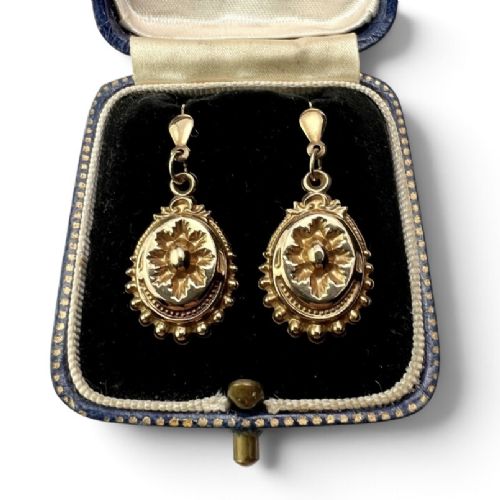
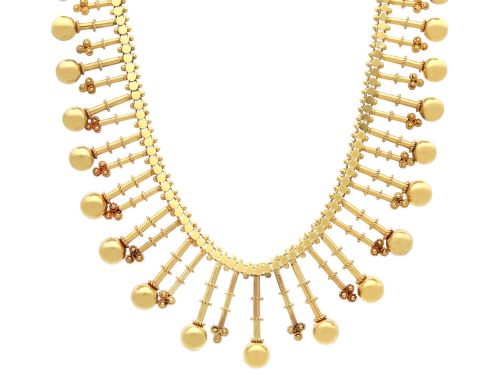
Pieces carrying the search phrase etruscan revival gold consist largely of Victorian earrings, brooches, necklaces, and bangles produced during the nineteenth century. Buyers encounter items defined by classic classical motifs, archaeological revivals, and distinctive granulation techniques.
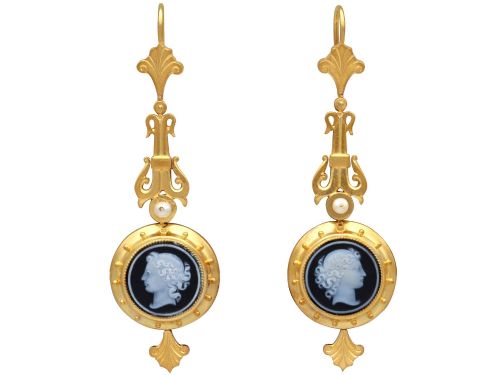
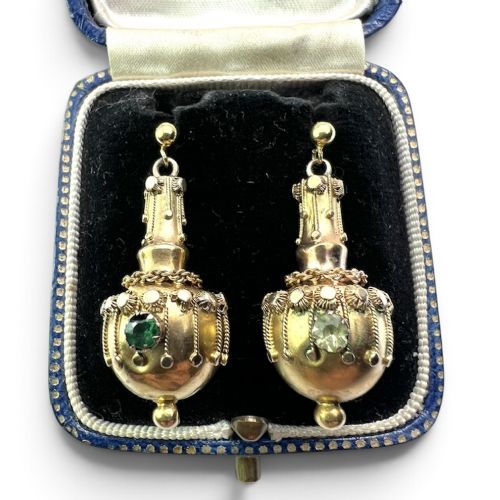
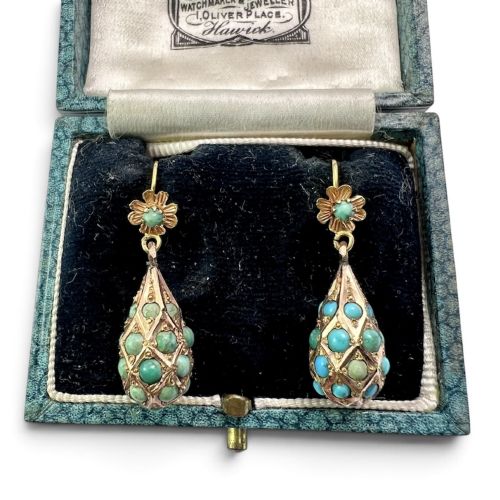
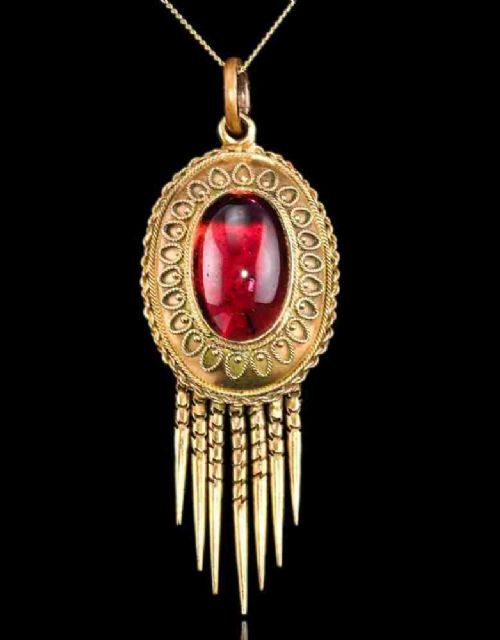
The objects most frequently met on this page are Victorian drop earrings, pendant necklaces, and statement brooches. These examples utilise yellow gold alongside turquoise, garnet, pearl, and hardstone cameos.
Materials and Techniques
Goldsmiths of the period employed yellow gold in various purities, ranging from 9ct and 15ct up to 18ct, 21ct, and 22ct. This metal served as the foundation for elaborate wirework, granulation, and repoussé detailing.
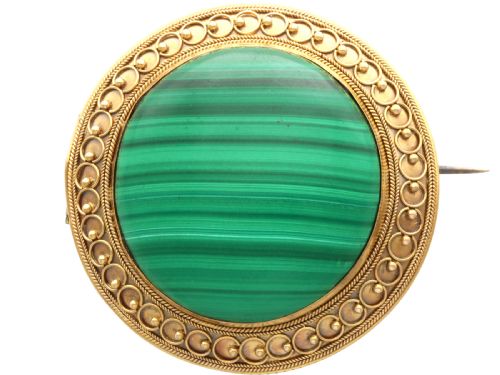
Construction frequently incorporated gemstones such as garnet, ruby, diamond, malachite, bloodstone, and turquoise. Pearls and cameos also appeared, set securely within heavy gold mountings and complex frames.
Etruscan Revival Gold Retail Price Guide 2026
Typical asking prices for etruscan revival gold among the pieces listed under this phrase on Sellingantiques today, from the lower quarter to the upper quarter. They describe what is for sale here now, not the wider market.
Listings feature Victorian and Edwardian periods alongside materials including yellow gold, 9ct gold, 15ct gold, 18ct gold, turquoise, garnet, and pearl.
Quality Variations in Jewellery
Distinctions across the range depend heavily on the complexity of the goldwork and the purity of the metal used. Finer pieces demonstrate superior control in applied wirework and precise granulation.
The selection of gemstones and the structural integrity of settings further separate standard examples from finer items. Heavier gold weights and integrated matching sets indicate higher manufacturing standards.
Ilias Lalaounis
The Etruscan Revival Gold Glossary
- Granulation
- A decorative technique involving the application of tiny spheres of gold to a metal surface in geometric or floral patterns.
- Repoussé
- A method of shaping metal by hammering from the reverse side to create a raised design on the front.
- Cameo
- A gemstone or shell carved in relief to depict a profile portrait or classical scene.
- Foxtail
- A flexible, tubular chain style woven from curved links resembling a fox's tail.
- Gilt
- A thin layer of gold applied to the surface of a base metal such as silver or copper.
Etruscan Revival Gold: Frequently Asked Questions
What is etruscan revival gold jewellery?
This jewellery encompasses nineteenth century pieces inspired by ancient Etruscan and Greek artefacts discovered during archaeological excavations. Goldsmiths recreated ancient techniques like granulation and filigree to satisfy Victorian tastes.
The items span earrings, brooches, bangles, and necklaces, frequently incorporating coloured gemstones or classical cameos into the heavy gold designs.
How do I date these antique pieces?
Dating relies on stylistic markers, hallmarks, and the specific gold purities utilised during different periods. Victorian examples often display distinct archaeological revival motifs that evolved across the decades.
Items from the late nineteenth century frequently combine high-carat yellow gold with garnet, turquoise, or banded agate. Hallmarks, where present, provide definitive clues regarding the year of manufacture.
How should I care for antique gold?
Proper maintenance involves gentle cleaning with a soft cloth and avoiding harsh chemical dips that damage softer gemstones. Pearls and turquoise require particular caution due to their porous nature.
Store pieces individually in lined boxes to prevent friction between intricate gold wirework and harder stones.
What stones appear in these designs?
Garnets, turquoise, pearls, and hardstone cameos dominate the settings found in these archaeological revival jewels. Rubies, diamonds, malachite, and bloodstone also feature in select pieces.
These materials were chosen for their strong contrast against yellow gold surfaces, mirroring ancient Mediterranean aesthetics.