



Etched Brass Ceiling Lamp
These etched brass ceiling lamp fixtures bring warmth and decorative shadow to a hallway or room.
Etched Brass Ceiling Lamp
When you search for an etched brass ceiling lamp, you are looking at overhead lighting fixtures that combine metal frames with patterned glass panels or shades. These pieces range from compact hall lanterns to larger bowl pendants designed to hang centrally in a room.
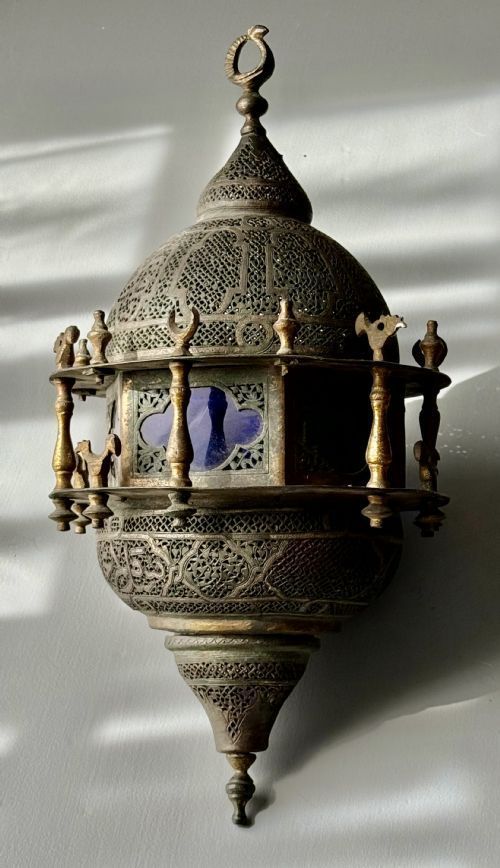
The versions you are most likely to meet on this page hail from the nineteenth century, the Edwardian era, and the early decades of the twentieth century. They encompass distinct design movements including Arts and Crafts, Art Deco, and Moorish Revival.
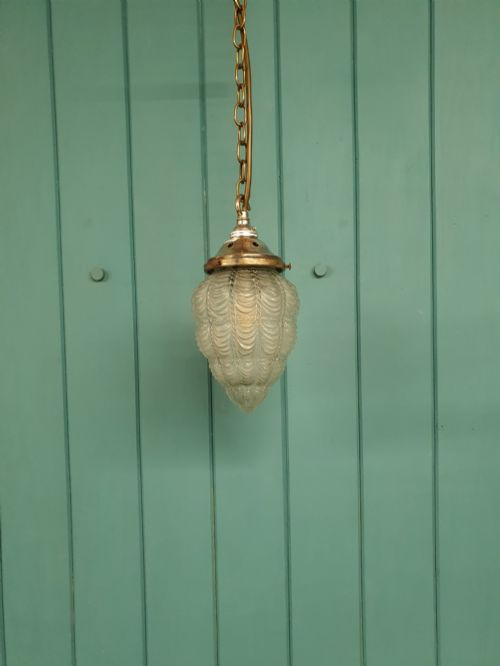
Common forms include hanging lanterns with pierced or framed metalwork alongside pendant lights featuring frosted, cut, or etched glass shades. Their survival offers a direct window into historical domestic lighting preferences.
How they were made
Makers constructed the primary framework of these lamps from sheet or cast brass, sometimes piercing the metal intricately to create patterned silhouettes when illuminated. Glass components were produced through techniques such as cutting, pressing, frosting, and acid etching to diffuse light effectively.
Artisans combined these brass structures with crystal and varied glass types, suspending the assemblies on chains or rigid metal arms. The physical weight of the materials necessitated robust fixings and secure joins to support the pendant bowls and lanterns safely.
Etched Brass Ceiling Lamp Retail Price Guide 2026
Typical asking prices for etched brass ceiling lamp among the pieces listed under this phrase on Sellingantiques today, from the lower quarter to the upper quarter. They describe what is for sale here now, not the wider market.
This site's current listings span periods from the nineteenth century through the 1930s, featuring brass, crystal, and various forms of etched and frosted glass.
What varies in quality
The distinction between standard examples and finer items lies in the crispness of the metalwork and the depth of the glass decoration. Pierced brass with sharp, clean cutouts and heavy cast frames sits higher in the range than thin, pressed metal alternatives.
Glass quality similarly dictates value, where hand-etched or deeply cut crystal displays superior light refraction compared to plain pressed panes. The coherence of the designated style, whether Moorish Revival or Arts and Crafts, also governs the standing of the piece.
The Etched Brass Ceiling Lamp Glossary
- Etched glass
- Glass treated with acid or abrasives to create a frosted design on the surface. This technique allows light to filter softly while displaying intricate decorative patterns.
- Pendant light
- A hanging lighting fixture suspended from the ceiling by a cord, chain, or metal rod. These fixtures serve as primary illumination sources in hallways and living spaces.
- Moorish Revival
- An architectural and decorative style popular in the nineteenth century that draws on Islamic design motifs. Lamps in this style feature heavily pierced metalwork and complex geometric patterns.
- Hall lantern
- An enclosed ceiling fixture designed specifically for narrow entrance spaces and corridors. They typically feature glass panels held within a protective metal frame.
- Arts and Crafts
- A design movement prioritising traditional craftsmanship and visible construction methods. Objects from this movement often showcase honest materials like brass and crystal in straightforward, sturdy forms.
Etched Brass Ceiling Lamp: Frequently Asked Questions
What rooms suit an etched brass ceiling lamp?
These lamps work best in hallways, entrance porches, and rooms with sufficient ceiling height to accommodate a hanging fixture. Their decorative glass and metalwork project patterned light onto surrounding walls.
Smaller pendant versions fit compact spaces, while larger bowl chandeliers anchor principal rooms. Selecting the correct scale ensures the fixture complements the proportions of the interior.
How do I identify the period of a brass lamp?
Period identification relies on examining the construction style, metal finishing techniques, and glass characteristics. Pieces from the nineteenth century often display heavier casting or Moorish Revival pierced work, whereas Edwardian and 1930s examples shift towards cleaner lines and different etching motifs.
Reviewing the specific design vocabulary, such as Arts and Crafts influences or Art Deco symmetry, helps narrow down the decade of manufacture.
Are these lamps safe for modern electrical systems?
Many surviving antique lamps have been updated with modern wiring to meet contemporary safety standards. Professional rewiring ensures the internal components function correctly with standard modern bulbs.
Buyers should inspect the lampholders and wiring pathways to confirm that a qualified electrician has updated the fixture prior to installation.
How should I clean an etched glass shade?
Cleaning requires removing the glass shade from the brass frame if possible to prevent damage to the metalwork. Warm soapy water and a soft cloth generally suffice for removing dust and grime from etched surfaces.
Harsh chemical abrasives must be avoided, as they can scratch the glass or strip antique finishes from the surrounding brass.