
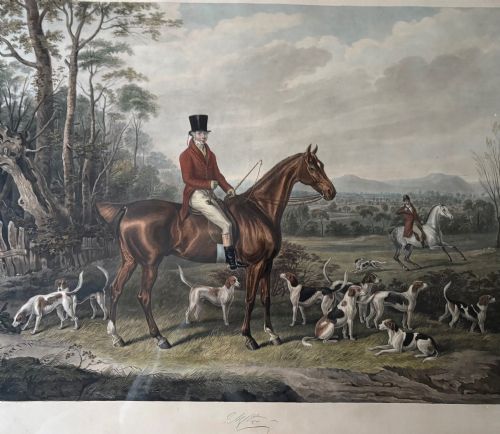


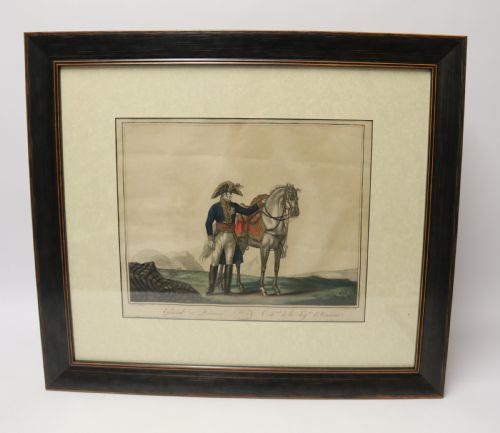

Equestrian Etching Print
An equestrian etching print captures horses and riders through inked lines on paper, offering a classic slice of sporting history for your walls.
Equestrian Etching Print
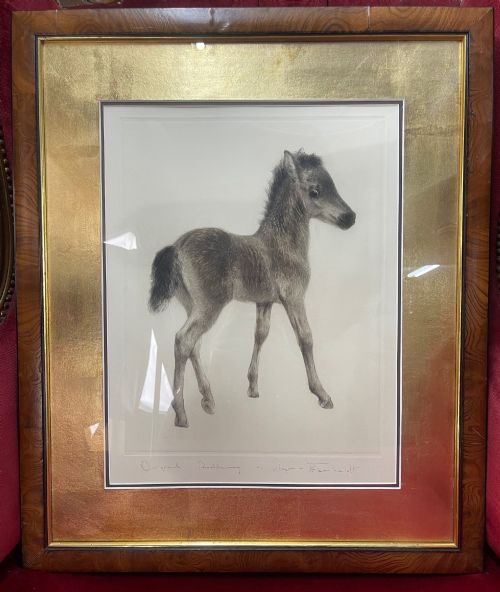
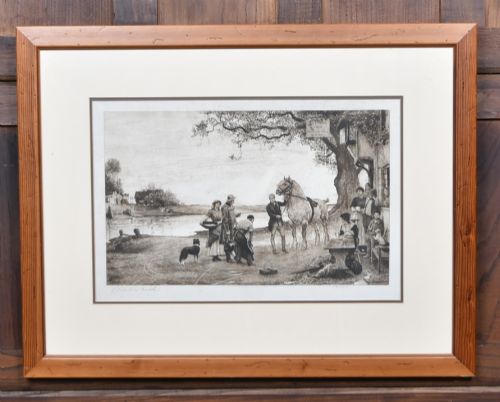
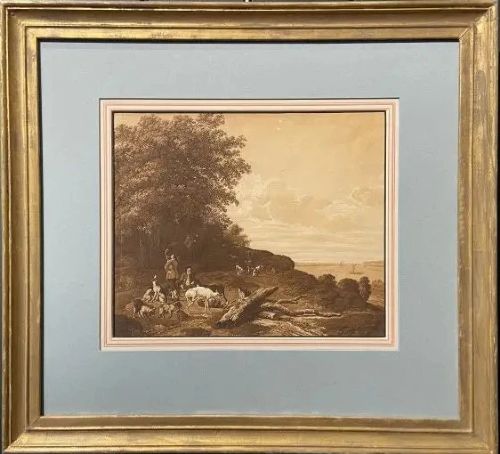
When you search for an equestrian etching print, you are looking at works on paper that depict horses, hunts, and rural scenes through fine linear marks.
The selections available range across several centuries, encompassing works from the seventeenth century up to twentieth century fine art pieces.
You will encounter framed art and wall art presentations, often finished with glass and wood frames that suit their traditional character.
Methods and materials
These works rely on paper as the primary support, combined with ink applied through techniques such as etching, drypoint, and engraving.
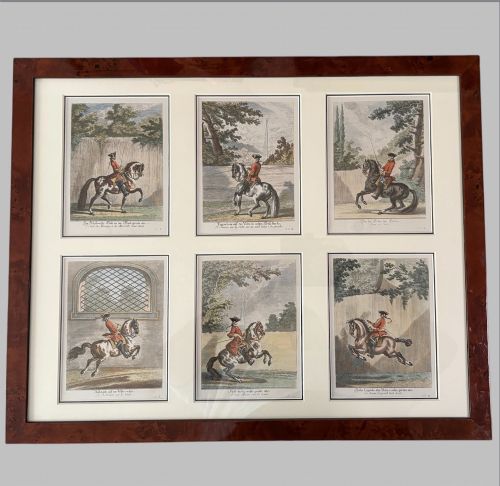
Certain pieces feature hand colouring using watercolour over the printed lines to enhance the visual detail.
Framing often incorporates wood, burr wood veneer, and gilt wood alongside glass for protection, sometimes accented with gold leaf.
One exceptional lot pairs an aquatint and wax seals with a book about the eccentric sporting figure John Mad Jack Mytton.
Quality factors
Quality rests upon the crispness of the line work and the skill of the original artist in capturing the movement and form of the horse.
The presence of period hand colouring in watercolours elevates the character of an engraving compared to plain monochrome impressions.
Originality of the printing and the preservation of the paper surface distinguish the finer examples from standard decorative reproductions.
Kurt Meyer Eberhardt·Robert W Macbeth·Johannes Lingelbach·Ridinger·Herbert Dicksee·Anne Goldthwaite
The Equestrian Etching Print Glossary
- Etching
- A printmaking method where acid bites lines into a metal plate to hold ink. This technique allows for fine detail and varied tonal depth.
- Drypoint
- A printmaking process where an artist scratches directly into a metal plate with a sharp needle. It creates a soft, velvety line due to the metal burr raised on the plate.
- Engraving
- A method of cutting design lines directly into a hard plate using a burin tool. This produces clean, precise lines on the printed paper.
- Aquatint
- An etching technique that creates areas of tone rather than lines by using powdered rosin on the plate before acid biting. It often resembles a watercolour wash.
- Watercolour
- A paint medium consisting of water-soluble pigments used here to hand colour printed sheets. It adds vibrant hues to historic engravings.
Equestrian Etching Print: Frequently Asked Questions
What is an equestrian etching print?
An equestrian etching print is a work of art on paper focusing on horses, riders, and sporting subjects created through intaglio printing methods.
These pieces capture historic scenes from the seventeenth century through to the modern era, reflecting changing artistic styles over time.
Are these prints hand coloured?
Some historical engravings and prints feature applied hand colouring using watercolour over the printed ink lines.
This extra step was common in eighteenth and nineteenth century productions to make the sporting scenes more vibrant.
How do I identify the age of a print?
Age is indicated by the paper characteristics, printing technique, and stylistic markers associated with periods like the Georgian era or nineteenth century.
Signatures from known artists or period framing can also provide clear clues to the date of creation.