



Equestrian Art Set
These equestrian art set pieces bring the historic energy of the racecourse and the hunting field directly onto your wall.
Equestrian Art Set
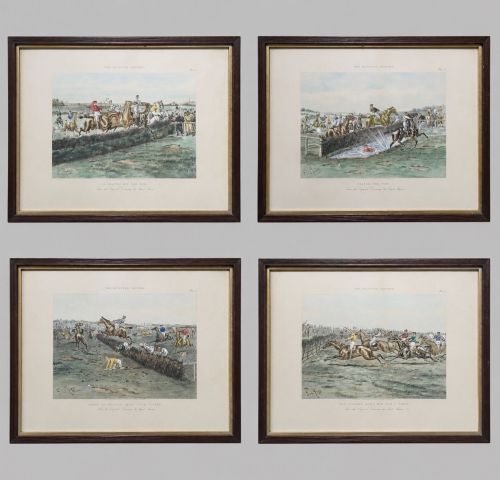
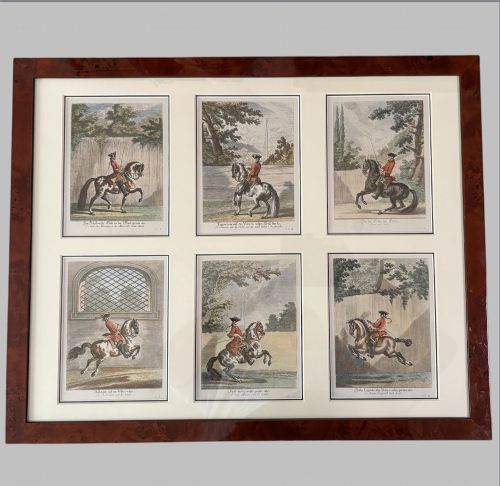
An equestrian art set gathers multiple related works focusing on horses, racing, hunting, and military cavalry subjects. When exploring this category, you will most frequently encounter framed groupings of prints and engravings spanning several centuries.
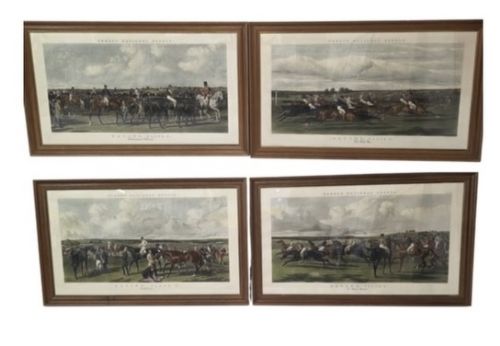
The selections range from eighteenth-century copper engravings and nineteenth-century aquatints to twentieth-century photographic prints and watercolour sketches. These groupings often preserve complete sequences, such as hunting scenes or sets of four racing prints.
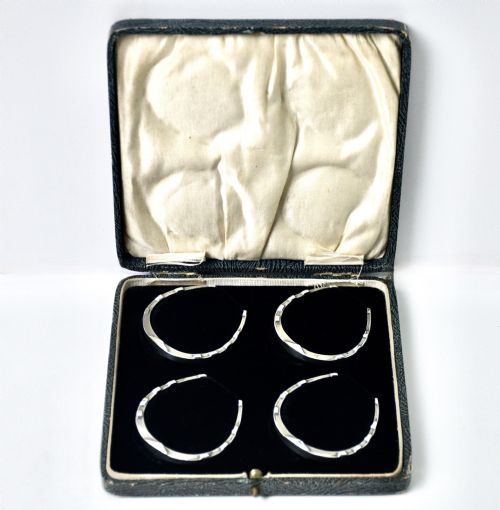
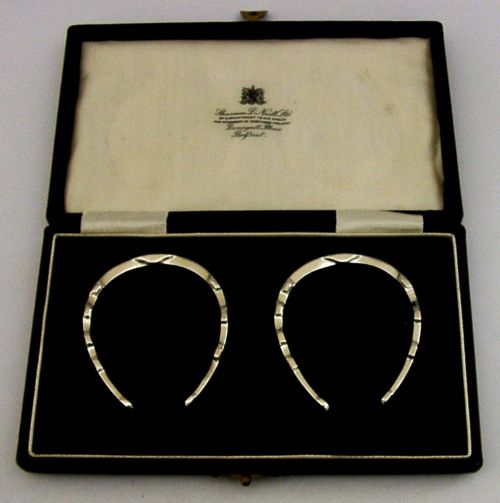
Framed artwork and specialised table pieces like cased solid sterling silver napkin rings also appear within these collections. The visual focus centres squarely on horse racing, fox hunting, and spirited coaching depictions.
Materials and methods
The works rely upon traditional paper supports carrying copper engravings, lithographs, aquatints, ink, and hand-applied watercolour pigments. Many examples incorporate gold leaf or gilt detailing to highlight the framing and imagery.
Wooden frames, often in mahogany or glass-glazed enclosures, protect the delicate paper works from environmental damage. Functional items utilise solid sterling silver shaped into dimensional horse shoes.
Equestrian Art Set Retail Price Guide 2026
Typical asking prices for equestrian art set among the pieces listed under this phrase on Sellingantiques today, from the lower quarter to the upper quarter. They describe what is for sale here now, not the wider market.
Horses in eighteenth-century engravings occasionally possess surprisingly human expressions of competitive determination.
Judging the quality
Quality rests upon the crispness of the printing plate impression and the fidelity of any hand-applied colouring. Early impressions pulled directly from copper or steel plates retain sharper detail than later printings.
The preservation of the paper support and the clarity of the original framing significantly influence the overall standard. Complete matching sets by notable artists command greater attention than assembled groupings.
J.Roberts·George Finch Mason·Ridinger·Alken·Thomas Mackay·Charles Johnson Payne Snaffles·Victor Adam·Charles Hunt·Francis Calcroft Turner·J F Herring
The Equestrian Art Set Glossary
- Aquatint
- An intaglio printmaking technique that produces tonal areas resembling watercolour washes. It allows artists to achieve subtle shades of grey and colour in equestrian prints.
- Engraving
- A printmaking method where an artist cuts lines directly into a metal plate using a sharp tool. This creates sharp, permanent lines that define horse musculature and rider figures.
- Lithograph
- A planographic printing process based on the repulsion of oil and water on a limestone or metal surface. It enables smooth colour transitions across nineteenth-century sporting scenes.
- Cased
- Refers to items, such as napkin rings, supplied within their original fitted presentation box. This preserves the condition and completeness of the set over generations.
Equestrian Art Set: Frequently Asked Questions
What subjects appear in an equestrian art set?
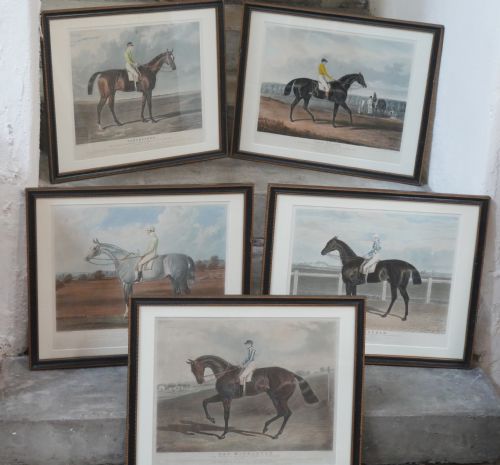
The subjects focus heavily on horse racing, fox hunting sequences, cavalry studies, and formal portraits of famous racehorses or jockeys. Artists captured these dynamic scenes to celebrate British and European sporting traditions.
Grouping these works into sets allows viewers to follow a narrative sequence, such as a multi-part hunting run or a series of racing milestones.
How should I display these framed prints?
Hanging a matching set in a symmetrical arrangement creates a strong visual anchor on a library, hallway, or dining room wall. Keeping the frames aligned respects the historical nature of the artwork.
Protect the paper and watercolours from direct sunlight to prevent fading and maintain the integrity of the original pigments.
How do I date an equestrian engraving?
Dating relies upon the paper quality, printing technique, and stylistic markers of the clothing and horse tack depicted. Eighteenth-century plates often feature heavier laid paper and distinct plate marks.
Inscriptions naming the publisher, artist, and publication date directly beneath the image provide the most reliable chronological evidence.
Are these works original prints or modern reproductions?
The listings comprise period pieces created during the eighteenth, nineteenth, and early twentieth centuries. Examination under magnification reveals the inked impressions and paper textures characteristic of historic printing methods.
Analysing the framing materials and backing boards also helps confirm the age of the overall presentation.