

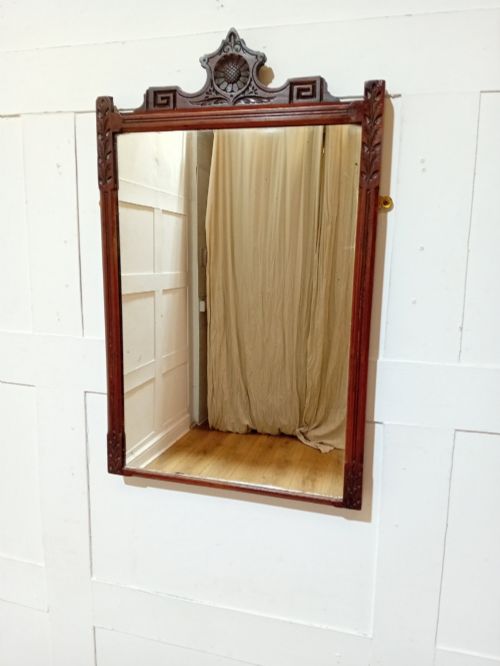
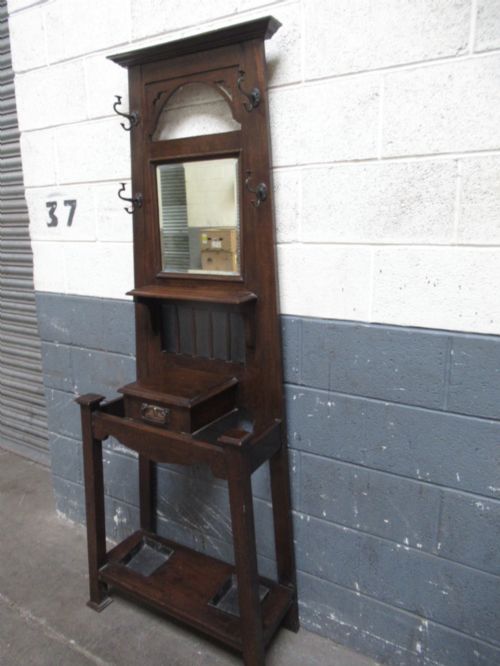
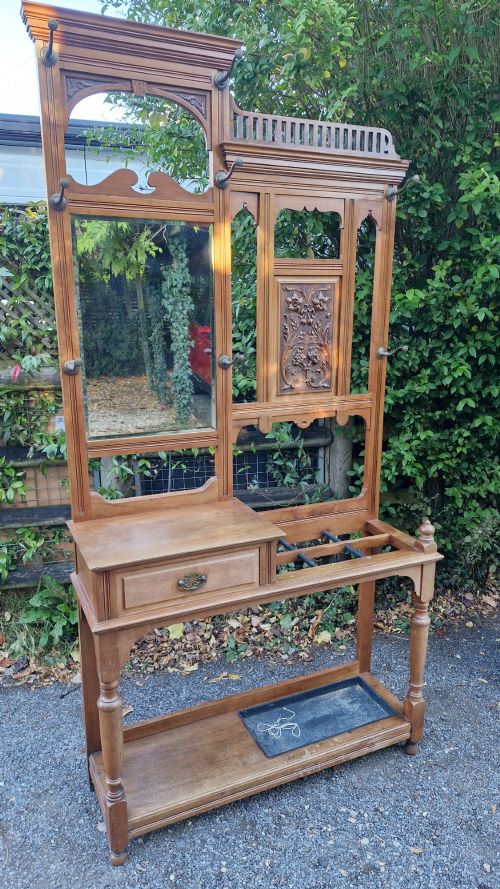

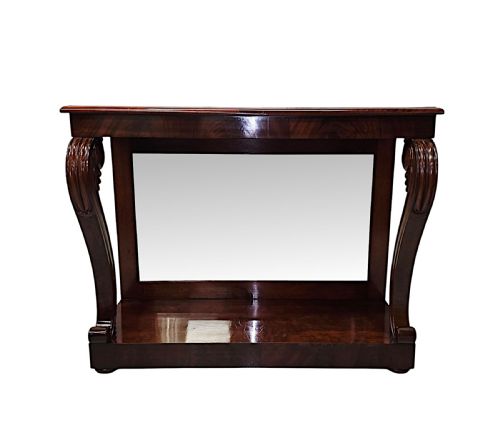
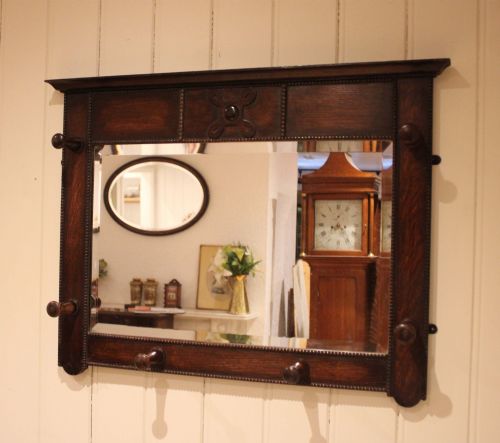


Entryway Wood Mirror
An entryway wood mirror anchors a hall with functional utility and period character, bringing warmth through rich timber frames and practical glass.
Entryway Wood Mirror
When you search for an entryway wood mirror, you encounter pieces designed to organise and illuminate a hallway or lobby. These items range from wall hanging cloakroom mirrors with shelves to grand hall stands combining coat hooks, umbrella wells, and glass.
The selection on this page centres on domestic furniture from the nineteenth century into the early twentieth century. You will frequently meet Victorian and Edwardian examples alongside French Art Deco and Biedermeier forms.
Makers and craftsmen utilised diverse domestic and exotic timbers to construct these items, pairing polished wood with bevelled or plain glass plates. Their origins span British country houses and continental workshops, reflecting regional domestic habits.
Materials and construction methods
Cabinetmakers constructed these forms using solid timbers and veneers such as mahogany, walnut, oak, and maserbirch. They frequently incorporated brass hooks, marble tops, and gilt highlights to enhance the functional wooden frames.
Joinery techniques involved sturdy framing to support hanging garments and heavy glass plates. Carved classical motifs, panelled backs, and applied mouldings defined the decorative vocabulary of the period workshops.
Entryway Wood Mirror Retail Price Guide 2026
Typical asking prices for entryway wood mirror among the pieces listed under this phrase on Sellingantiques today, from the lower quarter to the upper quarter. They describe what is for sale here now, not the wider market.
The listings show pieces constructed from mahogany, walnut, and oak, alongside French Art Deco bamboo wall mirrors.
Distinctions in craftsmanship and design
Quality separates standard utility items from pieces commissioned for country houses through the depth of timber selection and the crispness of carved ornamentation. Superior examples feature well-figured mahogany or walnut, integrated marble surfaces, and substantial brass hardware.
The integration of the glass plate within the wooden structure also indicates standard versus high production. Better items display heavy, original mirrored glass securely framed within robust, structurally sound joinery.
Gillingtons of Dublin·Gillows
The Entryway Wood Mirror Glossary
- Hall stand
- A composite piece of hallway furniture combining a mirror, coat hooks, umbrella stands, and occasionally a small shelf or drawer. These items served a primary organisational purpose in Victorian and Edwardian entrance halls.
- Console table
- A table designed to stand against a wall, frequently paired with a wall mirror above it in an entryway. They often featured marble tops and elaborate mahogany or walnut frames.
- Gilt heightened
- An application of thin gold leaf or gilt paint to highlight specific carved details on a wooden frame. This technique accentuated the architectural motifs of nineteenth-century mirrors.
- Biedermeier
- A central European style dating from the early nineteenth century emphasising clean lines and minimal ornamentation. Pieces from this period utilised native woods like maserbirch to display natural grain patterns.
Entryway Wood Mirror: Frequently Asked Questions
What is an entryway wood mirror?
An entryway wood mirror is a functional furnishing designed for a hallway, typically combining a reflective glass plate with solid timber framing. Many examples integrate coat hooks, small shelves, or umbrella stands to manage outerwear.
These pieces emerged in various regional styles during the nineteenth and early twentieth centuries. They served both a practical purpose for checking appearance before leaving the house and a decorative role in welcoming visitors.
How were hall stands used?
Hall stands provided a central station in a home for outdoor garments, hats, and walking sticks. Residents and guests hung their coats on the brass hooks and placed wet umbrellas in the integrated stands.
The incorporated mirror allowed a final inspection of attire, while small ledges held visiting cards or keys. They occupied the entrance hall of domestic residences as both furniture and organisational tools.
How do I date a wooden hallway mirror?
Dating involves examining the wood species, construction methods, and stylistic motifs present in the frame. Victorian and Edwardian pieces often feature dark hardwoods like mahogany or walnut alongside specific carved ornamentation.
Earlier nineteenth-century examples display distinct regional cabinetmaking traits, such as Regency or Biedermeier design characteristics. The backing boards, screw types, and glass bevelling also offer clues to the period of manufacture.
How do I care for antique wood and glass?
Maintaining these items requires keeping them away from direct sunlight and excessive humidity changes to protect the timber and veneer. Gentle dusting with a soft cloth preserves the polished surface without damaging the historic finish.
Glass cleaner should be applied sparingly to a cloth rather than directly sprayed onto the mirror to prevent moisture seeping behind the plate. Regular inspection of wall fixings ensures heavy wooden frames and combined stands remain secure.