
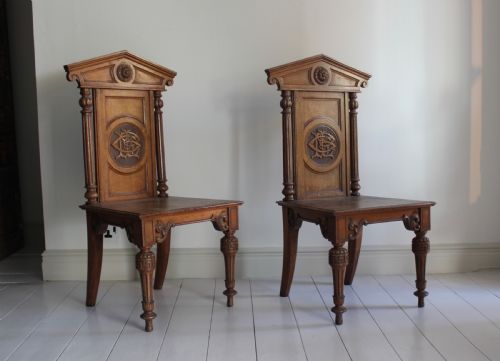
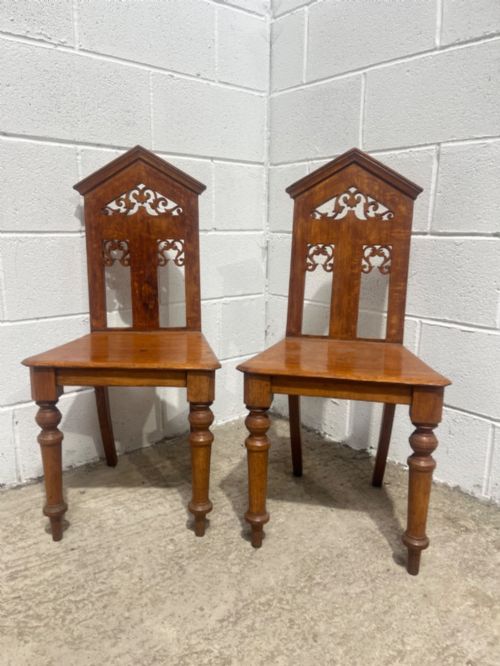
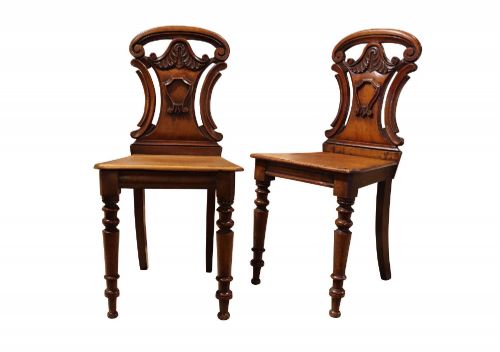
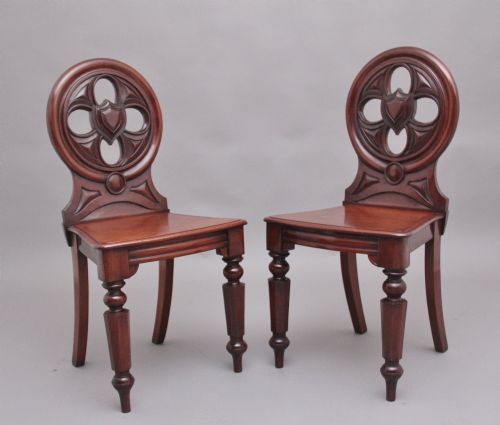
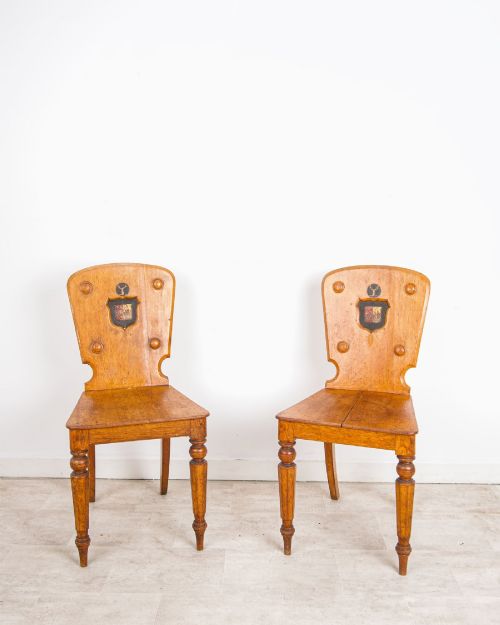
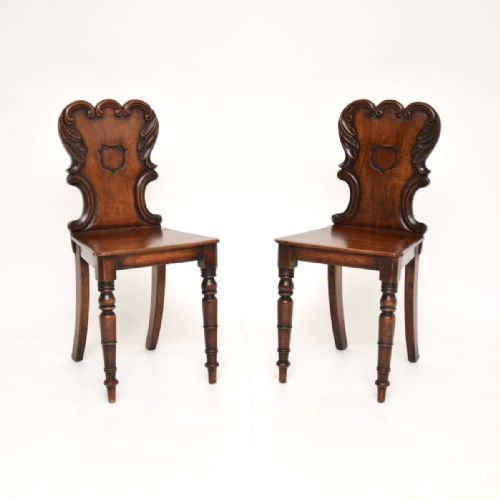
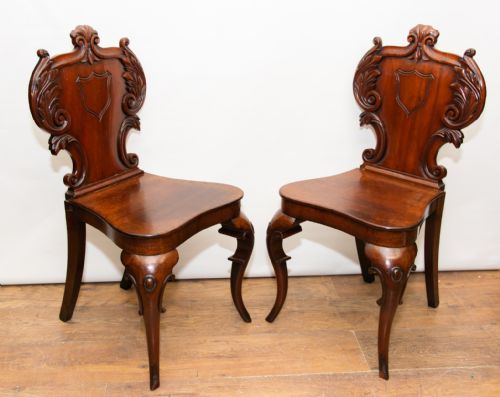

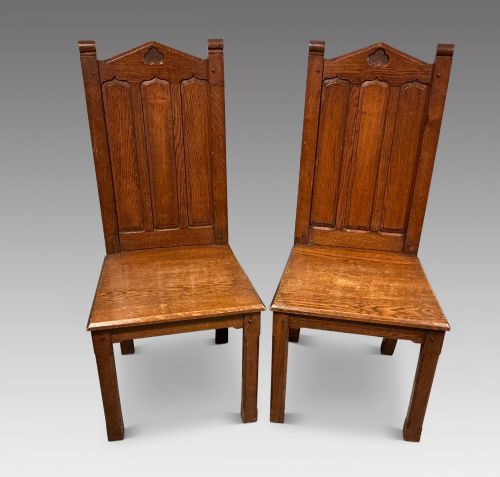




Entryway Chairs Pair
An entryway chairs pair provides a striking architectural greeting in a hallway, combining practical seating with formal presence.

Entryway Chairs Pair
An entryway chairs pair consists of matching seats designed specifically for placement in halls, vestibules, and reception areas. These pieces originate across the eighteenth and nineteenth centuries, spanning Georgian, Regency, and Victorian periods.
The dominant forms appearing here are hall chairs and benches, frequently executed in robust timbers like mahogany and oak. Makers shaped these items for formal display rather than lounging, placing them against walls to greet arriving guests.
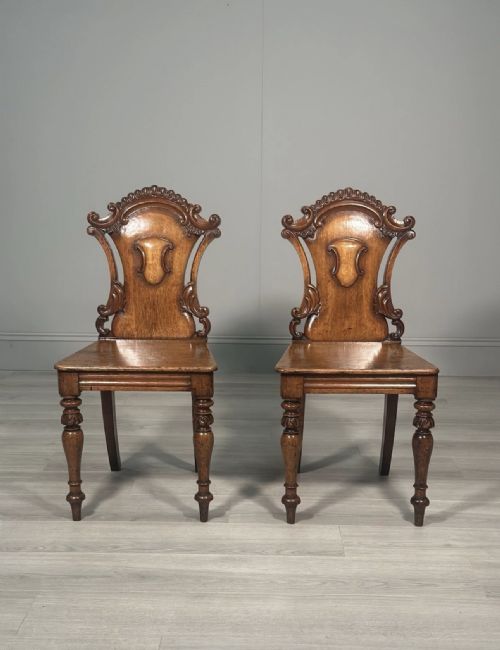
Examples often incorporate carved details such as heraldic shield backs, pelta backs, and shell motifs. Such elements reflect the stylistic shifts from classic Georgian restraint through to ornate Victorian revival designs.
Materials and construction
Cabinet makers utilised dense hardwoods including mahogany, oak, and walnut to construct these sturdy seating pairs. These timbers were selected for their structural strength and ability to hold crisp, deep carvings on solid wood seats.
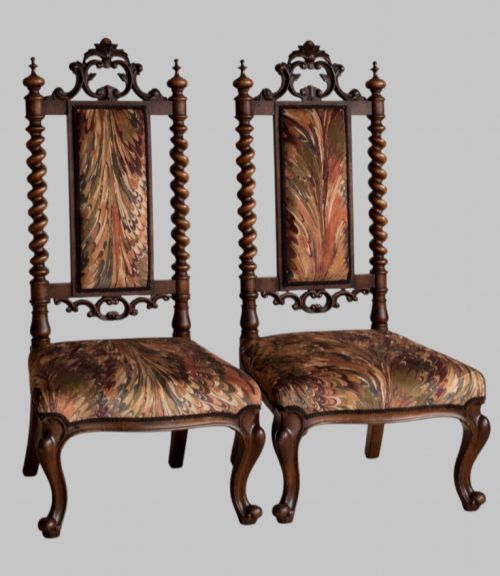
Joinery methods combined traditional pegged joints with turned supports like barley twists and brass accents. Pitch pine and ceramic components also appear, showing how regional workshops adapted available materials for hallway furniture.
Listings feature mahogany, oak, and walnut pieces spanning the Georgian, Regency, and Victorian periods.
Distinctions in quality
Quality rests upon the crispness of the carved ornamentation, particularly on shield backs, shell motifs, and heraldic elements. Master carvers produced deeply articulated relief work that remained sharp across both matching chairs in the pair.
The selection of timber grain and the integrity of the solid wood seats dictate the superior tier of these pieces. Matched figuring in the mahogany or oak shows deliberate material pairing by skilled makers.
Gillows
The Entryway Chairs Pair Glossary
- Shield back
- A chair back shaped in the outline of a heraldic shield, frequently carved with crests or foliage. This form was especially popular during the Georgian and Regency eras.
- Sgabello
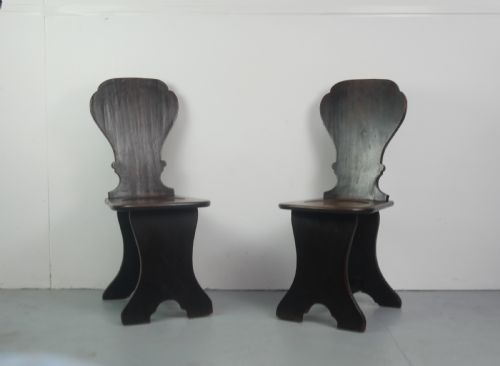
- An early Renaissance-style chair form featuring solid trestle supports and a wooden seat, occasionally interpreted by later makers. It offers a sculptural silhouette suitable for narrow spaces.
- Pelta back
- A chair back designed in the ancient Greek shield shape resembling a crescent with curved ends. It provides a distinctive classical profile.
- Barley twist
- A decorative turning technique resembling a twisted rope, used on the legs and supports of Victorian seating. This detail adds vertical rhythm to the frame.
- Hall chair
- A stiff-backed wooden seat intended for temporary use in an entrance hall rather than comfortable lounging. They were traditionally painted or carved with family crests.
Entryway Chairs Pair: Frequently Asked Questions
What is an entryway chairs pair?
An entryway chairs pair comprises two matching antique seats designed for placement in a hallway or reception area. They were traditionally used by visitors waiting briefly before being received.
These pieces typically feature solid wooden seats and high, decorative backs rather than upholstery. Their slim profiles allow them to sit flush against walls without obstructing passage.
How do I date a pair?
Dating relies on observing the prevailing style, timber choices, and construction methods visible in the frame. Georgian pieces often show restrained classical lines, while Regency items embrace bolder carved motifs.
Victorian examples frequently introduce heavier proportions, darker walnut or oak timbers, and turned supports like barley twists. Comparing the carving depth helps confirm the period.
What woods were used?
Cabinet makers predominantly used dense hardwoods such as mahogany, oak, and walnut for these hallway seats. These materials endured heavy use and provided a stable base for deep relief carving.
Pitch pine also appears in certain regional or later Victorian pieces. Each timber brings distinct grain patterns and colour variations to the finished pair.