




Entryway Cane Holder
These entryway cane holder examples corral walking sticks and umbrellas in materials from cast iron to bent beechwood.
Entryway Cane Holder
An entryway cane holder encompasses practical hall furnishings designed to hold walking sticks, umbrellas and parasols near the door. Buyers seeking an entryway cane holder find heavy floor-standing vessels and integrated hall furniture intended to keep hallways tidy.
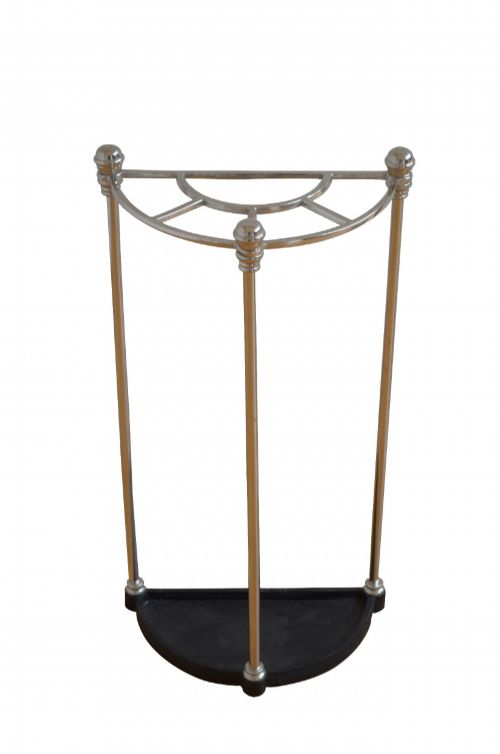
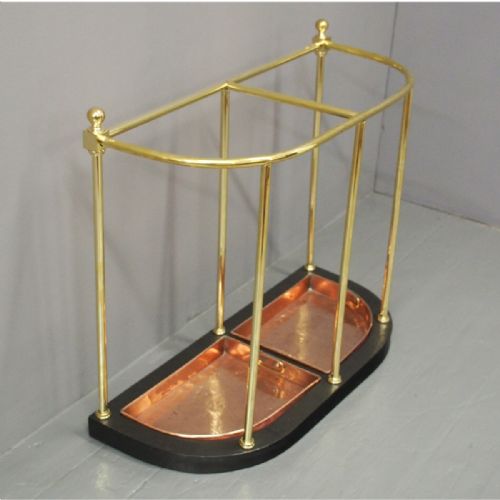
The pieces on this page span the Victorian era, the Edwardian period, the Art Deco style and the 1930s. Common forms include demi-lune designs, corner stands, compartmentalised metal frames and coopered wooden vessels.
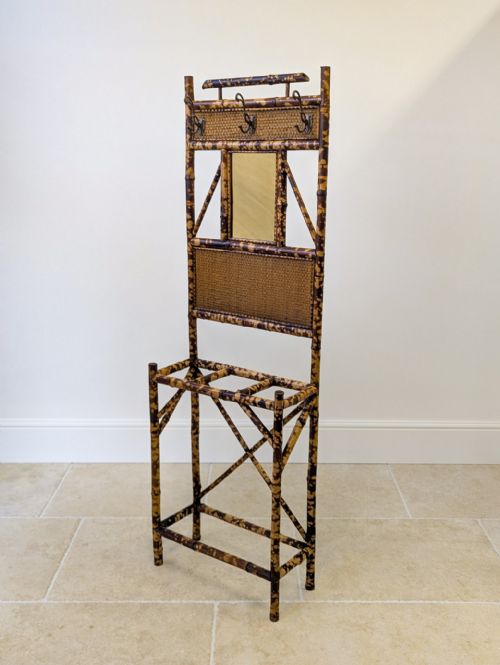
Victorian cast iron and brass versions sit alongside bent beechwood, bamboo, rattan and oak examples. Each style reflects the interior tastes of its decade, from Aesthetic Movement bamboo to Jacobean Revival oak.
How they were made
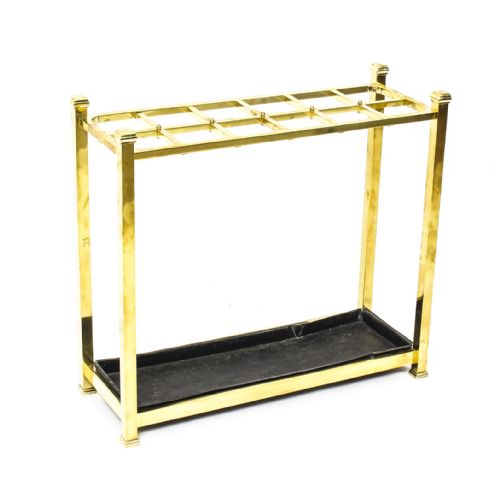
Metal stands rely on cast iron, brass, steel and nickel, utilising casting and structural assembly to support heavy loads of wet umbrellas. Iron frames often feature decorative pierced patterns and integrated drip pans to catch rainwater.
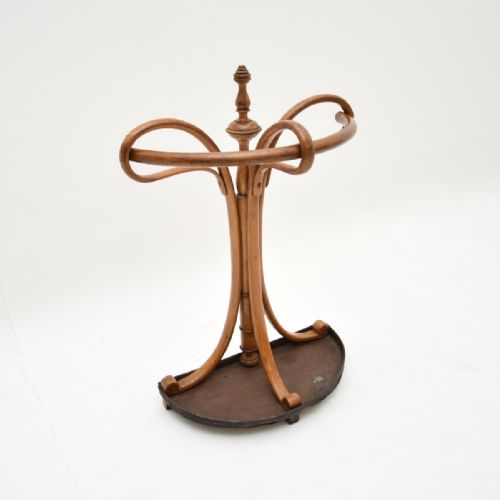
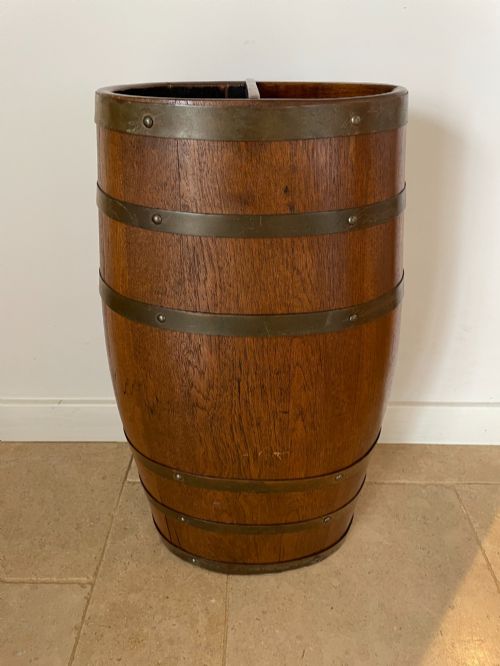
Wooden examples employ oak, walnut and bent beechwood, with some pieces constructed using coopered staves bound together like barrels. Bamboo and rattan pieces incorporate natural plant stems bent and bound to form lightweight yet rigid frames.
Entryway Cane Holder Retail Price Guide 2026
Typical asking prices for entryway cane holder among the pieces listed under this phrase on Sellingantiques today, from the lower quarter to the upper quarter. They describe what is for sale here now, not the wider market.
Materials span brass, cast iron, oak, metal, bent beechwood, bamboo, rattan and glass across Victorian, Edwardian and Art Deco periods.
What varies in quality
The grade of materials and the complexity of construction dictate distinction across these stands. Heavy cast iron and solid brass demonstrate durability, whilst coopered oak requires precise woodworking to ensure the staves remain tight and true.
Design ambition sets finer examples apart from utility pieces, seen in twelve-division metal separators or marked bentwood works. The presence of original drip pans and sophisticated styling, such as Aesthetic Movement bamboo or demi-lune brass, elevates a piece.
Thonet·Honourable Company of Edinburgh Golfers
The Entryway Cane Holder Glossary
- Demi-lune
- A half-moon shape used for stands designed to sit flush against a hallway wall. This profile saves floor space in narrow corridors.
- Coopered
- A method of construction where narrow wooden staves are joined edge-to-edge and bound with bands, similar to barrel-making.
- Bentwood
- Wood softened by steam and then bent into curved forms, a technique famously utilised by Thonet for beechwood furniture.
- Aesthetic Movement
- A late nineteenth-century design style that emphasised visual beauty over narrative meaning, frequently employing Japanese-inspired bamboo and rattan.
Entryway Cane Holder: Frequently Asked Questions
What is an entryway cane holder?
An entryway cane holder is a functional furnishing designed to store walking sticks, umbrellas and parasols in a hallway. These pieces provide an organised receptacle near the front door for wet or muddy outdoor accessories.
They appear in various formats, from heavy cast iron frames to wooden coopered vessels and bamboo structures, reflecting the domestic habits of the nineteenth and twentieth centuries.
How were these stands used?
Households placed these stands in entrance halls, vestibules and mudrooms to receive wet umbrellas and walking aids upon entering the home. The inclusion of metal drip pans at the base prevented water from damaging hallway flooring.
Visitors and residents deposited their canes and parasols here for convenient retrieval when heading back outside into the weather.
How do I live with one?
Position your stand near the main entrance where umbrellas and walking sticks naturally accumulate. Ensure the interior base retains a suitable tray or liner to catch moisture from wet items.
Regularly check wooden or metal surfaces for accumulated dampness and maintain them according to their specific material requirements.
How do I tell periods apart?
Victorian and Edwardian pieces often utilise cast iron, heavy brass, oak and bamboo, frequently displaying ornate detailing or Aesthetic Movement influences. Later twentieth-century items, such as Art Deco and 1930s examples, lean towards nickel finishes and streamlined forms.
Examining the manufacturing techniques, materials and fastening methods helps connect a piece to its respective decade.