

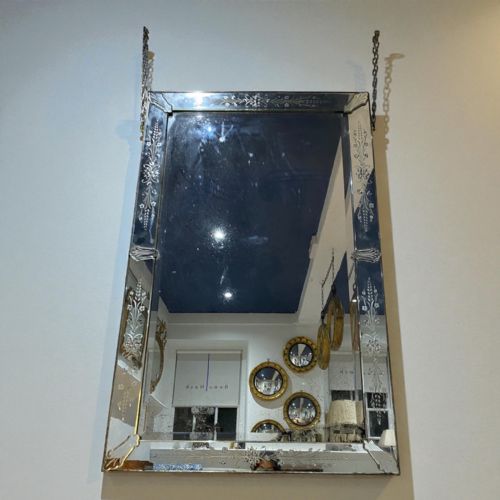

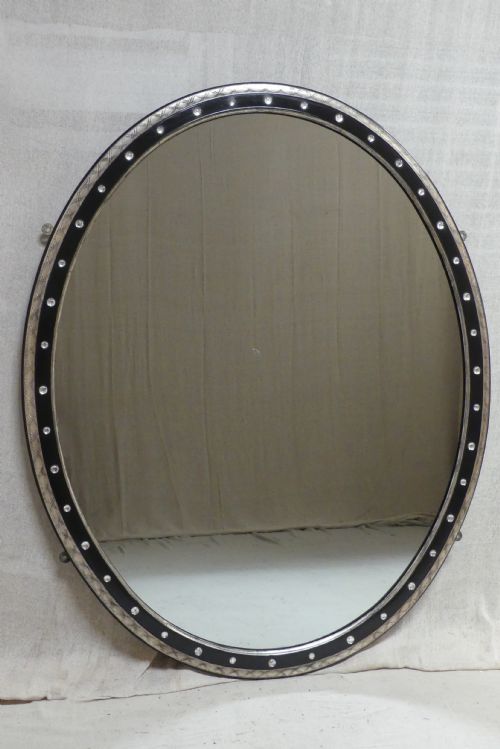


Engraved Wall Mirror
These engraved wall mirror pieces bring sparkling etched glass and ornate frames into a room to catch the daylight.
Engraved Wall Mirror
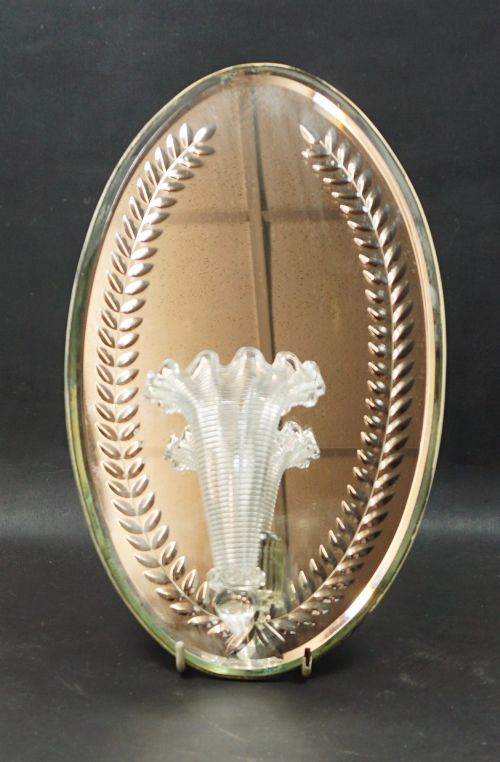
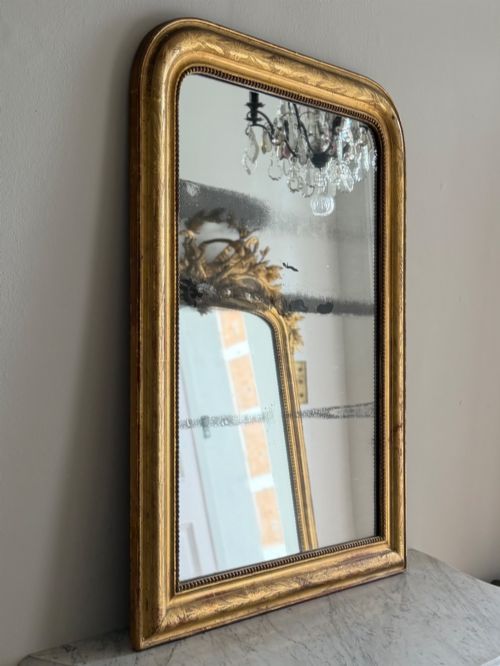
An engraved wall mirror combines reflective glass with decorative surface work, spanning periods from the mid-nineteenth century through the 1930s. Buyers searching for an engraved wall mirror find items ranging from nineteenth-century French gilt Louis Philippe designs to Italian Venetian styles.
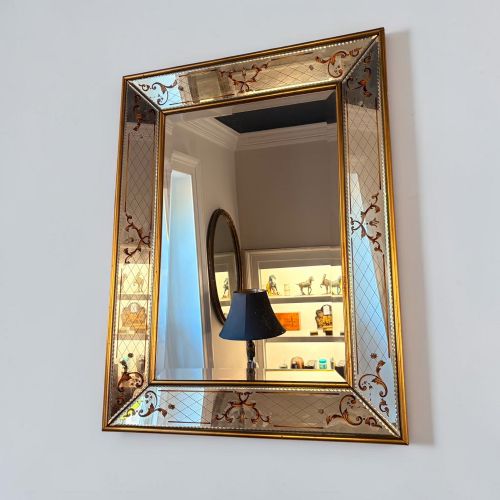
The most common formats include large Venetian pieces, cushion mirrors, and rectangular or oval shapes. These items draw on historical aesthetics, including eighteenth-century taste reinterpreted in later periods.
Materials and construction
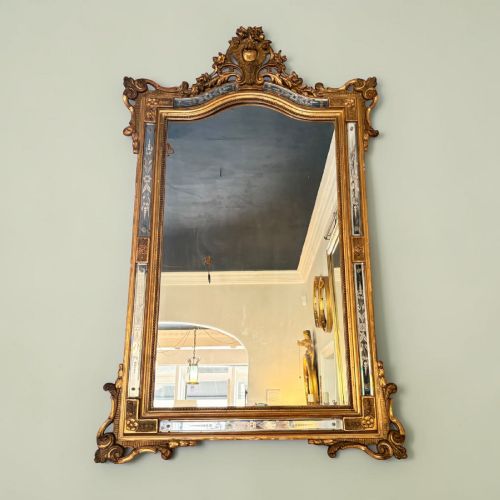
Makers utilised glass, mirrored glass, and wood as primary foundations for these pieces. Frames often incorporate gesso, gold leaf, and parcel gilt surfaces over carved wood.
Techniques involve surface engraving and etching directly onto the glass plates, paired with traditional carving and giltwood application on the frames.
Engraved Wall Mirror Retail Price Guide 2026
Typical asking prices for engraved wall mirror among the pieces listed under this phrase on Sellingantiques today, from the lower quarter to the upper quarter. They describe what is for sale here now, not the wider market.
Listings feature pieces spanning the 1850s to the 1930s, utilising materials including giltwood, gesso, and peach glass.
Judging quality in these mirrors
Quality rests upon the depth and clarity of the glass engraving, alongside the execution of the carved wooden or gilt frames. Finer examples display intricate hand-etched details and skilful gilding.
The condition of the mirrored glass itself, including the presence of authentic ageing or foxed mercury glass, distinguishes different tiers of craftsmanship.
The Engraved Wall Mirror Glossary
- Foxed mercury glass
- Glass featuring dark spots and mottled patches caused by the breakdown of the backing over time. This age-related characteristic appeals to many collectors.
- Eglomise
- A technique involving the application of cold painting and gilding to the rear face of glass. It creates a decorative border or panel on the mirror.
- Giltwood
- Timber that has been coated with a thin layer of gold leaf or gold paint. It forms the ornate frames seen on French and Italian pieces.
- Cushion mirror
- A mirror featuring a convex or sloping outer frame border made of individual glass segments. This form creates extra angles for reflection.
Engraved Wall Mirror: Frequently Asked Questions
How do I hang an engraved wall mirror safely?
These mirrors require sturdy wall fixings suited to the combined weight of the wood, gesso, and glass plate. Professional mirror brackets or picture wire attached to the frame structure provide secure support.
Position the mirror at eye level where it can catch natural light from a window. Ensure the wall anchors match the specific weight of the piece you own.
What periods do these mirrors come from?
The listings span the nineteenth and early twentieth centuries, including Victorian, Edwardian, and 1930s examples. Makers often drew inspiration from earlier French and Italian aesthetics.
Items range from mid-nineteenth-century French designs to 1920s and 1930s Venetian pieces. Each era brings distinct framing styles and engraving techniques to the surface.
How do I clean engraved mirror glass?
Clean the glass surface gently using a soft microfibre cloth and a mild, ammonia-free glass cleaner. Avoid spraying liquid directly onto the glass to prevent moisture seeping behind the engraved areas or backing.
Take extra care around foxed or etched sections where the silvering is fragile. Wipe softly to remove dust without disturbing the historic surface.
What is the difference between Venetian and French styles?
Venetian mirrors frequently feature frames made entirely of shaped and engraved glass segments with floral crests. They rely on glasswork rather than heavy wood for their decorative impact.
French styles, such as Louis Philippe or Rococo, typically pair a wooden frame with gilt or gesso decoration around a single etched glass plate. Their silhouettes lean towards arched tops or ornate carved crests.