



Engraved Walking Stick
An engraved walking stick carries the weight of personal history, offering both a gentleman's support and a hidden blade or precious pommel.
Engraved Walking Stick
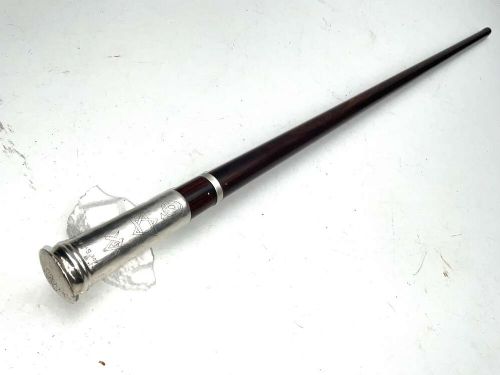
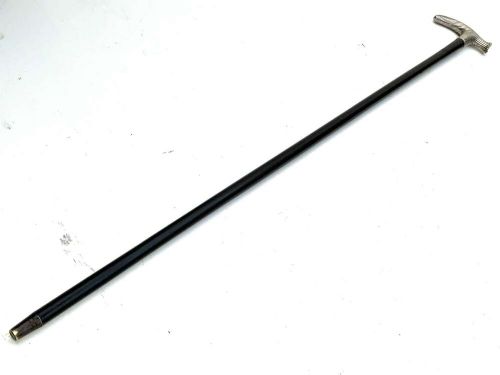
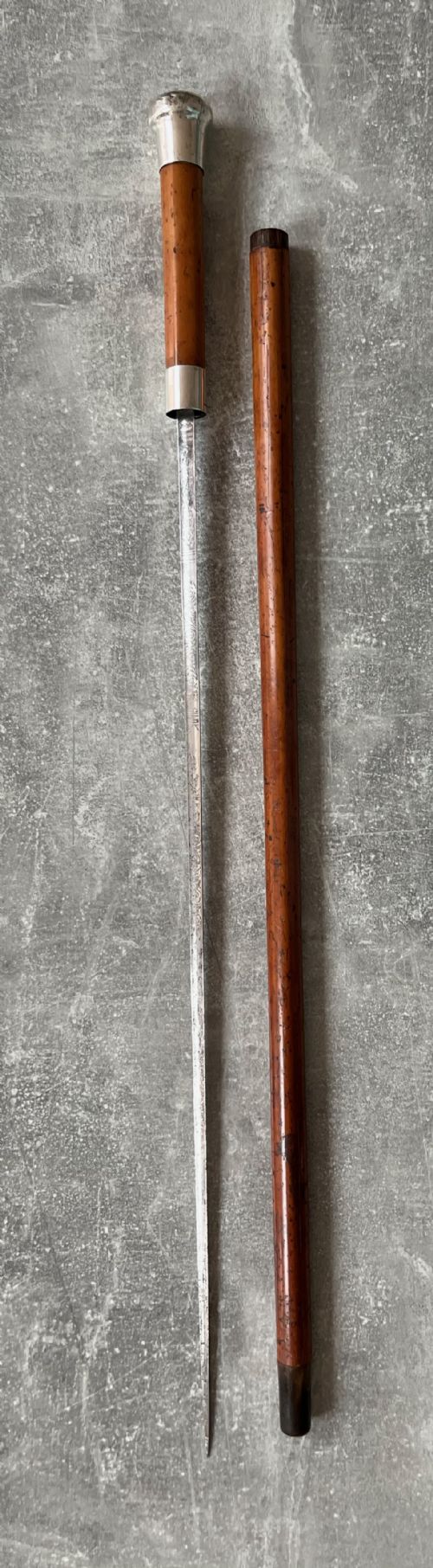
When you search for an engraved walking stick, you find a variety of canes and sword sticks produced during the Victorian, Edwardian, and later periods. The examples on this page range from simple ebonized wood shafts to elaborate items featuring silver mounts, 18ct gold pommels, and decorated blades.
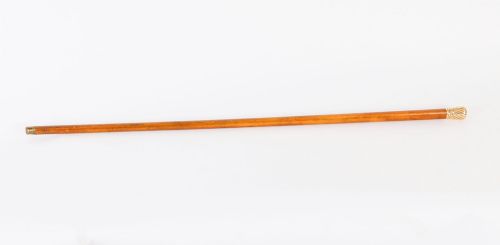
The forms span standard walking sticks and canes alongside specialised sword sticks and daggers. Materials include wood, malacca cane, horn, and ebonized oak, paired with precious metal collars and handles bearing inscriptions or military interest.
Origins vary from British India regiments and Imperial Russian workshops to French and continental makers. You are most likely to encounter nineteenth-century and early twentieth-century pieces with silver or gold decorative elements.
What varies in quality
The distinction between ordinary and superior pieces rests in the craftsmanship of the pommel and the quality of the blade. Solid 18ct gold or heavy silver mounts with detailed engraving signify a higher grade of manufacture than basic plated collars.
The integrity of the shaft and the precision of the fit between the blade and the scabbard determine the overall standard. Superior examples maintain a tight alignment when closed and utilise fine hardwoods like malacca or ebonized oak.
Engraved Walking Stick Retail Price Guide 2026
Typical asking prices for engraved walking stick among the pieces listed under this phrase on Sellingantiques today, from the lower quarter to the upper quarter. They describe what is for sale here now, not the wider market.
A surprising number of Victorian gentlemen chose to hide lethal steel blades inside unassuming wooden walking sticks.
Brigg's·Wilkinson·Henry Borlase Stevens
The Engraved Walking Stick Glossary
- Pommel
- The knob or handle at the top of a walking stick. These often feature precious metals and personal engravings.
- Malacca cane
- A strong, resilient stem derived from a Southeast Asian rattan palm. It is prized for its mottled brown surface and flexibility.
- Sword stick
- A cane designed to conceal a steel blade within the shaft. They function as both walking aids and concealed personal protection.
- Ebonized
- Wood treated to resemble dense, black ebony. This finish provides a dark, uniform appearance on walking canes.
- Collar
- The metal band situated below the handle. It frequently carries initials, hallmarks, or decorative engraving.
Engraved Walking Stick: Frequently Asked Questions
How do I spot a sword stick?
Sword sticks generally feature a subtle seam where the handle meets the shaft, concealing a locking mechanism that releases the hidden blade.
Closer inspection of the overall weight and balance often reveals the presence of steel interior components within the wooden exterior.
Were these canes used in military service?
Many nineteenth-century examples reflect military connections, often owned by officers serving in colonial India or British regiments.
Inscriptions and regimental crests engraved on the silver mounts usually denote this specific provenance.
How should I clean the silver mounts?
Silver mounts require gentle cleaning with a soft cloth to preserve any fine engraving or maker marks. Avoid abrasive polishes that might wear away thin plating or delicate details.
Care should be taken to keep moisture away from the wooden shaft while attending to the metal elements.
What woods are commonly found on these canes?
Shafts frequently utilise malacca cane, oak, or ebonized wood finished to a dark sheen. These materials were chosen for their straight grain and durability.
Some examples also incorporate leather coverings over the core structure for enhanced grip and texture.