


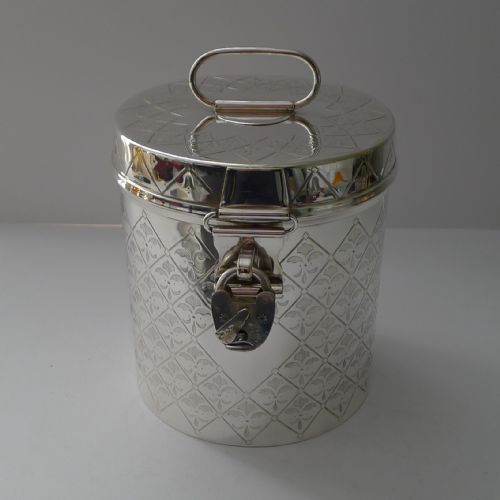


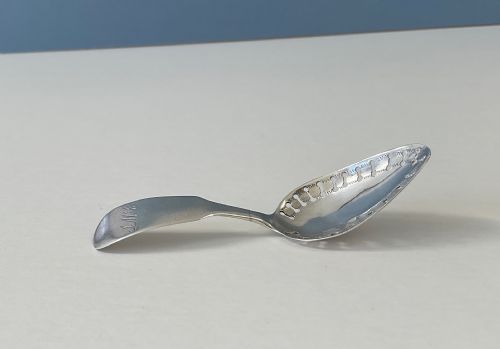


Engraved Tea Caddy
An engraved tea caddy brings domestic history to the sideboard, offering a tangible link to eighteenth and nineteenth-century tea ceremonies.
Engraved Tea Caddy
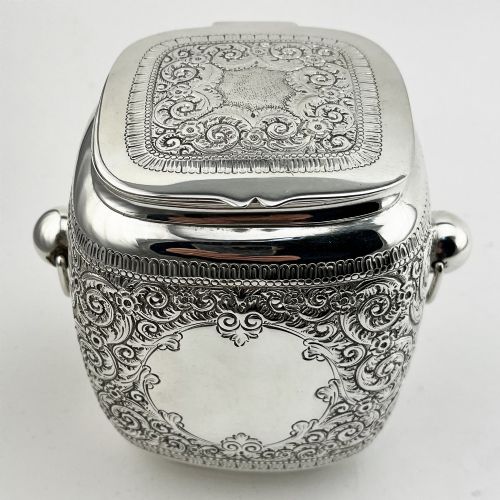
When searching for an engraved tea caddy, collectors encounter items spanning the Georgian, Victorian, and Edwardian periods, alongside Chinese export pieces.
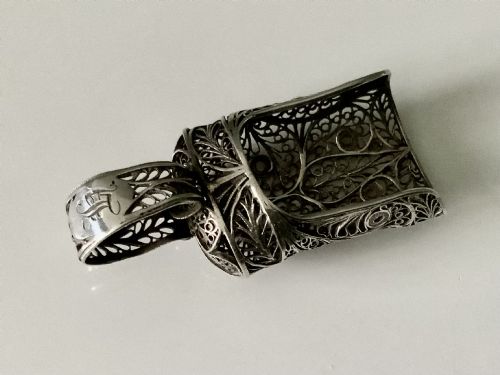
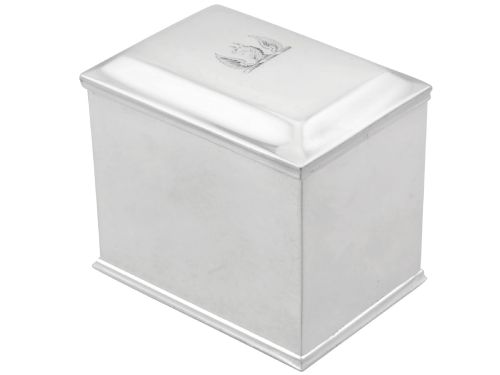
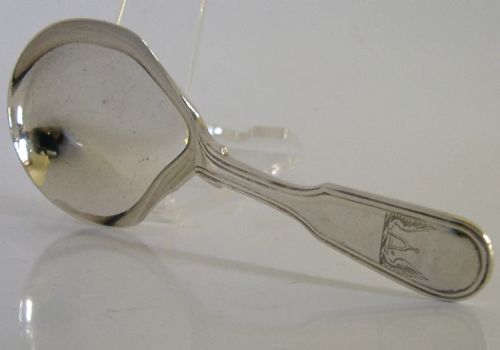
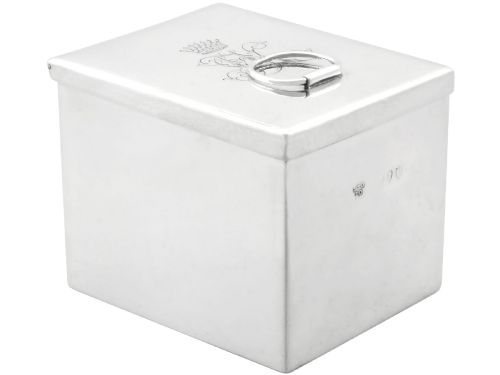
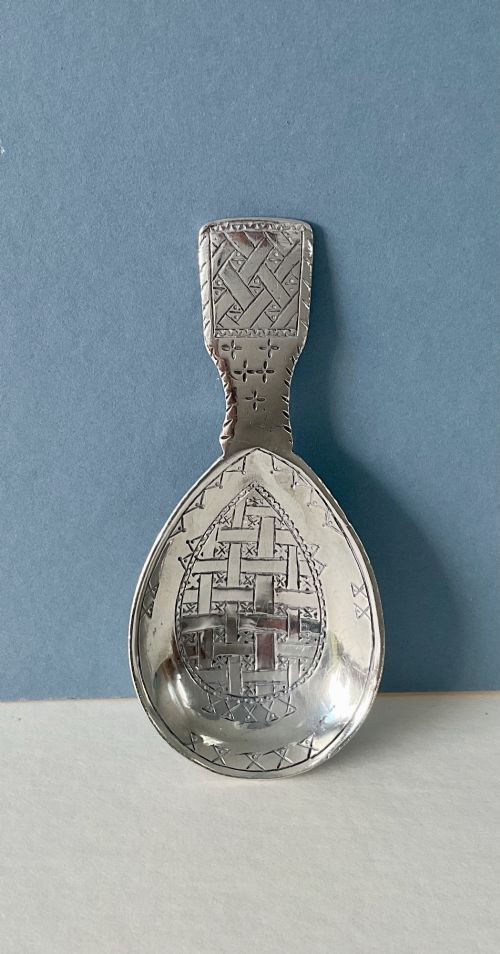
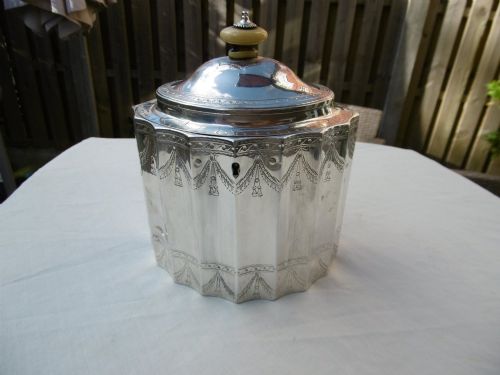
The selection ranges from substantial solid sterling silver tea caddy boxes and locking biscuit barrels to delicate caddy spoons featuring engraved handles and bowls.
Materials and construction methods
Silversmiths utilised sterling silver and silver plate, frequently employing techniques such as fluting, piercing, and detailed surface engraving to decorate the metal.
Alternative materials include bone, metal, ebonised wood, and lacquer, reflecting diverse manufacturing traditions across different workshops and periods.
Engraved Tea Caddy Retail Price Guide 2026
Typical asking prices for engraved tea caddy among the pieces listed under this phrase on Sellingantiques today, from the lower quarter to the upper quarter. They describe what is for sale here now, not the wider market.
Distinctions in craftsmanship and condition
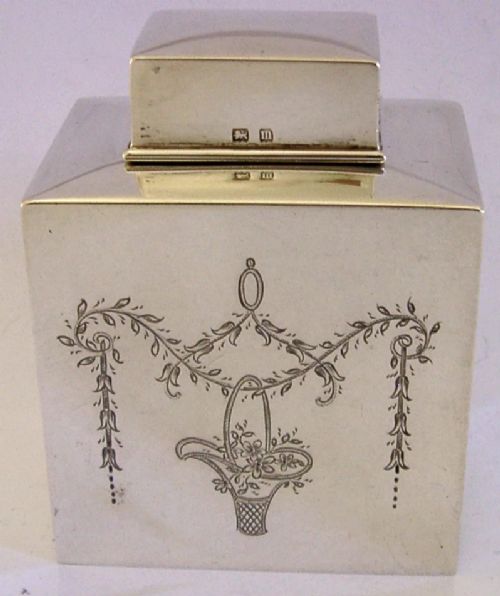
The quality of an engraved tea caddy depends upon the crispness of the hand engraving and the robustness of the gauge of silver used in its construction.
Pieces bearing clear assay office hallmarks, maker marks, and well-preserved family crests demonstrate superior provenance and manufacturing standard.
Martin Hall And Co·Mappin And Webb·Robert Hennell·Zimmermann·William Neale·Robert And Belk·George Unite·Elkington And Co·George Wintle
The Engraved Tea Caddy Glossary
- Caddy Spoon
- A small specialised spoon designed for measuring tea leaves from a caddy into a teapot. These often feature distinctive engraved bowls shaped like shells or jockey caps.
- Hallmark
- An official stamp applied by an assay office indicating the purity of the silver, the year of manufacture, and the city of origin.
- Biscuit Barrel
- A covered ceramic, glass, or silver-plated vessel used for storing biscuits during Victorian and Edwardian dining occasions.
- Electroplated Nickel Silver
- A base metal coated with a thin layer of silver using an electrical process, common in nineteenth-century production.
- George III
- The period of British history spanning from 1760 to 1820, noted for refined neoclassical silver design.
Engraved Tea Caddy: Frequently Asked Questions
What is an engraved tea caddy used for?
An engraved tea caddy was traditionally used to store valuable tea leaves securely under lock and key in wealthy households.
Today, these boxes serve as decorative display items on sideboards or as containers for small keepsakes.
How do I identify a Georgian tea caddy?
Georgian tea caddies typically display neoclassical styling, often featuring bright-cut engraving, fluting, and makers' marks associated with late eighteenth and early nineteenth-century silversmiths.
Examining the assay office marks stamped on the silver provides the exact year and city of manufacture.
What is the difference between solid silver and silver plate?
Solid silver pieces are made entirely of precious metal, such as sterling silver, throughout their structure.
Silver-plated items consist of a base metal coated with a layer of silver, introduced widely during the Victorian era.
How should I clean a silver tea caddy?
Silver pieces require gentle cleaning with a specialised silver cloth to maintain the polish without wearing down the delicate hand engraving.
Avoid harsh chemical dips that can damage patination and obscure historical hallmarks.