

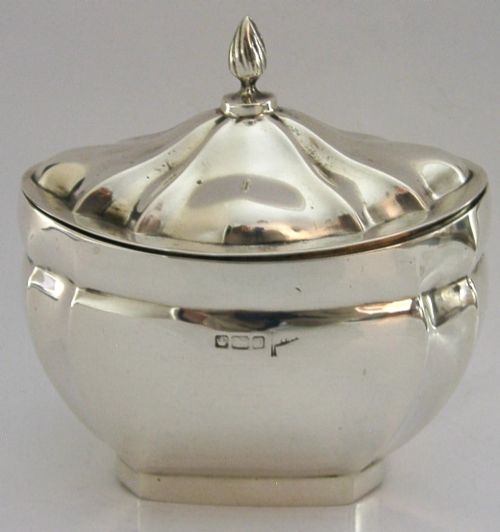
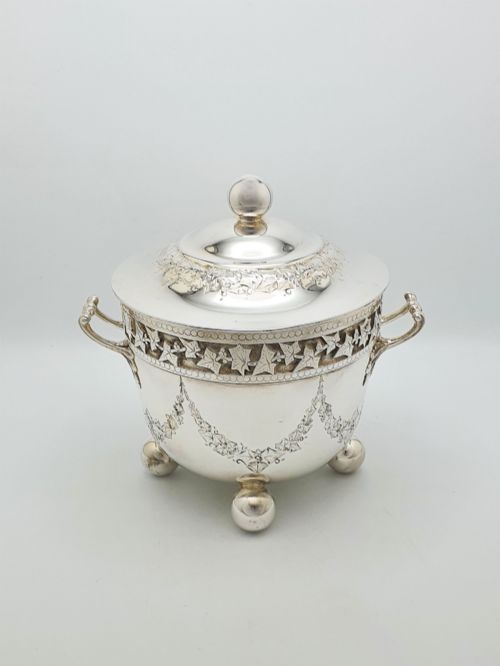
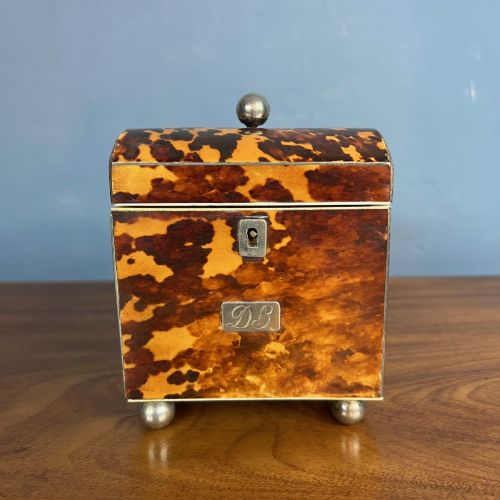
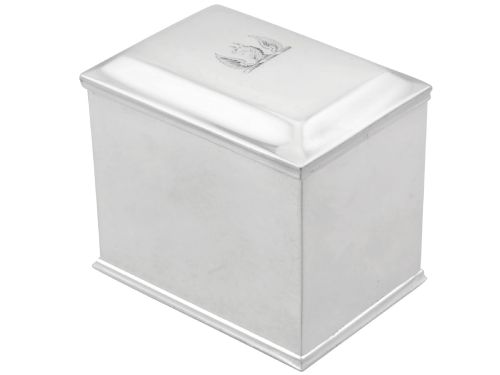
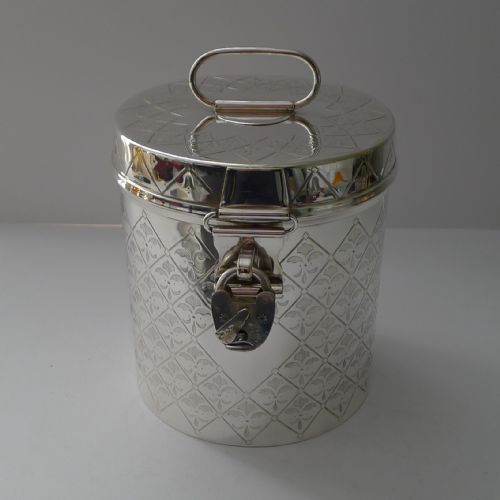


Engraved Tea Box
An engraved tea box brings the tactile refinement of Georgian, Victorian, and Edwardian dining rooms straight to your sideboard.
Engraved Tea Box
The pieces appearing on this page span several distinct periods, most notably the Georgian, Victorian, and Edwardian eras. Sterling silver and silver plate dominate the material record, frequently accompanied by interior linings of velvet or silk.
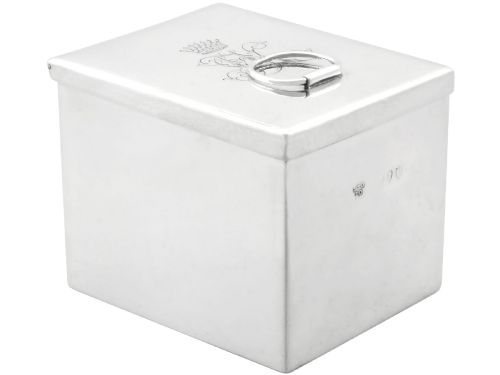
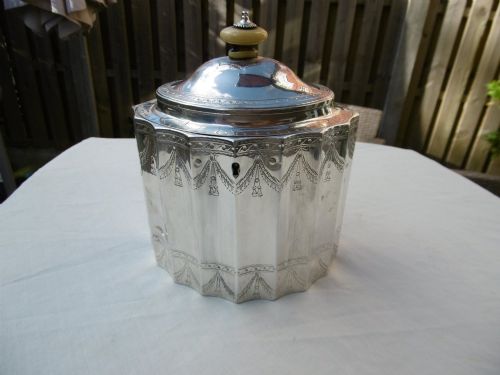
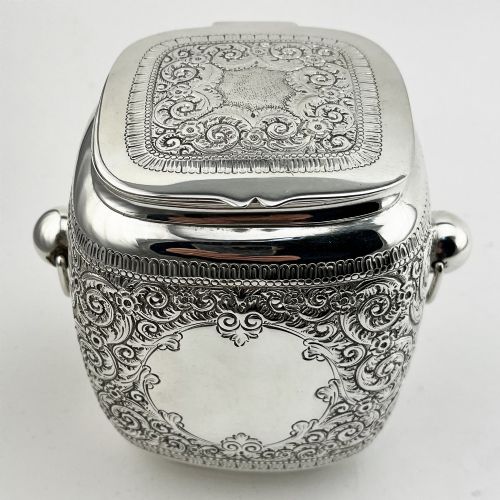
Makers ranging from established silversmiths to larger firms produced these items in varied forms, including drum shapes, fluted profiles, and ornate lidded boxes. Buyers are most likely to encounter Victorian and Edwardian examples fashioned from sterling silver or electroplated nickel silver.
How they were made
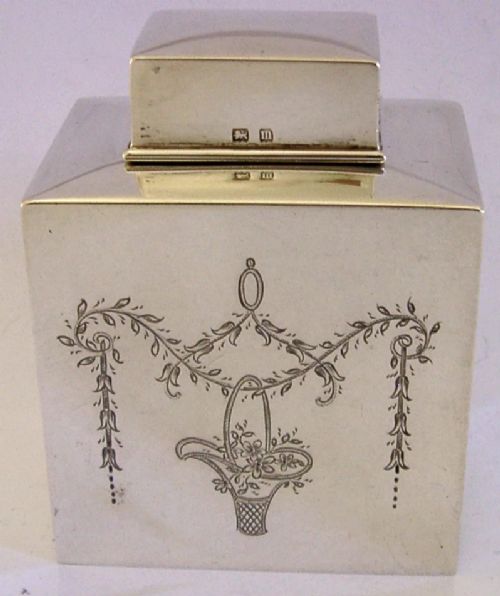
Metalsmiths shaped sterling silver and silver plate through techniques such as casting, hammering, and detailed hand engraving. Artisans applied surface decoration by incising floral, geometric, or heraldic motifs directly into the metal walls of the caddy or box.
Internal elements often involved contrasting textures, utilising velvet or silk to cushion delicate items or protect the contents. Cut glass also appears in combination with silver plating, particularly in nineteenth-century biscuit barrels where transparent bodies met ornate metal mounts.
Engraved Tea Box Retail Price Guide 2026
Typical asking prices for engraved tea box among the pieces listed under this phrase on Sellingantiques today, from the lower quarter to the upper quarter. They describe what is for sale here now, not the wider market.
Object forms recorded across the inventory include tea caddies, biscuit barrels, decorative boxes, flatware sets, and cutlery.
What varies in quality
The standard of an engraved tea box depends heavily on the weight of the metal and the crispness of the surface decoration. Heavier gauge silver provides a substantial feel in the hand and allows for deeper, more permanent hand-engraved detailing.
The precision of the maker's handwork distinguishes everyday production from exceptional craftsmanship. Sharply defined chasing, securely fitted lids, and intact interior linings of silk or velvet elevate certain pieces far above standard utilitarian boxes.
Martin Hall & Co·Mappin and Webb·Zimmermann·Robert & Belk·Walker & Hall·Elkington & Co·Robert Stebbings
The Engraved Tea Box Glossary
- Tea caddy
- A small container designed to store tea leaves securely away from moisture and light. These vessels often featured lockable lids to protect expensive imported leaves.
- Biscuit barrel
- A lidded container used for serving biscuits in formal Victorian and Edwardian settings. They frequently combined silver plated mounts with cut glass bodies.
- Silver-gilt
- Silver that has been coated with a thin layer of gold on its surface. This technique provided a rich golden interior finish to silver boxes and spoons.
- Electroplated nickel silver
- A base metal alloy of copper, nickel, and zinc coated with a layer of pure silver through electrolysis. This method became widespread during the nineteenth century for producing durable tableware.
- Gauge
- The thickness of the metal sheet used to construct a box or caddy. Higher gauge metal indicates a thicker, heavier, and more durable construction.
Engraved Tea Box: Frequently Asked Questions
How were tea boxes used?
Tea boxes served to store valuable loose tea leaves securely under lock and key in the dining room or parlour. The mistress of the house typically kept the key to control access to the precious contents.
Over time, these containers evolved in form and function, transitioning into decorative table accessories or specialised storage for biscuits and sweetmeats during formal gatherings.
Are these boxes suitable for daily use?
These pieces can certainly be utilised in daily life to store dry goods, small trinkets, or contemporary tea bags. Their sturdy construction in sterling silver or heavy plate permits practical handling.
Care must be taken with delicate interior linings of silk or velvet, which respond poorly to moisture. Regular, gentle cleaning preserves the polished exterior finish without wearing down the engraved details.
How do I identify a Georgian tea caddy?
Georgian tea caddies typically exhibit restrained classical proportions, often featuring bright-cut engraving, fluted surfaces, or shield-form cartouches. The hallmarks on silver examples provide direct dates corresponding to the reigns of the Hanoverian kings.
Construction methods from this period rely heavily on hand-craftsmanship, resulting in individual variations in weight, shape, and decorative motifs compared to later mass-produced items.
What is the difference between silver and silver plate?
Solid silver, often marked as sterling silver, consists of a high purity metal alloy throughout the entire object. This material carries intrinsic value and develops a deep patina through generations of polishing.
Silver plate involves a base metal, such as nickel silver, coated with a thin layer of pure silver. While plate lacks the solid weight of sterling, it allowed nineteenth-century manufacturers to produce elaborate, large-scale items at a more accessible cost.