

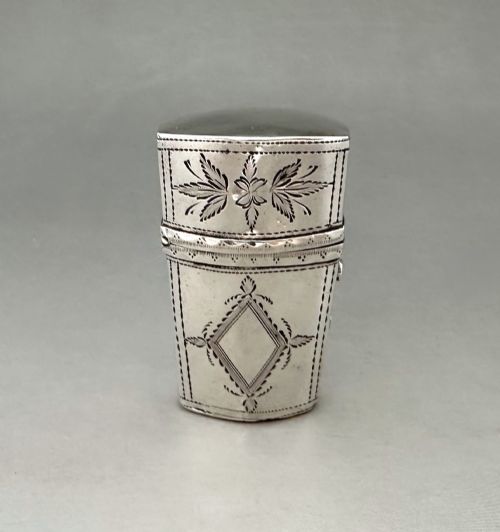

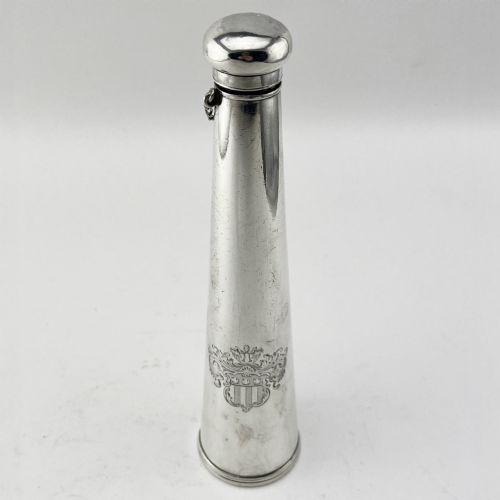


Engraved Sterling Silver Flask
These engraved sterling silver flasks and bottles combine hand-cut decoration with solid precious metal, offering portable luxury from past centuries.
Engraved Sterling Silver Flask
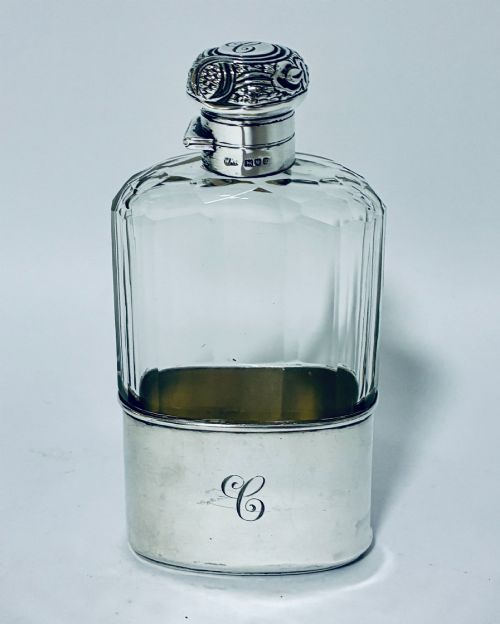
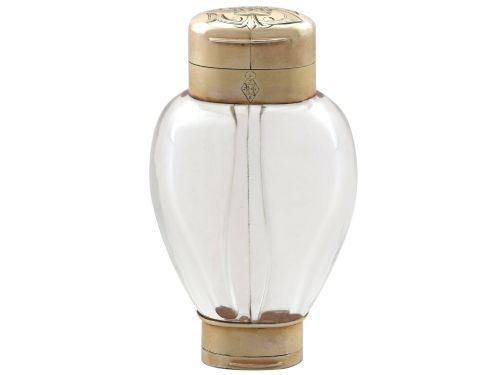
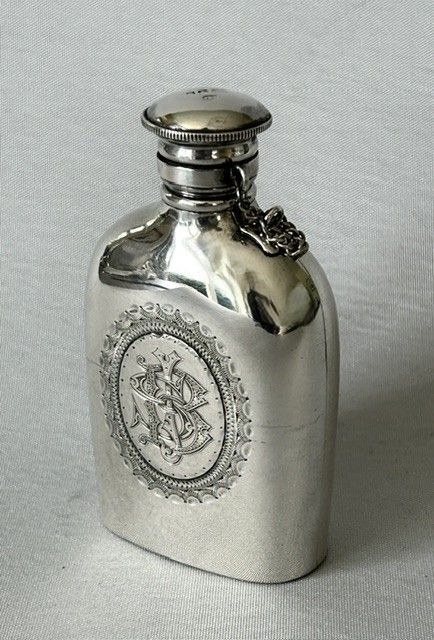
When you search for engraved sterling silver flask, you encounter pocket-sized vessels designed for personal use, ranging from hip flasks to scent and perfume bottles.
The pieces on this page span the Georgian, Victorian, Edwardian and George V periods, featuring both standalone metal containers and glass bottles encased in silver.
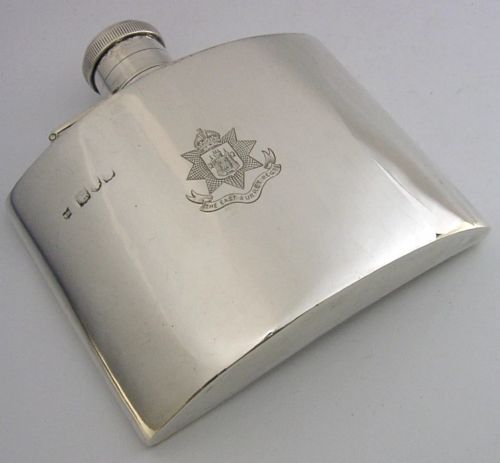
You also find specialised items such as travelling communion sets and military pieces associated with specific regiments like the East Surrey Regiment.
How they were made
Maker's hands shaped sterling silver into rigid pocket containers, frequently incorporating hinged caps and screw tops to secure liquid contents.
Engravers worked directly onto the metal surface, incising armorial crests, baronet's crowns and intricate foliage patterns by hand.
Certain pieces combined sterling silver with glass, leather, tortoiseshell, silk and velvet linings to create tactile dual-material objects.
Engraved Sterling Silver Flask Retail Price Guide 2026
Typical asking prices for engraved sterling silver flask among the pieces listed under this phrase on Sellingantiques today, from the lower quarter to the upper quarter. They describe what is for sale here now, not the wider market.
Materials paired with silver across these items include tortoiseshell, silk, leather and glass.
What varies in quality
Quality rests upon the crispness and depth of the hand engraving, where deeply cut armorial crests outshine superficial scratched decoration.
The substance of the silver casing and the integrity of internal glass inserts or original linings dictate the durability and survival of the piece.
The presence of identifiable maker's marks and town hallmarks elevates the standing of an item above unmarked or provincial work.
Horton & Allday
The Engraved Sterling Silver Flask Glossary
- Sterling silver
- A silver alloy containing 92.5 percent pure silver and 7.5 percent other metals, typically copper, ensuring structural strength for daily use. This alloy forms the primary body of the flasks.
- Armorial crest
- A heraldic design engraved onto the silver surface to denote family lineage and social status. These coats of arms often identify the original owner.
- Hallmark
- Official stamps struck into the metal indicating the standard of silver, the assay office, and the date letter. These marks provide precise chronological context.
- Hip flask
- A thin, curved container shaped to fit comfortably in a pocket for carrying spirits. Examples often include a detachable cup at the base.
Engraved Sterling Silver Flask: Frequently Asked Questions
What were sterling silver flasks used for?
These vessels served practical daily functions, carrying spirits during hunts or holding perfumed scents for personal grooming during travel.
More specialised items, such as travelling communion sets, carried consecrated wine for religious rites conducted outside consecrated buildings.
How do I date an antique silver flask?
Dating relies upon reading the hallmarked stamps pressed into the metal, which record the assay office and specific year of testing.
Stylistic cues, such as the complexity of the hand engraving and the form of the cap, also point toward Georgian, Victorian or Edwardian periods.
Can I still use an antique hip flask?
While these items were built for active use, modern usage depends entirely on the internal condition of the container and the security of the closures.
Many collectors prefer to keep them as display pieces to preserve the delicate silver surfaces and original glass or velvet components.
Why do some flasks have cups?
Hunting flasks often incorporated a detachable silver cup that slid over the lower half of the bottle, secured by a bayonet mount.
This allowed the user to pour a measure of spirit directly into the cup while out in the field.