




Engraved Sterling Card Case
An engraved sterling card case carries the quiet formality of a Victorian calling or visiting ritual in solid silver.
Engraved Sterling Card Case
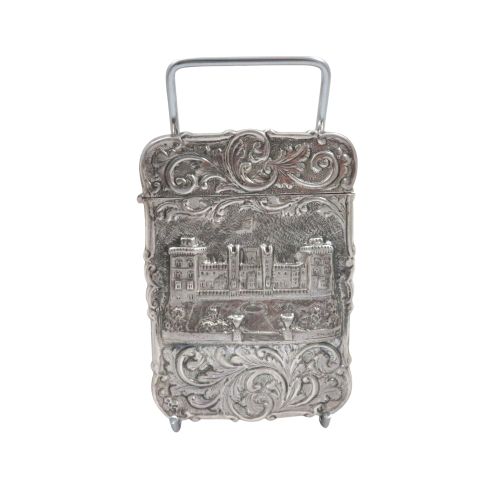
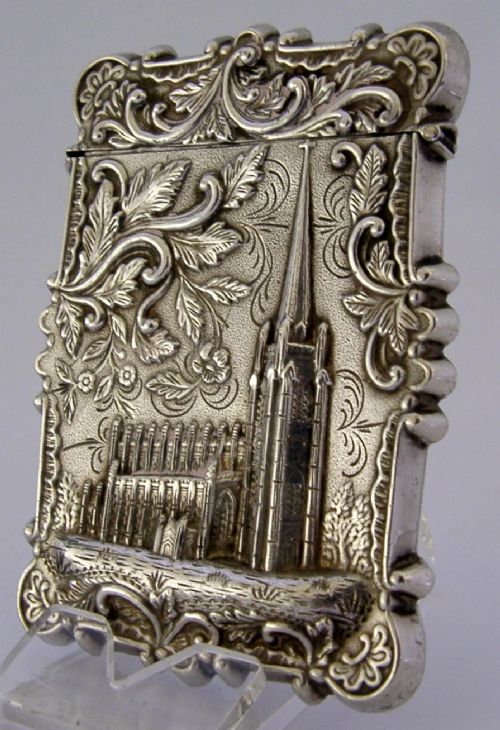
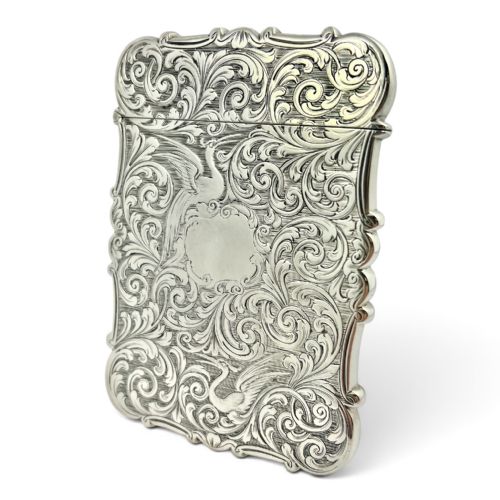
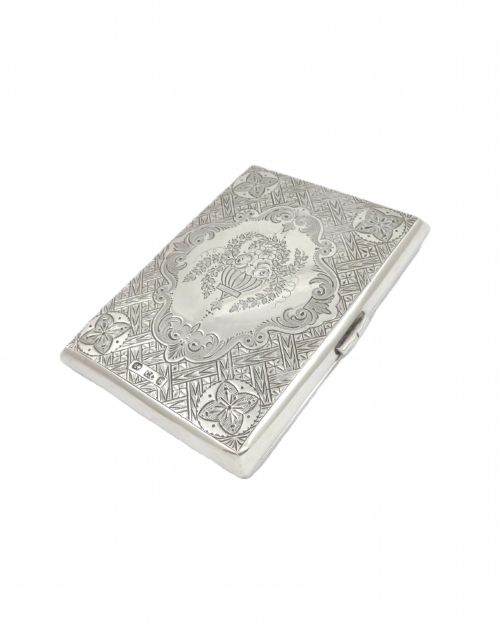
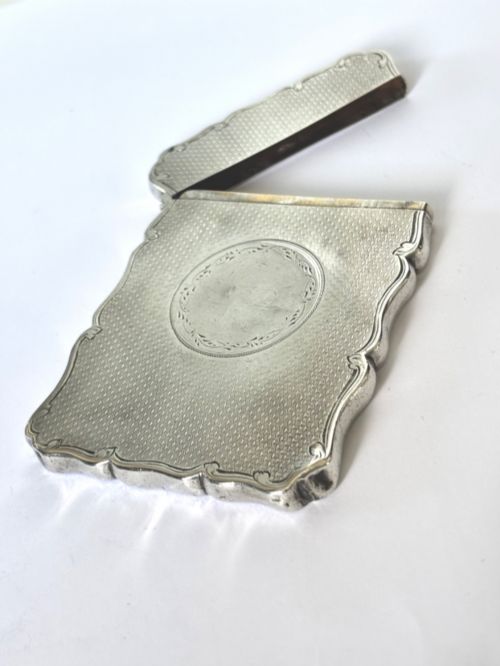
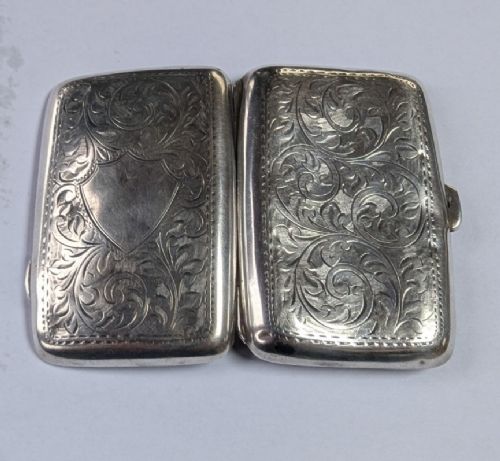
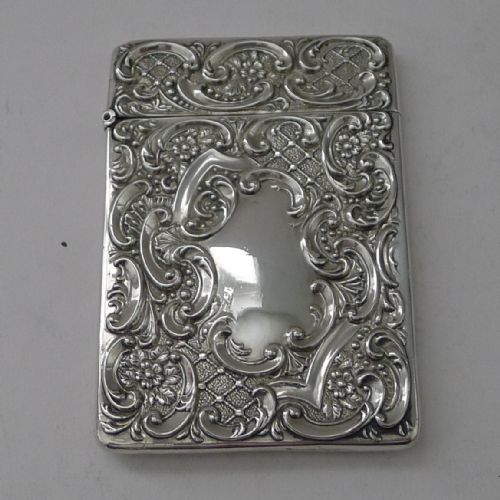
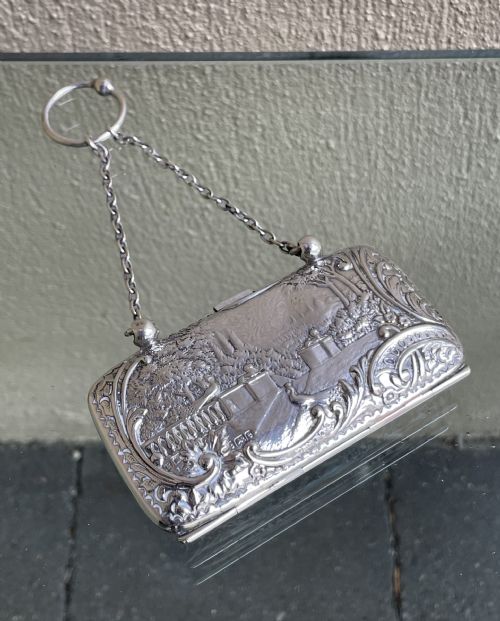
When you search for an engraved sterling card case, you encounter pocket-sized silver containers designed for holding visiting cards, calling cards, or dance cards. The versions you meet most frequently on this page belong to the Victorian and Edwardian periods, alongside a smaller number from the Georgian and Art Deco eras. Most examples take the form of stiff rectangular card cases, though variants include purses, fold-out concertina interiors with silk linings, and boxes.
Makers shaped these items primarily for social exchange, giving rise to specialised types such as visiting card cases and cigarette or cigar cases. Castle top pieces appear among the selections, depicting landmarks like Windsor Castle, Trinity Church, or St Paul's Cathedral in high relief. Alongside standard silver work, you encounter combinations involving Connemara marble, glass, and paper.
Materials and Techniques
Silversmiths constructed these pieces using sterling silver and solid silver, frequently applying silver gilt linings or bright cut engraving to create patterned scrollwork and floral motifs. Workshops utilised specialised mechanisms, including spring clips, detachable two-part assemblies, and unusual opening actions.
Beyond plain metal, makers incorporated secondary materials like silk concertina pockets, Connemara marble inserts, and mother of pearl panels. Hallmarks stamped into the silver record the assay office, such as Birmingham or London, and the year of production.
Listings span production dates from the mid-eighteenth century through the Art Deco period, with a strong concentration of Victorian and Edwardian examples.
Variations in Quality
The distinction between standard production and exceptional work rests upon the depth and clarity of the hand engraving. Deeply chased architectural scenes, known as castle tops, demonstrate a higher level of artisan skill than machine-etched or shallow scroll patterns.
Structural complexity also defines the tier of an object. Pieces featuring internal silk concertina compartments, multi-part detachable designs, or uncommon opening mechanisms require more advanced manufacturing than simple slip-lid boxes.
Nathaniel Mills·George Unite·Wright & Davies·Edward Edwards·Foxall & Co
The Engraved Sterling Card Case Glossary
- Castle top
- A card case featuring a high-relief architectural engraving of a specific landmark on the cover. Nathaniel Mills specialised in this form.
- Sterling silver
- An alloy consisting of silver and other metals, meeting a specific standard of purity for manufactured objects. British items carry hallmarks confirming this composition.
- Concertina
- An expandable interior divider made of silk or paper that folds like an accordion to hold cards separately. This component appears inside select Victorian examples.
- Bright cut engraving
- A technique of faceted cutting using a graving tool to produce bright, light-reflecting geometric or floral grooves across the silver surface. It creates high contrast against the matte background.
Engraved Sterling Card Case: Frequently Asked Questions
What were engraved sterling card cases used for?
These cases held calling cards and visiting cards exchanged during formal social visits in the nineteenth and early twentieth centuries. People carried them in pockets or attached them to chatelaines to keep paper cards crisp and clean.
Over time, owners also repurposed them for cigarettes, cheroots, dance programs, or stamps. Their slim profile kept personal mementos protected from damage while away from home.
How do I identify a Victorian card case?
Victorian examples frequently display hallmarks corresponding to assay offices like Birmingham or London between the eighteen-thirties and nineteen-hundreds. Stylistic markers include deep scrollwork, floral motifs, and architectural castle top scenes.
Examining the date letter stamped alongside the maker's mark provides the exact year of assay. Pieces from this era often utilise heavy gauge sterling silver and mechanical hinges.
How should I clean antique silver?
Antique silver benefits from gentle cleaning using a non-abrasive cloth and mild soapy water to remove accumulated dust and oils. Avoid harsh chemical dips that strip away the natural patina accumulated over generations.
Store pieces in dry conditions away from direct sunlight and humidity to prevent accelerated tarnishing. Silk-lined interiors require careful brushing without moisture to preserve the fabric.