
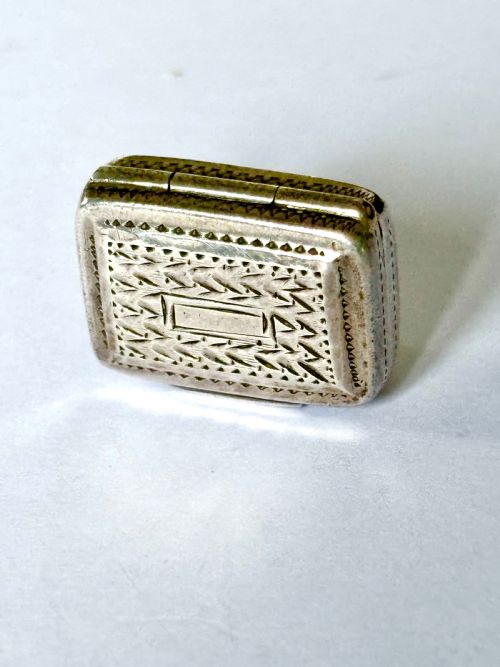


Engraved Silver Scent Box
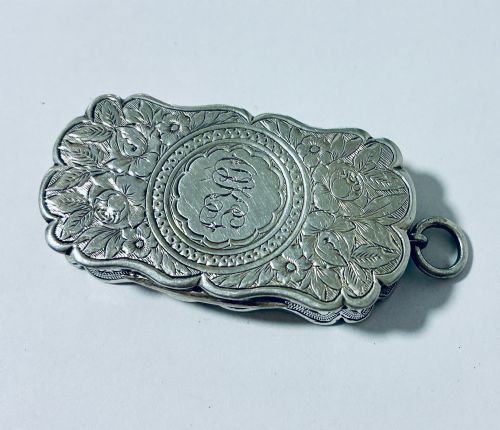
These engraved silver scent box pieces are tactile Georgian and Victorian silver containers made to hold aromatic vinegars or perfumes, combining miniature metalwork with everyday utility.
Engraved Silver Scent Box
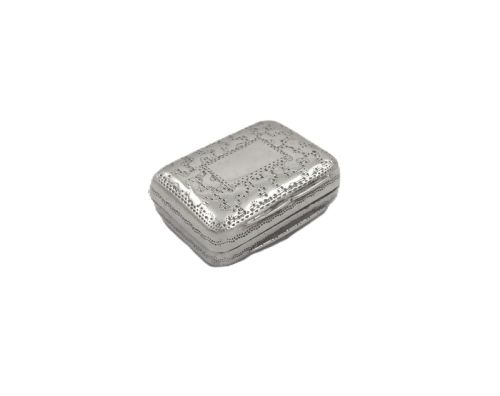
An engraved silver scent box typically takes the form of a small silver box or vinaigrette, designed to hold a sponge soaked in scented vinegar during the Georgian and Victorian periods. Buyers search for these items to acquire small-scale silver work that reflects 19th-century social habits and personal adornment.
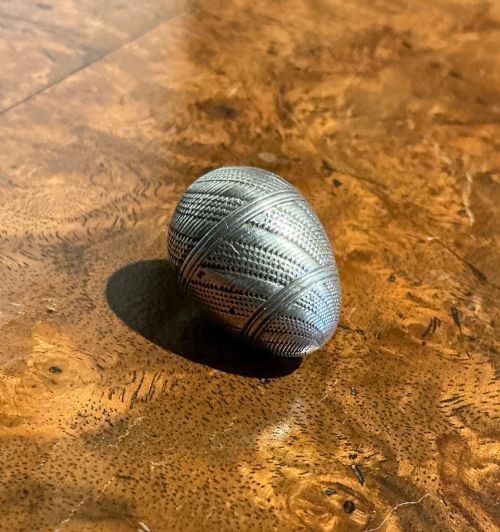
The versions most commonly met on this page are Georgian and Victorian vinaigrettes made from sterling silver, often featuring internal grilles alongside exterior engravings. Pieces range from simple egg shapes to detailed architectural castle top designs.
How they were made
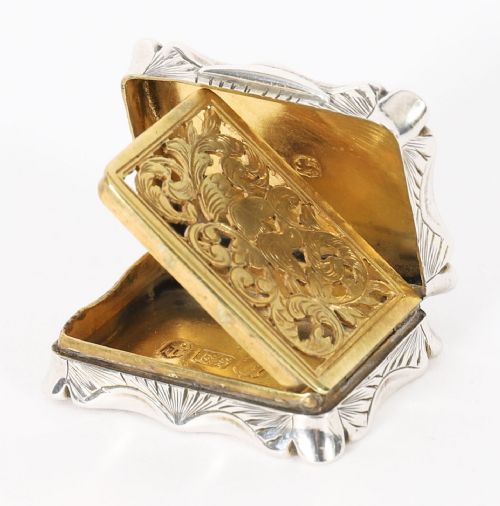
Makers utilised sterling silver and silver gilt, frequently applying rich gilding to the interior surfaces of the boxes to protect the metal from corrosive aromatic vinegars. Exterior decoration relies on detailed hand engraving, executed across surfaces like the egg-shaped or castle top forms.
Internal components include pierced and engraved grilles that hold the scented sponge securely in place while allowing the fragrance to escape. Additional materials such as leather, silk, velvet, and agate appear alongside the metalwork in the broader construction of these small containers.
The listings here span the Georgian and Victorian periods, utilising materials such as sterling silver, silver gilt, leather, silk, velvet, and agate.
What varies in quality
Quality in an engraved silver scent box rests upon the crispness of the hand engraving and the complexity of the object's form. Architectural designs like castle tops demonstrating specific buildings show a higher level of artisan skill than plain geometric containers.
The presence of clear hallmarks adds considerable merit, confirming the maker, assay office, and date of manufacture. Finer examples also exhibit well-executed interior silver gilt work and securely fitted, delicately pierced internal grilles.
Horton & Allday·Edward Smith·John Bettridge
The Engraved Silver Scent Box Glossary
- Vinaigrette
- A small hinged metal box containing a pierced internal grille, used to hold a sponge soaked in aromatic vinegar. These containers were carried in pockets or reticules during the Georgian and Victorian eras.
- Silver gilt
- Sterling silver that has been coated with a thin layer of gold on its surface. This technique prevents the acidic vinegar from tarnishing or damaging the interior silver of a scent box.
- Castle top
- A style of small silver box featuring a detailed high-relief engraving of a famous building or landmark on the lid. Christchurch College, Oxford, is one such architectural subject found on Victorian pieces.
- Hallmark
- An official stamp or series of marks applied to precious metals indicating the standard of purity, the maker, the assay office, and the year of manufacture. These marks provide the definitive history of a piece.
- Sterling silver
- An alloy of silver containing ninety-two point five percent silver by mass and seven point five percent other metals, usually copper. This standard alloy provides the durability required for intricate miniature engraving.
Engraved Silver Scent Box: Frequently Asked Questions
What is an engraved silver scent box?
An engraved silver scent box is a small portable container made during the Georgian and Victorian periods, designed to hold pleasant aromas or vinegars.
These items functioned as personal accessories for neutralizing unpleasant odours in public spaces before modern sanitation.
How were vinaigrettes used?
Owners carried these small boxes in pockets or attached them to chatelaines for quick access during travel or social gatherings.
A sponge soaked in vinegar sat beneath a pierced interior grille, releasing fragrance when the lid was opened.
How do I date a silver scent box?
Dating relies primarily on the hallmarks stamped into the silver, which record the assay office and the specific year of production.
Stylistic cues such as Georgian simplicity or Victorian castle top architecture also help establish the era.
What are castle top boxes?
Castle top boxes feature detailed relief engravings of recognisable buildings, estates, or academic institutions upon their lids.
Silversmiths produced these commemorative pieces during the Victorian era to celebrate specific British landmarks.