
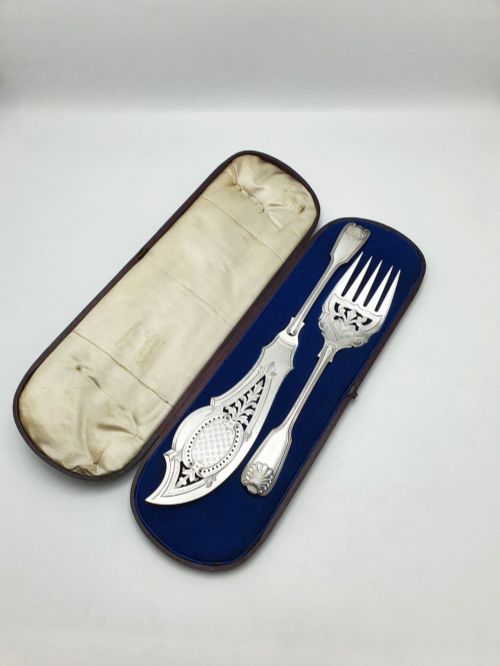


Engraved Silver Forks
These engraved silver forks bring tactile historical charm to the table, combining intricate decoration with lasting sterling silver and plate.
Engraved Silver Forks
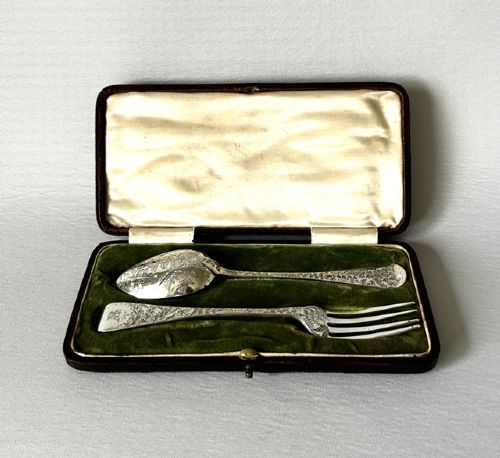
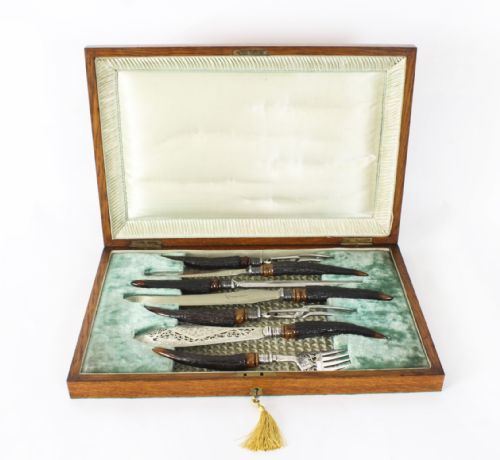
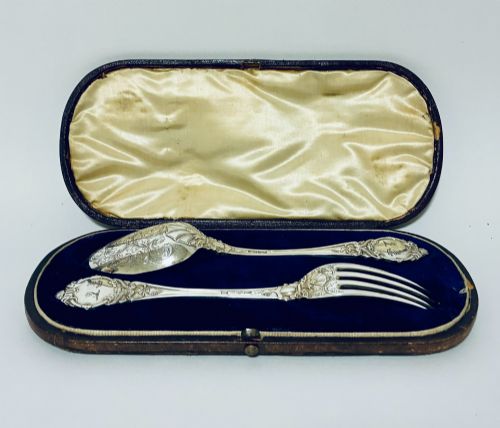
Engraved silver forks cover a broad span of dining and serving cutlery, ranging from single fruit and table pieces to elaborate Christening and fish sets. When collectors search for engraved silver forks, they encounter mostly Victorian examples alongside older George III and 18th-century forms. The selection includes specialised items such as folding fruit forks, carving sets, and hors d'oeuvres pieces alongside standard flatware.
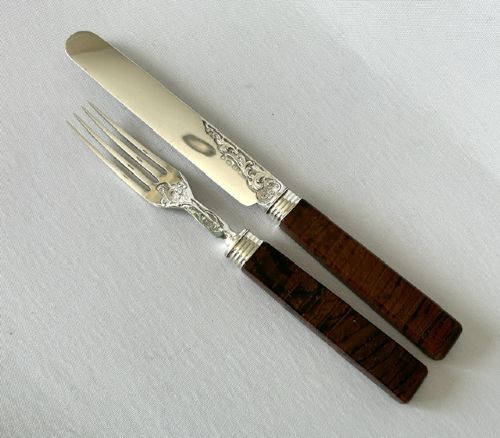
Victorian items dominate the available forms, often incorporating decorative engraving alongside handles made from mother-of-pearl, horn, or agate. Earlier 18th-century pieces, including Dognose table forks and folding designs, appear with armorial crests and hand-cut embellishments. Cased sets designed for children or fish courses frequently pair the fork with a matching knife or server.
What varies in quality
Quality rests upon the crispness of the hand-engraving and the structural integrity of both the metal and the handle material. Finer pieces display deep, detailed pictorial or heraldic work that remains sharp despite historical use, while lesser examples show worn or shallow surface marks.
The choice of handle material and the presence of a fitted original presentation case influence the overall execution. Solid sterling silver items and well-preserved natural handles like agate or mother-of-pearl mark the upper tier of craftsmanship compared to standard silver plate.
Hunting dogs peer out from engraved Victorian fish forks, reminding diners of nineteenth-century sporting passions.
John Round·Thomas Harwood and Co
The Engraved Silver Forks Glossary
- Sterling silver
- A silver alloy containing 92.5 percent pure silver and 7.5 percent other metals, usually copper, chosen for durability in tableware. It forms the primary metal body of higher-end antique flatware.
- Silver plate
- A base metal layer coated with a thin film of silver, widely utilised for Victorian fish and carving sets. This technique offered a decorative dining option at a lower cost than solid silver.
- Dognose table fork
- An early flatware form featuring a spatulate terminal turned slightly upward, popular around the turn of the 18th century. These pieces often display engraved armorial crests belonging to the original owners.
- Christening set
- A specialised collection of cutlery, often including a fork, knife, and spoon, presented as a traditional gift for infants. They frequently feature detailed floral engraving and fitted presentation boxes.
- Fish server
- A wide, flat utensil designed for portioning fish, regularly paired with a matching fork in cased Victorian sets. The blades and tines typically show elaborate engraved scrollwork or hunting scenes.
Engraved Silver Forks: Frequently Asked Questions
How do I clean antique silver forks?
Wash silver pieces gently in warm water with a mild, phosphate-free soap and dry them immediately with a soft cloth. Avoid harsh chemical dips that can strip away the dark oxidation highlighting the fine hand engraving.
Store them in tarnish-resistant rolls or lined presentation boxes away from direct humidity. Regular, gentle handling maintains the natural lustre of the metal without harming older surfaces.
Are these antique forks safe for daily dining?
Many solid sterling silver forks remain sturdy enough for regular use, provided they are washed by hand rather than placed in a mechanical dishwasher. Older plated items or those with delicate natural material handles require more careful treatment.
Hand-washing prevents thermal shock and protects organic handle components like horn, agate, and mother-of-pearl from splitting. Treating them with care preserves both the metal structure and the engraved details.
What does an armorial crest mean on a fork?
An armorial crest indicates that the piece was custom-engraved for a specific aristocratic or landed family. Silversmiths etched these heraldic symbols by hand to match the family's official coat of arms.
Finding a clear crest adds historical context and helps researchers trace the original ownership of 18th-century tableware. These personalized touches separate bespoke commissions from mass-produced factory items.
Why are some forks sold in fitted boxes?
Fitted cases lined with silk and velvet protected delicate multi-piece sets, such as Christening collections or fish servers, during storage and transit. These presentation boxes were tailored specifically to hold the fork, knife, and associated utensils securely in place.
Survival of the original box often indicates that the set saw minimal use and remained together as a complete unit. Collectors value these fitted housings for preserving the items in original condition.